




? A New Trade Horizon
Is the India-New Zealand Free Trade Agreement a blueprint for the future? We investigate the deal’s impact on farmers, professionals, and the economy. For the 60-second summary, check out the Quick Read Version (#quickreads) here.
A Deal That Isn’t Signed Yet—but Already Reshaping the Debate
The India–New Zealand Free Trade Agreement (FTA) has been politically approved by both sides and is expected to be formally signed in the first half of 2026. While the agreement is not yet in force, it has already triggered intense debate—across exporters, farmers, political parties, immigration advocates, and trade unions in both countries.
For India, the deal is being framed as a strategic economic opening. For New Zealand, particularly among its agricultural and political circles, it has raised questions about balance, access, and long-term leverage. The truth, as always, lies in the structure of the agreement rather than the slogans around it.
What the Agreement Actually Changes on Trade
At the core of the FTA is tariff liberalisation.
India will receive zero-duty or sharply reduced tariffs on approximately 95% of its goods exports to New Zealand. More than half of Indian goods and services exported to New Zealand will become duty-free from the very first day the agreement comes into force. Over time, tariffs on most remaining lines are expected to fall close to zero.
For Indian exporters—especially in chemicals, pharmaceuticals, industrial inputs, textiles, agriculture, and processed foods—this represents immediate price competitiveness in a high-income market.
New Zealand, in return, secures duty-free access on about 57% of its exports to India from day one, rising to around 82% as the agreement is fully implemented. For the remaining products, tariffs are not eliminated but significantly reduced over time.
The asymmetry in market size is critical here. India is a 1.4-billion-consumer economy. Even marginal penetration can translate into large volumes. New Zealand, by contrast, is a much smaller export-oriented economy where access to India can meaningfully move national trade numbers.
The Deliberate Red Line: Dairy and Sensitive Agriculture
One of the most politically charged aspects of the agreement is what it excludes.
Recommended Product
Amazon Renewed — Best Deals of the Day
🛒 View on Amazon →As an Amazon Associate, we earn from qualifying purchases. Price and availability may vary.
India has explicitly kept dairy and several sensitive agricultural products outside market access commitments, including milk, cream, cheese, yoghurt, whey, sugar, onions, spices, edible oils, and rubber.
This exclusion has drawn criticism inside New Zealand, where dairy products are among the country’s most globally competitive exports. For many New Zealand farmers and politicians, dairy access is not just an economic issue—it is a symbolic one.
From India’s perspective, the rationale is structural rather than ideological. India’s dairy sector is sustained by millions of small and marginal farmers, not large agribusinesses. Zero-tariff access for world-class New Zealand dairy products would place immediate downward pressure on domestic prices, potentially destabilising rural livelihoods at scale.
The Indian state’s decision reflects a long-standing trade policy posture: openness in manufacturing and services, caution in politically sensitive farm sectors.
Services, Mobility, and the Human Dimension of Trade
Beyond goods, the agreement places heavy emphasis on services and mobility.
India has secured market access in 118 service sectors and sub-sectors in New Zealand, along with Most Favoured Nation (MFN) treatment across more than 1,100 service categories. These include IT services, education, financial services, professional consulting, and emerging knowledge-based sectors.
Equally significant is the mobility framework. Provisions around professional visas, student pathways, and post-study work opportunities have been welcomed by Indian services professionals and diaspora communities. For students and skilled workers, the FTA is seen less as a trade document and more as a mobility enabler—opening structured, predictable routes into New Zealand’s labour market.
This is where the agreement moves beyond economics into social psychology. For aspirational professionals, trade deals are no longer abstract GDP tools; they are perceived as personal opportunity frameworks.
Investment Flows and the Long Horizon
Under the agreement, New Zealand has committed to investing approximately USD 20 billion in India over the next 15 years, across sectors of its choosing. The emphasis is on long-term capital rather than short-term portfolio flows.
For India, this aligns with a broader strategy: attracting foreign investment that integrates into domestic manufacturing, MSMEs, and infrastructure rather than remaining extractive.
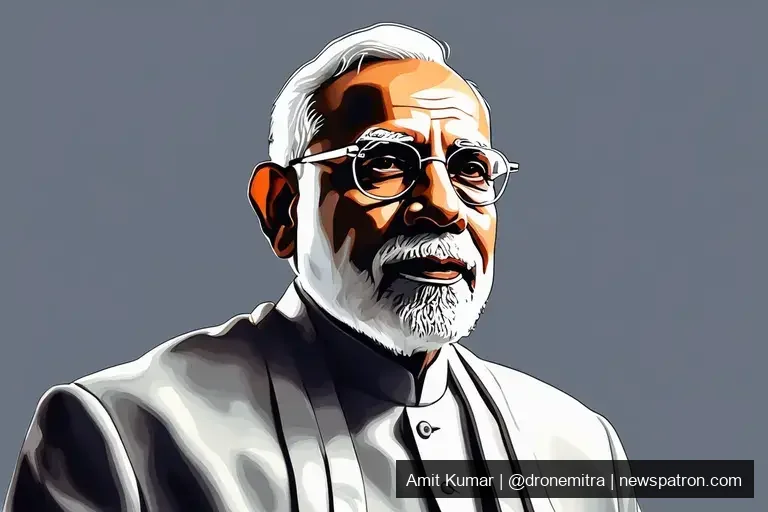
Politically, the investment commitment strengthens the narrative that India is no longer negotiating trade deals purely for export volumes, but for capital, technology, and ecosystem development.
Political Resistance and Coalition Friction in New Zealand
Not all responses in New Zealand have been enthusiastic.
Within the country’s coalition politics, some leaders have labelled the agreement a “bad deal,” arguing that New Zealand has conceded too much on immigration and services while receiving limited gains in its core export sectors. Concerns have also been raised about labour market pressure and whether Indian mobility provisions will strain public systems.
These objections are not unusual in trade politics. What they reflect is a deeper anxiety: trade agreements increasingly redistribute gains unevenly across domestic constituencies, and dairy-centric economies feel particularly exposed when access is constrained.
Why This Deal Is Happening Now
Timing matters.
India is actively negotiating multiple trade agreements as it seeks to diversify supply chains and reduce over-dependence on any single market. Global tariff uncertainty, protectionist rhetoric elsewhere, and fragile supply chains have accelerated this push.
The New Zealand agreement is being viewed in Indian policy circles as a template deal—a model for future negotiations with mid-sized, developed economies where India can combine export access, services mobility, and investment inflows while protecting politically sensitive sectors.
Beyond the Headlines: What This Deal Represents
At a deeper level, the India–New Zealand FTA reflects a shift in how trade is perceived.
It is no longer just about imports versus exports. It is about:
- Who gets mobility
- Which livelihoods are protected
- How political risk is distributed
- And how states balance global integration with domestic stability
The agreement does not eliminate all friction. It does not satisfy all stakeholders. But it does reveal how modern trade deals are negotiated—not as pure economic texts, but as complex social contracts between states, markets, and people.
Is this deal a win for Indian farmers or a challenge? Share your views below.
#india #newzealand #freetrade #FTA #narendramodi #tradeagreement #economy #farmers #globaltrade
