




The Thunder in the Silence
They say real power moves in silence, and right now, the silence in the Northeast is deafening.
While the cameras of the world have been glued to the streets of Dhaka, obsessing over the political chaos and the tragic, violent attacks on minorities, they have missed the real story. It is a story that isn’t being written in the television studios of New Delhi, but in the quiet, rugged hills of the Northeast.
In late 2025, a shift occurred. It was rapid. It was calculated. And it was decisive.
Reports indicate a significant, swift military buildup in the border states of Tripura and Mizoram. Troops have been positioned within striking distance—mere 50 to 100 kilometers—of the Chittagong Hill Tracts (CHT). This is not a routine border patrol exercise. You do not move heavy assets to the edge of a sovereign neighbor just to check paperwork.

This mobilization comes immediately on the heels of intense clashes between Bangladeshi forces and the Kuki-Chin National Front (KNF) in the districts of Bandarban and Rangamati. The timing is not a coincidence. It is a signal.
For too long, the narrative has been that India is a passive spectator, wringing its hands while its neighborhood burns. That narrative is now dead. The swiftness of this deployment suggests that New Delhi has stopped waiting for permission to secure its interests. The chaos in Bangladesh provided the vacuum; India is merely stepping in to ensure that vacuum isn’t filled by forces hostile to its existence.
The ‘Second Chicken’s Neck’
Geography, as they say, is destiny. But sometimes, if you are smart enough and bold enough, you can rewrite it.
For seventy years, Indian defense planners have woken up in a cold sweat thinking about the Siliguri Corridor. The ‘Chicken’s Neck.’ That terrified sliver of land, barely twenty kilometers wide, that connects our mainland to the Northeast. We have lived with the nightmare that one well-timed move could cut off seven states from the rest of India. We built our entire defense doctrine around this vulnerability. We lived in fear of the choke point.
But look closely at what is happening in Mizoram, and you will see the map flipping.
Recommended Product
Jockey Women's Hipster Brief – Comfort Fit, Assorted Colors
🛒 View on Amazon →As an Amazon Associate, we earn from qualifying purchases. Price and availability may vary.
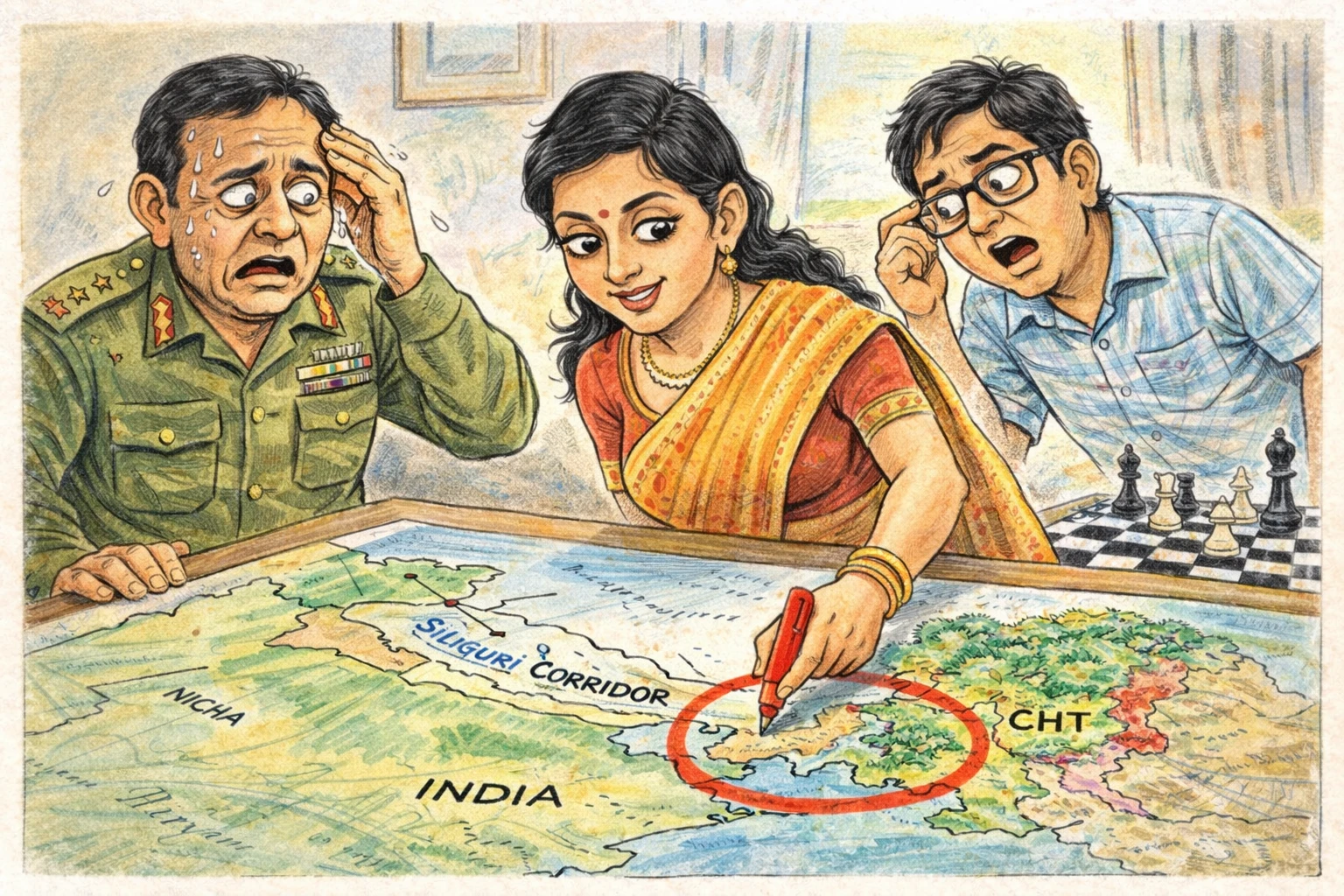
The Chittagong Hill Tracts (CHT) are not just another district in Bangladesh. They are the anomaly. In a country of flat floodplains, this is the only major hill range. It borders Tripura to the north, Mizoram to the east, and Myanmar to the south.
By projecting influence here, India is effectively creating a ‘Second Chicken’s Neck’—but this time, the choke chain is not around our neck. It is around theirs.
If the Siliguri Corridor is India’s vulnerability, the Chittagong Hill Tracts are Bangladesh’s Achilles’ heel. These hills are the high ground. They overlook the critical approaches to the Bay of Bengal. Whoever controls the hills, commands the view. Whoever commands the view, holds the keys to the port access that keeps an economy alive.
The Original Sin: 1947
To understand why this move matters today, you have to understand the betrayal of yesterday. You have to go back to the original sin.
In 1947, when the cartographers were carving up the subcontinent with their pens and their ignorance, the Chittagong Hill Tracts were an anomaly. The numbers were clear. The logic was indisputable. The region was nearly 98% non-Muslim. It was a land of Buddhists and Hindus, tribals who had nothing in common with the plains of East Pakistan.
On August 15th, 1947, the people of the Hill Tracts didn’t just hope for India; they celebrated it. They hoisted the Indian tricolor in Rangamati. They believed, with a naive faith in justice, that demographics would determine their destiny.
They were wrong.
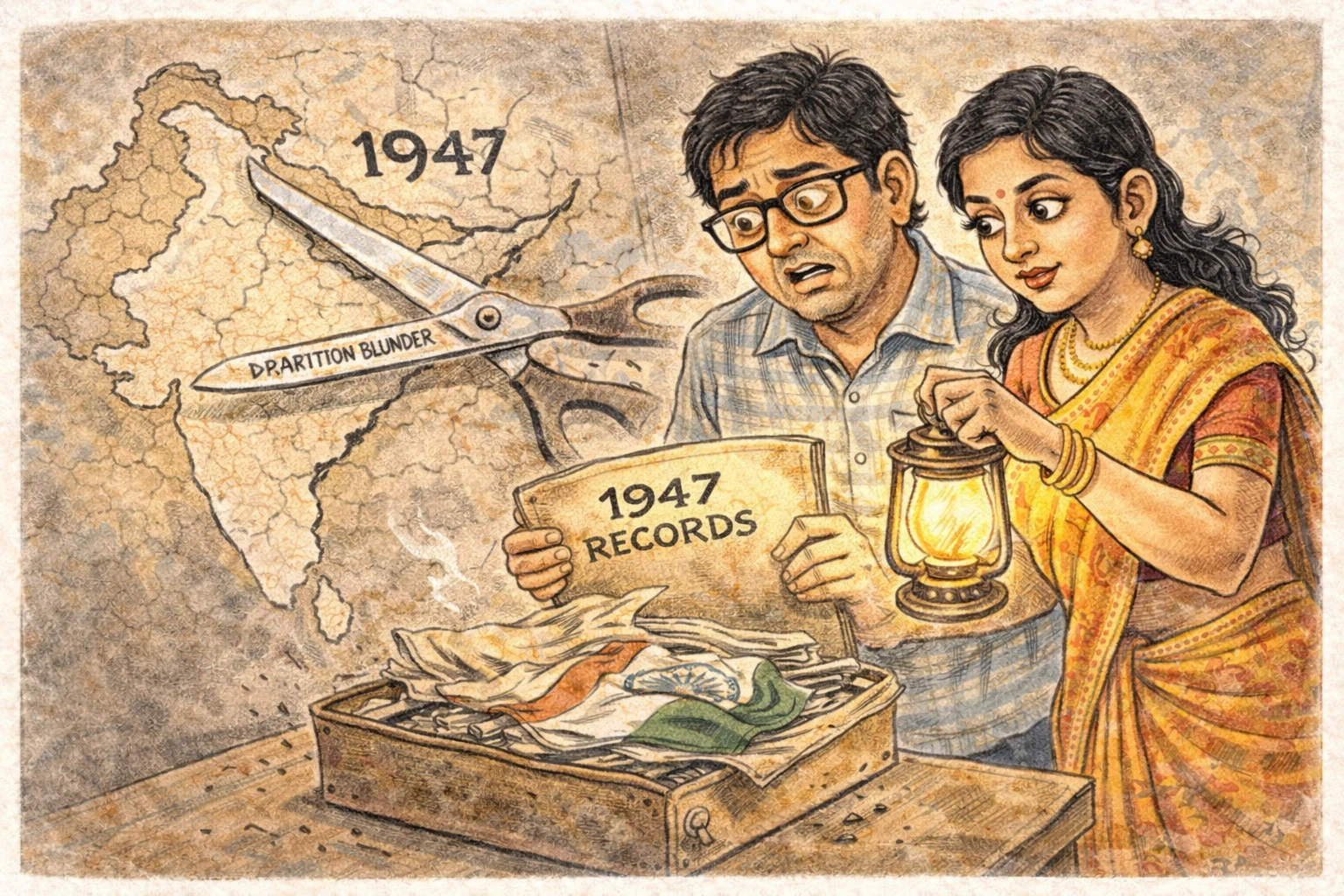
In one of the most inexplicable blunders of the Partition, the Boundary Commission handed the CHT to Pakistan. The justification? ‘Access to a port.’ ‘Economic buffer.’ The lives and culture of an entire population were traded away for a logistical footnote.
What followed was predictable. It was a slow-motion erasure. First came the Pakistani army, tearing down the Indian flags. Then came the Kaptai Dam in the 1960s, a project that conveniently flooded the fertile lands of the Chakmas, displacing a hundred thousand people and forcing them to flee into India. Then came the settlements—waves of plainspeople moved into the hills to dilute the tribal majority until the indigenous people became strangers in their own land.
The Invisible Hand
Now, we must address the elephant in the room. We must talk about the whispers that are becoming shouts in the corridors of power.
There are allegations—persistent, specific, and loud—that India is doing more than just watching. Reports from the ground and murmurs from intelligence circles suggest that New Delhi is quietly cultivating assets within the Chittagong Hill Tracts. The name being whispered is the Kuki-Chin National Front (KNF).
Let us be absolutely clear: The Government of India officially denies any involvement in armed insurgencies. There is no public document, no press release, and no admission that supports the claim that India is arming or funding rebels. As far as the official record goes, India’s involvement is strictly humanitarian—providing shelter to the thousands of refugees fleeing persecution in the hills.
But in statecraft, official denials often walk hand-in-hand with strategic necessities.
If—and I stress the word if—India is indeed cultivating leverage through local autonomy groups like the KNF, it is not an act of aggression. It is an act of insurance. It is the creation of a buffer.
The End Game
So, what is the ultimate objective? Let us step away from the hysteria of war drums. This is not about annexation. India is a civilization state, not a colonial power. We do not need to plant a flag on foreign soil to secure our own.
The game here is not land; the game is leverage. By establishing a dominant position overlooking the Chittagong Hill Tracts, India is fundamentally altering the security architecture of the Bay of Bengal.
The message to the neighborhood is simple, and it is final: India prefers friendship. We prefer open borders and shared prosperity. But if you choose to burn the bridges that connect us, be prepared for what we build in their place. We will build fortresses. And from the high ground of the hills, we will be watching.
Dhaka is distracted. But Delhi? Delhi has never been more focused.
Connect with the Editor
What are your thoughts on India’s new strategic posture? Connect with me, Kumar, Editor at Newspatron, on your favorite platform:
- For quick updates: Follow me on Instagram, Twitter, YouTube, or Reddit.
- For instant updates: Subscribe to my WhatsApp Channel.
