




India’s Geopolitical Edge: Navigating a Volatile World
The global stage is a complex tapestry of shifting alliances and escalating conflicts. Recent US military strikes on Iran have sent ripples across the Middle East. Nations are being forced to re-evaluate their positions and strategies. This report delves into these geopolitical tremors. It examines the immediate fallout of the Iran-US conflict. It also dissects Pakistan’s diplomatic missteps. Ultimately, it spotlights India’s unique and evolving foreign policy approach. New Delhi’s strategic autonomy sets it apart with a distinct geopolitical edge. Its proactive engagement allows India to navigate this volatile environment with remarkable dexterity. This analysis will illuminate why India’s strategic advantage is more pronounced than ever. It offers a compelling case study in modern statecraft. Before exploring the intricate details, remember to explore our older channel, DroneMitra. “Your Sky is Digital with a Drone as a Friend.” Subscribe to our newer YouTube channel, Newspatron. “Let Curiosity Be Your Guide.”
The Geopolitical Chessboard: US Strikes and Regional Ripples
The recent US military action against Iran is codenamed Operation Midnight Hammer. It signifies a significant escalation in the ongoing tensions in the Middle East. This section meticulously analyzes the operation’s details. It examines the conflicting narratives surrounding its success. It also considers the broader implications for regional stability. This includes a critical look at the US’s approach to nuclear proliferation warnings.
Operation Midnight Hammer: A Deep Dive into the US Strikes on Iran’s Nuclear Facilities
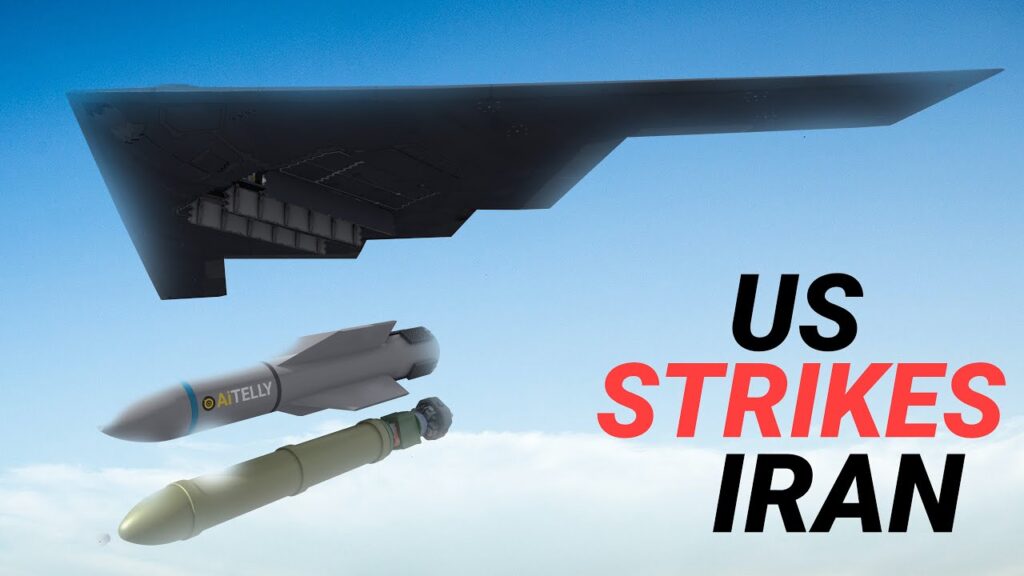
On June 22, 2025, the United States launched “Operation Midnight Hammer.” It was a significant military operation targeting three critical Iranian nuclear sites. These targets were Fordow, Natanz, and Isfahan. Seven Stealth Bombers from the 509th Bomb Wing conducted this complex assault. They undertook a non-stop flight from Whiteman Air Force Base in Missouri. Six of these B-2s dropped 12 GBU-57A/B MOP (Massive Ordnance Penetrator) bombs. These 30,000-pound “bunker buster” bombs were used on the heavily fortified Fordow facility. The seventh B-2 delivered two MOPs on Natanz. These “bunker buster” bombs were exclusively possessed by the United States. They were designed to penetrate deeply buried, hardened targets. This marked their first operational use in combat. Additionally, a US submarine fired 30 Tomahawk Missiles. It was the USS Georgia that targeted the Natanz and Isfahan sites. The strikes, particularly on Natanz and Fordow, occurred around 2:30 a.m. local time, underscoring the coordinated and precision nature of the assault.
Caught on Camera: The Real Story
The “Bunker Buster” Gambit: US Claims vs. Iranian Resilience
President Donald Trump asserted on social media that Iran’s key nuclear facilities were “completely and fully obliterated.” He described the attack as “very successful” and a “spectacular military success.” Chairman of the Joint Chiefs of Staff Dan Caine echoed this sentiment. He stated that the Iranian nuclear sites sustained “severe damage.” This damage occurred particularly “far below ground level.” Nonetheless, a full damage assessment would need time. This strong rhetoric aimed to project an image of overwhelming ability and decisive action.
Nonetheless, Iran’s Atomic Energy Organization confirmed the attacks but swiftly countered the US narrative. Iranian officials insisted that their nuclear work would not be halted and claimed only “minor damage” to the targeted sites. Crucially, they stated that they had already removed 400 kilograms of 60% pure enriched uranium before the strikes. Satellite images reportedly showed many vehicles deployed a day before the attack. This suggested a pre-emptive evacuation of nuclear material. Tehran’s immediate counter-narrative aimed to reduce the perceived impact of the US operation. It was also intended to keep an image of resilience.
The Unfolding Narrative: Damage Assessment and Uranium Stockpiles
The true extent of the damage and the fate of Iran’s nuclear material stay uncertain. Rafael Grossi heads the UN nuclear watchdog. He expressed significant uncertainty about the underground damage at Fordow. Grossi stated that “no one — including the IAEA — is in a position to assess the underground damage.” He also emphasized the need for International Atomic Energy Agency (IAEA) inspectors to return to Iran’s nuclear sites. They must “account for” its highly enriched uranium stockpiles. This lack of independent verification complicates any definitive assessment of the strike’s success.
President Trump has continued to claim “monumental damage.” US Secretary of State Marco Rubio conceded. He stated that it would take days to confirm whether Iran’s enriched uranium stockpile had been moved. He expressed doubt about the movement. Similarly, Israeli Prime Minister Benjamin Netanyahu praised the US action. He vaguely claimed to have “interesting intel” about the stockpile’s location. Nonetheless, he provided no further details. This divergence in statements, even among allies, suggests an ongoing effort to control the narrative surrounding the operation’s effectiveness.
The US strikes were not an isolated event but followed Israel’s Operation Rising Lion, which commenced on June 13. This Israeli campaign had a systematic approach. It targeted Iranian nuclear facilities and military bases. The campaign also focused on leadership figures, including top Islamic Revolutionary Guard Corps (IRGC) officers and scientists. The stated aim of Operation Rising Lion was to eradicate Iran’s air defenses. It also aimed to destroy offensive missile capabilities. This would set the stage for the ensuing US intervention.
Recommended Product
Magnesium Body Spray – Muscle Recovery & Lavender Scent
🛒 View on Amazon →As an Amazon Associate, we earn from qualifying purchases. Price and availability may vary.
The contrasting statements from the US and Iran show a crucial aspect of modern geopolitical conflicts. The IAEA’s inability to verify the full extent of the damage emphasizes the battle for information. When a nation like the US claims “total obliteration” of an adversary’s nuclear sites, it indicates a strategic communication effort. Meanwhile, the adversary asserts minimal damage and pre-emptive material relocation. This scenario suggests there is a planned communication strategy at play. The powerful “bunker buster” narrative is militarily significant. It also serves a psychological warfare purpose. It aims to deter future actions or project an image of overwhelming power. This dynamic reveals that the true effectiveness of such high-profile military operations can be difficult to assess. Public narratives often differ significantly from ground realities.
The US National Terrorism Advisory: A Double Standard?
In the immediate aftermath of the US strikes, the Department of Homeland Security issued a National Terrorism Advisory. This bulletin warned of a “heightened threat environment in the United States.” It explicitly cited the “nuclear threat posed by the world’s number one state sponsor of terror.” The bulletin unequivocally referred to Iran. The advisory highlighted the potential for cyberattacks. It also warned of acts of violence. It urged increased caution for US citizens both domestically and abroad.
Yet, a closer examination reveals a perceived double standard in the US approach to nuclear proliferation and state-sponsored terrorism. Iran’s nuclear program is explicitly linked to its designation as a “terrorist state.” Meanwhile, Pakistan, also a nuclear power, has government officials noted to “threaten with nuclear bombs every day.” Pakistan receives a distinctly different, more favorable treatment from the US. This is exemplified by President Trump’s public assertion, “I love Pakistan.”
Despite this public affection, the US has long-standing, deep-seated concerns about the security of Pakistan’s nuclear arsenal. Reports show the US has contingency plans to take control of these weapons in critical scenarios. It sees Pakistan’s developing long-range ballistic missile capabilities as an “emerging threat.” This underlying apprehension contrasts sharply with the public diplomatic rhetoric. It exposes a selective application of the “terrorism” label. It also highlights differing diplomatic approaches. This is not based on consistent principles about nuclear proliferation or state behavior. Instead, it seems driven by strategic alliances. Geopolitical convenience also plays a role. The transactional nature of international relations influences the situation. In this context, certain nations are deemed more “useful” than others at a given time. These inconsistencies can weaken the credibility of international norms on nuclear non-proliferation. They can also impair frameworks that tackle counter-terrorism. This situation fosters resentment among non-aligned nations. It also breeds distrust.
Table: Key Players and Their Stances on the Iran Conflict
| Country/Actor | Key Stated Position/Recent Action | Inferred Underlying Aim/Motivation |
| US | “Obliterated” nuclear sites; Issued National Terrorism Advisory; Launched “Operation Midnight Hammer” | Deterrence; Non-proliferation; Support ally Israel; Project power; Keep regional influence |
| Iran | Claimed “minor damage,” moved uranium; Condemned attacks; Vowed to continue nuclear program | Preserve nuclear program; Resist Western pressure; Keep sovereignty; Avoid regime change |
| Israel | Launched “Operation Rising Lion”; Praised US strikes; Asserted “peace through strength” | Remove nuclear threat; Guarantee safety; Regime change in Iran; Strengthen alliance with US |
| India | Called for de-escalation and diplomacy; Spoke to both US and Iranian leaders; Facilitated citizen evacuation | Regional stability; Protect citizens; Keep strategic autonomy; Leverage influence; Avoid entanglement |
| Pakistan | Nominated Trump for Nobel Peace Prize; Condemned US strikes on Iran; Denied US use of airspace | Manage US ties/economic aid; Appease domestic pro-Iran sentiment; Gain diplomatic leverage; Avoid isolation |
India’s Strategic Compass: Navigating a Volatile World
In an increasingly turbulent global landscape, India’s foreign policy approach is closely examined. It is often termed the Modi Doctrine. This section explores how the doctrine allows New Delhi to sustain strategic autonomy. It also shows how India leverages its unique position in complex international conflicts. This highlights India’s geopolitical edge.
Peace Through Strength: Unpacking the Modi Doctrine
Prime Minister Narendra Modi’s “peace through strength” doctrine fundamentally asserts that genuine peace is achieved through national power. It is not achieved through weakness or passive diplomacy, but through unwavering resolve. This core principle was vividly exemplified by Operation Sindoor. This was India’s swift, calculated tri-service cross-border assault on terror camps located deep inside Pakistan. This retaliatory strike followed the brutal Pahalgam terror attack, which claimed 26 civilian lives.
The Modi Doctrine introduces a “new normal” in India’s policy against terrorism. It emphasizes “unapologetic retaliation and surgical precision” to any provocation, treating “terror as war” rather than a proxy action. This marks a significant departure from past Indian policies that sometimes tolerated cross-border terrorism. Furthermore, the doctrine signifies a shift from seeking third-party mediation, prioritizing decisive, self-reliant action. It stresses the importance of Made-in-India weapons. The use of indigenous BrahMos missiles and other systems in Operation Sindoor demonstrates self-reliance in defense. This showcases India’s growing military capabilities.
The effectiveness of this doctrine was underscored by Pakistan’s Deputy Prime Minister Ishaq Dar’s admission. Islamabad urgently requested a ceasefire after India targeted key airbases like Nur Khan and Shorkot. This confirmation of Pakistan’s plea for de-escalation showed India’s strategic upper hand. It also showed the unexpected impact of its retaliatory strikes. India’s willingness to use its strength directly influenced the outcome.
No Mediation, Just Action: India’s Diplomatic Clarity
India’s rejection of external mediation in its disputes is a cornerstone of the Modi Doctrine. President Donald Trump repeatedly claimed he mediated a ceasefire between India and Pakistan. Nonetheless, Prime Minister Modi “clearly” conveyed to him that there was no third-party involvement in the de-escalation process. India has consistently stated that the cessation of hostilities resulted directly from talks. These talks were between the Directors General of Military Operations (DGMOs) of both countries. They were initiated at Pakistan’s appeal. This firm stance reinforces India’s sovereignty and its capacity to manage its own regional security challenges.
India’s diplomatic position is unequivocally clear: “Terror and talks can’t go hand in hand. Terror and trade can’t go hand in hand. Water and blood can’t flow together.” This statement is a core tenet of the Modi Doctrine. It signifies a principled departure from past policies. These past policies sometimes blurred these lines. This approach asserts that engagement with nations sponsoring terrorism is incompatible with genuine peace and economic cooperation.
The Modi Doctrine is characterized by “peace through strength.” It involves decisive retaliation and a rejection of mediation. This doctrine contrasts sharply with traditional non-alignment that often implied passive neutrality. India’s assertive military response in Operation Sindoor demonstrates a willingness to use force when national interests are threatened. At the same time, Prime Minister Modi’s direct engagement with US President Trump is noteworthy. He also engages directly with Iranian President Pezeshkian. This shows he can keep open diplomatic channels. He demonstrates this skill even with adversarial nations. This combination of assertive military ability and broad diplomatic engagement signifies a new paradigm. It is not about being “non-aligned” by remaining aloof. It involves actively shaping outcomes through a position of strength. It also involves strategic autonomy. India is not choosing sides but maximizing its national interest by engaging all relevant actors. This “Non-Alignment 2.0” serve as a compelling blueprint for other middle powers navigating an increasingly multipolar and volatile world. It suggests that strategic autonomy in the 21st century requires robust defense capabilities. Nations also need agile, multi-directional diplomacy. This approach allows them to protect their interests without being forced into rigid blocs. For more insights into India’s foreign policy, explore books on Indian Foreign Policy. Consider works by prominent figures like S Jaishankar.
India’s Unique Diplomatic Leverage: Bridging Divides
India’s unique standing on the global stage is clear. The country can engage directly with opposing sides in major conflicts. This ability is a testament to its diplomatic leverage.
The Iranian President’s Call: A Testament to India’s Influence
In a significant diplomatic development, Iranian President Masoud Pezeshkian made a phone call to Prime Minister Modi. This happened shortly after the US strikes on Iran. Pezeshkian briefed Modi in detail on the evolving situation. Modi expressed “deep concern” at the escalations. He reiterated India’s call for “immediate de-escalation, dialogue, and diplomacy.” Pezeshkian described India as a “friend and partner in promoting regional peace, security and stability.” He thanked Modi for India’s balanced position.
This direct engagement highlights India’s geopolitical edge and unique standing. India is notably the only major country. Its head of government has spoken directly with both the US and Iranian leadership during this escalating conflict. This skill in maintaining open channels with opposing sides extends to other conflicts. For instance, India engages with both Ukraine and Russia. Beyond high-level diplomacy, Modi thanked President Pezeshkian for the continued support. This support ensures the safe return and repatriation of Indian citizens from Iran. It demonstrates practical and humanitarian cooperation amidst the crisis.
Historical Bonds: India-Israel Relations Beyond the Headlines
Leaders from the Indian National Congress publicly criticized the Modi government’s perceived “silence” or cautious stance on the Israel-Iran conflict. Key figures include Sonia Gandhi and MP Imran Masood. They urged India to explicitly support Iran. They cited Iran’s historical status as an “old friend” and mentioned its past support for India. For instance, Iran blocked a resolution critical of India on Kashmir at the UN Human Rights Commission in 1994. Gandhi framed the government’s approach as a “disturbing departure from India’s moral and diplomatic traditions.”
A deeper historical context reveals an important aspect. Israel has provided crucial military support to India during times of significant crisis. This includes military aid to Indira Gandhi during the 1971 Bangladesh Liberation War against Pakistan. Later, during the 1999 Kargil War, Israel emerged as a key defense supplier, providing vital surveillance equipment and laser-guided missiles. This “quiet” cooperation often developed through backchannel communication between their respective foreign intelligence agencies, Mossad and Research and Analysis Wing. Under the leadership of the Bharatiya Janata Party (BJP), India has deepened its strategic ties with Israel. India has also enhanced its defense ties through major procurements. This relationship is further intertwined with significant US diplomatic, military, and economic support, forming a “tripartite axis” in some analyses.
The Congress party criticizes the Modi government’s stance on the Israel-Iran conflict. It advocates for explicit support for “old friend” Iran and cites historical ties. This approach appears to be a domestic political play. This is notable because India voted against Iran’s nuclear program at the IAEA in 2005 and 2006. Sonia Gandhi’s party led the UPA government during this time. The decision was influenced by negotiations with the US for a civilian nuclear deal. Furthermore, despite the “old friend” narrative for Iran, Israel has historically provided crucial military support to India during its wars. Under the BJP, defense ties have deepened. This discrepancy suggests that the Congress’s critique focuses more on domestic political positioning. It also aims to appeal to specific voter bases. This is rather than being a consistent, principle-based foreign policy analysis. India’s foreign policy often adapts to evolving geopolitical realities and strategic imperatives. Sometimes it overrides historical or ideological preferences for pragmatic advantage. This underscores the ongoing tension. It also shows occasional hypocrisy when domestic political narratives intersect with the nation’s complex, often contradictory, foreign policy demands.
Table: India’s Diplomatic Engagements in the Current Crisis
| Engagement Type | Counterpart/Entity | Key Message/Outcome | Date/Context |
| Phone Call | Iranian President Masoud Pezeshkian | Expressed deep concern, called for immediate de-escalation, dialogue, and diplomacy; Thanked for support in citizen evacuation | June 22, 2025 (after US strikes) |
| Phone Call | US President Donald Trump | Rejection of US mediation claims in India-Pakistan conflict; Reiterated India’s direct talks approach | After Operation Sindoor |
| Statement | Global Community | Called for de-escalation, dialogue, and diplomacy in Middle East; Maintained balanced stance | Ongoing crisis |
| Evacuation Facilitation | Indian citizens in Iran | Ensured safe return and repatriation of Indian community from Iran | Ongoing crisis |
Pakistan’s Perilous Tightrope Walk
Pakistan’s diplomatic actions in the wake of the US-Iran conflict have been marked by stark contradictions. This is particularly clear in its ill-timed Nobel Peace Prize nomination for Donald Trump. The ensuing domestic and international backlash further highlighted the contradictions. This section critically examines these events, revealing Pakistan’s precarious diplomatic bind.
The Nobel Nomination Fiasco: A Diplomatic Own Goal
In a surprising move, Pakistan formally announced its decision to nominate President Donald Trump for the 2026 Nobel Peace Prize. This nomination was publicly attributed to his “decisive diplomatic intervention and pivotal leadership.” He allegedly played a key role in de-escalating tensions during the recent crisis between India and Pakistan.
The timing of this nomination was particularly awkward. It occurred barely 24 hours before the US launched “Operation Midnight Hammer” against Iran. Furthermore, the Nobel Peace Prize nomination process typically has a deadline of January 31st for the current year’s award. The committee prepares to get nominations in September for the next year. This suggests Pakistan’s immediate nomination for 2026 was premature. It was largely symbolic and aimed at political messaging. It was not intended as a realistic chance of success. The nomination also coincided with Trump’s repeated public assertions. He claimed he deserved the prestigious award for various “peace efforts.” These claims included his disputed assertion of mediating between India and Pakistan—a claim consistently denied by New Delhi.
Condemnation and Contradiction: Pakistan’s Shifting Stance
Less than 24 hours after its effusive praise for Trump, Pakistan’s foreign ministry first praised Trump. They then issued a strong condemnation of the US attacks. The ministry had praised Trump less than a day earlier. They also had nominated him for the Nobel. Just a day after praising Trump and nominating him for the Nobel, Pakistan’s foreign ministry condemned US attacks strongly. The attacks were on Iranian nuclear facilities. The statement called the strikes a “serious violation of international law.” It expressed “grave concern at the possible further escalation of tensions in the region.” This abrupt and dramatic shift in tone from “peacemaker” to “aggressor” for Trump sparked widespread domestic criticism within Pakistan.
Former ambassador Maleeha Lodhi sharply called it “diplomatic inconsistency at its worst.” She argued, “You can’t praise a man for peace one day. Staying silent when he orders bombings the next is unacceptable.” Commentators like Talat Hussain described the move as “pathetic.” They saw it as indicative of a “colonised mindset desperate for American approval.” This fueled significant public anger. There is strong pro-Iran and pro-Palestine sentiment within Pakistan. The original content vividly describes Pakistan’s predicament. It is in a “hung situation” or “like a dog.” It is caught between its wish to keep ties with the US. It also needs to appease domestic and regional sentiment. This contradictory behavior—praising Trump one day and condemning his actions the next—exposes Pakistan’s “strangely mad” and inconsistent foreign policy. It creates a significant diplomatic bind.
Pakistan’s decision to nominate Trump for the Nobel Peace Prize was promptly followed by condemning his military actions. This sequence showcases a highly transactional and inconsistent foreign policy. This abrupt shift was driven by a wish to curry favor with the US. An example of this is through the Nobel nomination and a White House meeting with its Army Chief. It also aims to appease strong domestic pro-Iran and pro-Palestine sentiments. These actions create a “diplomatic bind.” The domestic backlash is obvious. Accusations of a “colonized mindset” reveal a significant disconnect between the ruling elite’s strategic calculations. There is also a disconnect with public opinion. The pursuit of contradictory objectives is driven by external pressures. Internal political considerations also play a role. These factors directly lead to diplomatic inconsistency. They also cause an erosion of credibility. The domestic backlash is a direct consequence of this perceived inconsistency by the public. This case shows how a nation’s foreign policy can become a perilous tightrope walk. This happens when it attempts to serve multiple, often conflicting, masters. Such approaches can undermine a nation’s standing on the international stage. They can also create internal political instability. This highlights the importance of a coherent and principled diplomatic strategy.
The Airspace Allegations: Unmasking Disinformation Campaigns
In the immediate aftermath of the US strikes on Iran, a wave of rumors began circulating on social media. False claims started to spread. These posts primarily came from Pakistani and some Indian handles. They alleged that the United States had used Indian airspace. Their claim was that it was to launch its planes against Iran for “Operation Midnight Hammer.”
Both the Indian government, through its PIB Fact Check, denied these claims categorically. Pakistani officials from the Ministry of Defence also denied these claims categorically. They issued official statements to clarify that US operations did not use either Indian or Pakistani airspace. Pakistan’s Ministry of Defence confirmed that its radars detected no US plane in its airspace.
The original content describes a “toolkit.” It was “exposed again, at the government level.” This toolkit works to defame India in this context. This aligns with broader patterns of sophisticated disinformation campaigns observed during regional conflicts. In these scenarios, false narratives are actively pushed to mislead the public. They stir confusion and damage international reputations. These campaigns often originate from hostile groups or state-backed actors leveraging social media to amplify their messages.
The rapid spread of false claims about Indian and Pakistani airspace being used for US strikes was noteworthy. These claims were later debunked by official fact-checking bodies. This highlights the pervasive nature of disinformation in modern warfare. This incident is not isolated. Similar “fake news” patterns were observed during India’s “Operation Sindoor.” A significant segment of operational time was spent countering online misinformation. The reference to a “toolkit” suggests coordinated, strategic intent. The rapid dissemination of these false claims, despite official denials, shows an intentional effort to manipulate public opinion. It seeks to sow confusion and “defame India” or create friction between nations. This points to disinformation being a strategic weapon in modern geopolitical conflicts, used by hostile groups or state actors. This highlights that the “information battlefield” is an increasingly critical front in international relations. Nations must effectively counter and expose such “toolkits” of disinformation. This is vital for maintaining national security and public trust. It also helps prevent conflicts from escalating based on false narratives. It underscores the urgent need for robust fact-checking and media literacy initiatives globally.
Table: Pakistan’s Contradictory Diplomatic Actions
| Action/Statement | Date/Timing | Stated Rationale (if any) | Perceived Underlying Motivation/Consequence |
| Nominated Trump for Nobel Peace Prize | June 21, 2025 | Trump’s “decisive diplomatic intervention” in India-Pakistan conflict | Seek US favor/economic aid; Gain diplomatic leverage; Appease Trump’s ego |
| Condemned US strikes on Iranian nuclear facilities | June 22, 2025 | “Serious violation of international law”; “Grave concern” about escalation | Appease domestic pro-Iran/Palestine sentiment; Avoid regional isolation; Diplomatic embarrassment |
| Denied US use of Pakistani airspace | June 23, 2025 | “Allegations entirely baseless”; Radars detected no US planes | Avoid being implicated in US military actions; Counter disinformation; Keep neutrality |
Global Repercussions and the Information Battlefield
The Iran-US conflict extends far beyond the immediate theater of operations, triggering wider global implications. This section analyzes the strategic importance of the Strait of Hormuz. It examines the pervasive threat of disinformation. The analysis illustrates how nations like India are responding to these challenges. This response further solidifies India’s geopolitical edge.
The Strait of Hormuz: A Chokepoint Under Threat
The US conducted “Operation Midnight Hammer” strikes on Iran’s nuclear facilities. After these strikes, Iran’s parliament approved a resolution to close the Strait of Hormuz. This narrow passage, strategically located between the Persian Gulf and the Gulf of Oman, is a critical global chokepoint. An estimated 20-30% of the world’s oil passes through this strait daily. One-third of its Liquefied Natural Gas (LNG) shipments also pass through. The parliament approved the measure. Nonetheless, the final decision to suspend movement in this vital trade route ultimately rests with Iran’s Supreme Leader Ayatollah Khamenei.
A closure of the Strait of Hormuz would cause “huge upheaval” in the global oil market. Experts universally warn of this consequence. Such a disruption would lead to an immediate and significant spike in crude oil and gas prices. This would deliver a severe blow to the global economy. The economy is already grappling with the strains of multiple ongoing conflicts worldwide. Analysts predict oil prices surge to $80-$90 per barrel, or even $100 if Iran retaliates. This demonstrates a direct causal link between regional conflict and global economic vulnerability.
India’s Union Petroleum and Natural Gas Minister, Hardeep Singh Puri, addressed the escalating tensions. Despite the potential threat to global energy supplies, he provided assurances about the country’s energy supply stability. He explained that India has strategically diversified its oil import routes in recent years. A “large volume” of its supplies no longer transits through the Strait of Hormuz. Furthermore, India’s Oil Marketing Companies keep several weeks of reserves. They continue to get energy supplies from various different routes. This strategy indicates a robust preparedness to mitigate immediate impacts. India’s proactive measures in diversifying its energy sources were taken before this specific crisis. These measures show strategic foresight. They also show a long-term approach to national security beyond immediate military concerns. This pre-emptive action reduces its vulnerability to external shocks. It highlights that in an interconnected world, national security extends significantly into economic resilience. This is particularly true in critical sectors like energy. Nations that invest in strategic resource management gain a significant geopolitical edge. They achieve this by insulating themselves from global volatility. Additionally, they mitigate the impact of economic chokepoint weaponization.
China’s Role: A Diplomatic Lifeline for the US?
In a notable diplomatic maneuver, the US explicitly asked China to “stop Iran from closing the Strait of Hormuz.” This plea underscores China’s significant leverage over Tehran, given its position as the largest buyer of Iranian oil. This reliance on China for de-escalation contrasts with President Trump’s earlier boasts. He claimed to mediate all global conflicts, including between India and Pakistan. Soliciting China’s intervention in a crisis underscores the limitations of President Trump’s “peacemaker” claims. It also reveals the complex realities of international diplomacy.
The Disinformation “Toolkit”: Exposing Fake Narratives
The proliferation of false information is a significant challenge in modern geopolitical conflicts. Recent events have brought this issue into sharp focus.
PIB’s Fact-Check: Debunking Airspace Claims
Rumors rapidly circulated on social media after the US strikes on Iran. It was alleged that US planes had used Indian airspace for “Operation Midnight Hammer.” The Indian government’s PIB Fact Check Unit swiftly and definitively debunked these claims. In an official statement, the PIB Fact Check Unit declared the claims “FAKE.” They clarified that Indian airspace was “NOT used by the United States during Operation Midnight Hammer.” You can also watch a video explaining this fact-check.
The PIB Fact Check Unit was established in 2019. It plays a crucial role in countering fake, false, and misleading information related to the Government of India. It employs a rigorous fact-checking procedure. This involves cross-referencing information from official sources and using technological tools. It publicizes its findings across various social media platforms, including X (formerly Twitter), Instagram, Koo, Telegram, and Facebook. This proactive approach by Indian authorities demonstrates a commitment to maintaining information integrity.
The Broader War on Truth: Lessons from Operation Sindoor
The airspace disinformation incident is not an isolated event but part of a recurring pattern of information warfare. During India’s “Operation Sindoor” against Pakistan, Chief of Defence Staff General Anil Chauhan revealed an important detail. About 15% of the operational time was used to deal with fake news. They also spent time addressing misleading content online. This highlights the significant resources and effort nations must now assign to managing narratives in the digital sphere.
During Operation Sindoor, false claims included fabricated suicide bombings. Videos of rocket attacks were repurposed from video games. There were also erroneous reports of nationwide airport closures. These were designed to sow panic and confusion among the populace. The original content mentions a “toolkit” that was “exposed again, at the government level.” This toolkit works to defame India in this context. This suggests coordinated, strategic intent behind the spread of misinformation.
Modern disinformation campaigns are increasingly sophisticated, leveraging popular social media platforms like TikTok and Telegram to manipulate public opinion. These campaigns often originate from state actors, like Russia and Iran, or hostile groups. They are designed to amplify emotionally charged, polarizing narratives. This approach undermines trust and creates division. False claims about Indian airspace use during the Iran strikes highlight a tactic. Similar “fake news” during Operation Sindoor shows how misinformation is actively deployed. It is used to create confusion, sow discord, and “defame” nations. Nonetheless, government fact-checking initiatives like PIB act as a crucial “shield,” countering false narratives and protecting public trust. This reveals a constant, evolving struggle for narrative control in the digital age. This shows that modern geopolitical conflicts are fought on physical battlefields. They are also fought intensely in the digital information sphere. A nation’s capacity to manage and counter hostile narratives is becoming as crucial as its military strength. Investing in media literacy and official fact-checking mechanisms is essential for national resilience in the face of pervasive digital manipulation. For a deeper understanding of these dynamics, consider reading books on Geopolitics or International Relations or books on Nuclear Proliferation. You also find insights from books on Middle East Conflicts. World maps or atlases are also helpful for visualizing these complex regions. Additionally, resources on Air Defense Systems and Military Drones can offer further context.
The Road Ahead: India’s Enduring Geopolitical Edge
The complex interplay of military action, diplomatic maneuvering, and information warfare defines the current global environment. Amidst this volatility, India’s strategic approach has positioned it favorably, solidifying its India’s geopolitical edge.
Reinforcing India’s Position: Key Takeaways
India’s consistent ability to uphold open dialogue with all major parties in conflicts is remarkable. This includes interactions with the US and Iran or Ukraine and Russia. Its firm rejection of external mediation in its own disputes is firm. The assertive “peace through strength” doctrine collectively showcases a robust commitment to strategic autonomy. This empowers India to act decisively in its national interest. India is not constrained by rigid alliances or external pressures. This flexibility forms a core part of India’s geopolitical edge.
The Iranian President called Prime Minister Modi directly after the US strikes. Coupled with India’s successful efforts to evacuate its citizens from Iran, this underscores New Delhi’s significant diplomatic weight. It also highlights India’s recognized role as a credible, stabilizing force in regional crises. India’s unique position enables it to bridge divides where other nations can’t, demonstrating its proactive diplomacy.
Furthermore, India’s proactive experience and effective response to coordinated disinformation campaigns are clear. The rapid and authoritative fact-checking by the PIB demonstrates India’s growing capacity. It is vital to defend its information space and control its national narrative in the digital age. This resilience to disinformation is crucial for maintaining public trust and national cohesion.
Finally, India’s strategic diversification of its energy imports shows its foresight. The maintenance of significant reserves highlights its preparation for mitigating potential global economic shocks. These include events like the closure of critical chokepoints like the Strait of Hormuz. This economic preparedness is a crucial, often overlooked, aspect of national security, contributing significantly to its overall strategic advantage.
Looking Ahead: Challenges and Opportunities
A primary challenge for India will be to consistently sustain its delicate diplomatic balance with diverse global powers. These include the US, Iran, Israel, Russia, and China. Meanwhile, it must steadfastly uphold its core principles and protect its evolving strategic interests. This requires continuous diplomatic agility and careful calibration of its engagements.
India’s established role as a potential bridge-builder and de-escalator in West Asia will expand further. This presents significant opportunities for enhanced diplomatic influence. It also contributes to broader regional peace and stability. This positions India as a key player in resolving complex international disputes.
Continued investment in and refinement of mechanisms to counter increasingly sophisticated disinformation campaigns will be critical. These efforts are essential for safeguarding national narratives. They are also key to preserving public trust and ensuring informed decision-making in a hyper-connected world. The information battlefield will only grow in importance.
Its diversified economy, growing domestic market, and strategic partnerships will be key. These elements will help sustain robust economic growth and development. This will occur despite persistent global economic uncertainties and geopolitical turbulence. This economic resilience will be vital for India’s long-term prosperity.
Historically, non-alignment often implied a more passive stance, avoiding entanglement in great power blocs and conflicts. Yet, the Modi Doctrine demonstrates an assertive use of military strength. This is clear in Operation Sindoor. It also includes active, multi-directional diplomacy. This is exemplified by Prime Minister Modi speaking to both Trump and Pezeshkian. India is not merely neutral; it is actively engaging to protect its interests and influence outcomes. This combination signifies a crucial evolution from passive non-alignment to active strategic autonomy. India is leveraging its growing power. It uses unique relationships to function independently on the global stage. It does this rather than simply avoiding alliances. It is about maximizing national interest through a proactive, strength-based approach. This shift positions India as a significant, independent pole in an increasingly multipolar world. It demonstrates that a nation can exert considerable influence and protect its interests without being forced into rigid geopolitical blocs. This approach can model other emerging powers. They seek to navigate complex global dynamics. They aim to uphold sovereignty. They focus on strategic flexibility. This solidifies India’s geopolitical edge. For those interested in modern defense capabilities, exploring resources on Air Defense Systems and Military Drones can give further context.
Connect with Me
The complexities of global politics continue to unfold, and understanding these dynamics is more crucial than ever. I’m always eager to hear your thoughts and perspectives on these complex geopolitical shifts, so feel free to share your comments below or connect with me, Kumar, Editor at Newspatron, on your favorite platform:
For quick updates and insights: Follow me on Instagram, X (formerly Twitter), YouTube, or Reddit.
For deeper conversations: My Facebook profile is open to new friends! Feel free to send a friend request from your authentic profile (no fake accounts, please!). Alternatively, you can like the Newspatron page to stay updated on all the latest happenings.
For a visual journey: Follow me on Tumblr for captivating content and inspiring imagery.
For instant updates: Subscribe to my WhatsApp Channel and be the first to know about

[…] of the most striking aspects of this episode is the relative silence of mainstream economists and geopolitical analysts on the specific Russia-centric […]