


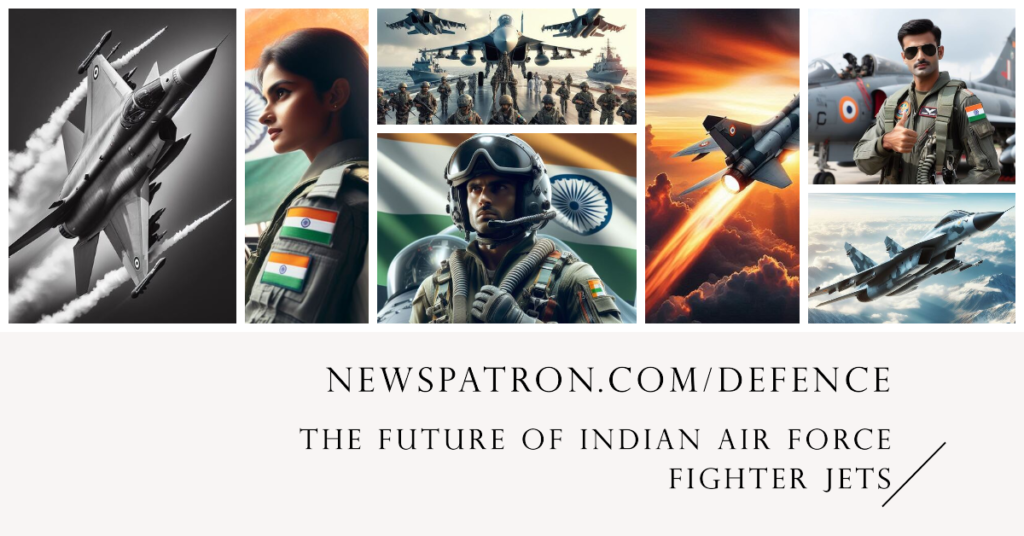

IAF Doubles Down on AMCA Program, Ditches Russian FGFA
Hey there, aviation aficionados and defence enthusiasts! Buckle up, because we’ve got some major updates on the Indian Air Force’s (IAF AMCA Program) fighter jet program. Remember the recent IAF crashes that put a spotlight on the need for modernization? Well, in a surprising turn of events, the IAF has officially scrapped the joint Sukhoi/HAL Fifth Generation Fighter Aircraft (FGFA) program with Russia. Instead, they’re going all-in on the homegrown AMCA (Advanced Medium Combat Aircraft) program.
This isn’t just about planes; it’s about India flexing its aerospace muscles and charting its own course. We’ll break down why the FGFA fell apart, the AMCA’s rising star, and what this means for India’s airpower ambitions. Plus, a little birdie told me there are some awesome drone shots over on our YouTube channel (check out the old channel [DroneMitra on YouTube] for archives and the NewsPatron channel for the latest AI-powered content). Don’t miss out!
Table of Contents
IAF Ditches FGFA: AMCA Takes Centre Stage
Recent suggestions from former IAF Marshal Anil Chopra to revive the FGFA program raised eyebrows, but reliable sources within the defence industry have confirmed that the program is officially dead.
FGFA: A Failed Experiment?
The FGFA, based on Russia’s Su-57 platform, was supposed to be a game-changer. However, technical issues and skyrocketing costs made it a no-go. The aircraft simply didn’t meet the IAF’s high standards for a fifth-generation fighter.
AMCA: India’s Homegrown Hero
With the FGFA out of the picture, the IAF is laser-focused on the AMCA. This homegrown fighter, developed at a fraction of the cost of the FGFA, is expected to meet or exceed the IAF’s operational requirements.
The AMCA represents a major step forward for India’s aerospace industry, showcasing the country’s growing technological capabilities and commitment to self-reliance.
Recommended Product
Casio Vintage A168WA Digital Grey Unisex Watch
🛒 View on Amazon →As an Amazon Associate, we earn from qualifying purchases. Price and availability may vary.
AMCA: A Deep Dive into India’s Next-Gen Fighter
Let’s take a closer look at the AMCA, the aircraft that’s capturing the imagination of India’s defence community.
Design and Capabilities
The AMCA’s stealth features are particularly noteworthy. It’s designed to have a low radar cross-section, making it difficult for enemy radars to detect. This, combined with its advanced sensors and electronic warfare suite, will give it a significant advantage in the air.
Timeline and Challenges
The AMCA is still in the development phase, but the IAF is hoping to have it operational by the early 2030s. Of course, developing a cutting-edge fighter jet is no easy feat. There are bound to be technical challenges and delays along the way.
One potential hurdle is the development of the AMCA’s engines. India is working on its own indigenous engine, but there’s a chance it might have to rely on foreign suppliers if the project faces setbacks.
The Future of the IAF
The AMCA represents a major shift in the IAF’s approach to fighter jet procurement. By focusing on indigenous development, the IAF is not only saving money but also building a more self-reliant defence industry.
If the AMCA lives up to its potential, it could be a game-changer for the IAF. It would provide a much-needed boost to India’s airpower capabilities and help the country maintain its edge in a rapidly evolving security environment.
[Read about Turbulent Skies & but first What are squadrons?]
India’s Fighter Jet Balancing Act: Challenges and Opportunities Beyond AMCA
India’s Airpower Strategy: A Balancing Act
With the FGFA program officially scrapped, India’s airpower strategy is coming into sharper focus.
A Multi-Pronged Approach
The IAF is taking a multi-pronged approach to modernizing its fighter fleet. In addition to the AMCA, India is also procuring Rafale fighters from France and exploring options for additional acquisitions from the United States and Russia.
This diversified approach helps to mitigate risks and ensures that the IAF has a mix of aircraft to meet its various operational needs.
The China Factor
China’s rapidly growing airpower is a major concern for India. The People’s Liberation Army Air Force (PLAAF) is modernizing at a breakneck pace, and India needs to keep up.
The AMCA, with its advanced capabilities, is seen as a key part of India’s response to the China challenge.
Self-Reliance vs. Collaboration
India is striving for self-reliance in defence production, but it’s also open to collaboration with international partners. The AMCA is a prime example of this approach. While the aircraft is being developed indigenously, India is not ruling out the possibility of collaborating with foreign companies on certain aspects of the project.
[Read About India’s Airpower in a Regional Context]
FAQs: Your Burning Questions Answered
Q: Is the FGFA program really dead?
A: Yes, it’s officially a no-go. The IAF has confirmed that there are no plans to revive the program.
Q: When will the AMCA be operational?
A: The IAF is hoping to have the AMCA operational by the early 2030s, but there could be delays.
Q: How does the AMCA compare to the Su-57?
A: It’s difficult to say for sure, as the AMCA is still in development. However, it’s expected to be a more cost-effective and tailored solution for the IAF’s needs.
A Shifting Landscape: IAF’s Fighter Jet Options Beyond AMCA
While the AMCA is undoubtedly the star of India’s future fighter fleet, the IAF isn’t putting all its eggs in one basket. Let’s explore some of the other options on the table:
Rafale: The Proven Performer
The Dassault Rafale is a proven multirole fighter with a stellar reputation. India has already acquired a batch of these aircraft, and additional orders are in the pipeline. The Rafale’s advanced capabilities, including its cutting-edge avionics and weapons systems, make it an asset for the IAF.
Plus, the Rafale’s low operating costs and high mission readiness rate are a major plus for the cash-strapped IAF. It’s a reliable workhorse that can be counted on to get the job done.
American Fighters: F-16 or Super Hornet?
The United States has offered India the F-16 Fighting Falcon and the F/A-18E/F Super Hornet as potential options for its fighter jet needs. Both aircraft are combat-proven and offer a range of capabilities.
The F-16 is a lightweight, single-engine fighter known for its agility and affordability. The Super Hornet, on the other hand, is a twin-engine, carrier-capable fighter with a heavier payload and longer range.
The “Make in India” initiative could be a major factor in India’s decision. Both Lockheed Martin (F-16) and Boeing (Super Hornet) have expressed their willingness to manufacture these aircraft in India, which would provide a significant boost to the country’s defence industry.
Russian Fighters: Old Friends, New Deals?
Russia, India’s longstanding defence partner, remains a potential source for additional fighter jets. The IAF already operates a large fleet of Sukhoi Su-30MKI fighters, and there’s a possibility of acquiring more or upgrading the existing fleet.
Russia is also offering licensed production of its military equipment in India, which could be an attractive option for the IAF. However, recent events like the Russia-Ukraine conflict and India’s growing ties with the West could complicate this relationship.
Indigenous Production: The Long Game
While foreign acquisitions may address India’s immediate needs, indigenous production remains the long-term goal. The AMCA is a major step in this direction, but it’s not the only one.
India is also working on the development of the HAL Tejas, a light combat aircraft that’s already in service with the IAF. The Tejas Mark 2, a more advanced version of the aircraft, is currently under development.
By focusing on indigenous production, India can reduce its reliance on foreign suppliers and build a more self-reliant defence industry.
The Balancing Act: Challenges and Opportunities
India’s airpower strategy is a delicate balancing act. The country needs to address its immediate needs while also investing in long-term capabilities.
Budget Constraints
One of the biggest challenges facing the IAF is budget constraints. Acquiring and maintaining a modern fighter fleet is an expensive proposition, and India’s defence budget is already stretched thin.
The IAF will need to make tough choices about which aircraft to prioritize and how to allocate its resources.
Technological Challenges
Developing indigenous fighter jets like the AMCA and the Tejas Mark 2 is a complex undertaking. There are bound to be technical challenges and delays along the way.
India will need to leverage its growing technological capabilities and collaborate with international partners to overcome these challenges.
Geopolitical Considerations
India’s airpower strategy is also shaped by geopolitical considerations. The country’s relationships with the United States, Russia, and China are all factors that need to be considered.
The IAF needs to strike a balance between its strategic interests and its desire to maintain good relations with its neighbours.
The Future is in the Air
Despite the challenges, the future of the IAF looks bright. With the AMCA on the horizon and a range of other options on the table, India is well-positioned to maintain its airpower dominance in the region.
Conclusion: India Soars High with AMCA and a Diversified Fleet
The IAF’s bold decision to scrap the FGFA program and prioritize the AMCA marks a turning point in India’s airpower strategy. While challenges like budget constraints and technological hurdles remain, the IAF is determined to maintain its air superiority. By embracing indigenous development, forging strategic partnerships, and diversifying its fleet, India is setting a course for a future where its air force soars among the world’s best.
What do you think of the IAF’s new direction? Share your thoughts in the comments below or join the conversation on our YouTube channel!
Join the Discussion
Your opinion matters! We invite you to express your views. Join our forum, engage in thoughtful discussions, share information, and submit your content. Let’s delve into diverse perspectives together.
[bbp-single-topic id=7126]
