





Google Tensor G3 – A New Level of Smartness for Your Smartphone
Smartphones are our constant companions, shaping the way we communicate, work, and experience the world. But what if your smartphone could truly understand you, anticipate your needs, and elevate your experiences beyond what you thought possible? That’s where Google Tensor G3 chip comes in – a revolutionary processor that’s not just powering the new Pixel 8 series, but transforming the very definition of a smartphone. [Read Google Pixel 8a Review: The Budget Flagship Ace]
#Pixel8 #MobileAI #Smartphone #AI #MachineLearning #Photography #Videography #GoogleAssistant
Tensor G3 isn’t just about faster speeds or sharper images; it’s about infusing your phone with a new kind of intelligence. From instant language translation to professional-grade photography enhancements, this chip is leading the charge in mobile AI innovation. It’s the engine behind features that make your phone more helpful, more intuitive, and more tailored to you. [Read the Google Tensor G3 Blog by Google].
Whether you’re a tech enthusiast or simply curious about the future of mobile technology, prepare to be amazed by the possibilities that this tiny chip unlocks. Welcome to the age of the smart smartphone, powered by Google Tensor G3.
The Rise of Google Tensor: A Strategic Vision
Google’s venture into custom chip design is a bold departure from its traditional software-centric approach. The creation of the Tensor G3 chip signifies a strategic shift towards a more integrated hardware and software ecosystem. This allows Google to meticulously control every aspect of the user experience, from the underlying silicon to the algorithms that power its AI-driven features.
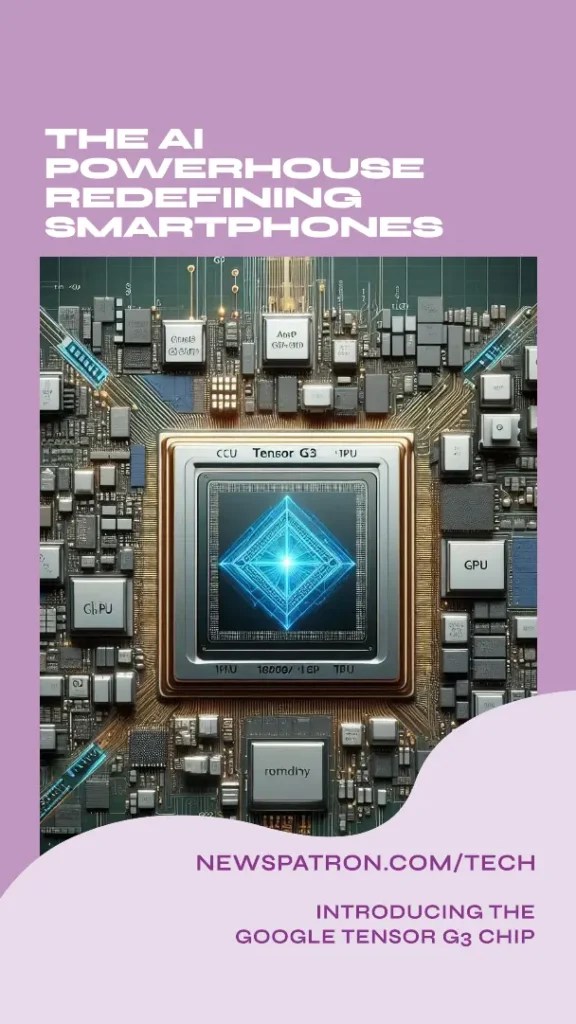

The journey of Tensor chips began with a simple yet powerful vision: to seamlessly weave artificial intelligence into the fabric of mobile devices. This vision was born out of the realization that AI is the future of computing. Google recognized that to deliver truly personalized and intuitive experiences, they needed to create a chip specifically designed to handle the demands of AI workloads.
The Tensor G3 is the culmination of years of research and development, building upon the successes and lessons learned from previous generations of Tensor chips. With each iteration, Google has refined its approach, incorporating feedback from users and developers to create a chip that not only meets but exceeds the expectations of modern smartphone users.
The motivations behind the Tensor G3 are clear:
Recommended Product
Top Electronics Bestsellers on Amazon India
🛒 View on Amazon →As an Amazon Associate, we earn from qualifying purchases. Price and availability may vary.
- Enhanced User Experience: Delivering faster, smoother, and more intuitive interactions.
- AI-Driven Innovation: Pushing the boundaries of what’s possible with AI on mobile devices.
- Differentiation: Creating a unique selling point for Pixel devices by offering features and capabilities not found elsewhere.
- Ecosystem Control: Ensuring seamless integration between hardware and software for optimal performance and security.

Inside the Powerhouse: Unveiling Google Tensor G3 Chip Tensor Technical Prowess
The Google Tensor G3 chip isn’t just another processor; it’s a marvel of modern engineering, meticulously designed to deliver a powerful and efficient mobile experience. At its heart lies a custom architecture, tailored for optimal performance and energy efficiency, built using a cutting-edge 4-nanometer process technology. This advanced manufacturing process allows for a denser concentration of transistors, packing more processing power into a smaller space. The result? A chip that’s not only powerful but also remarkably power-efficient. [Read how to Maximize Your Android Battery: 24/7 Power]
CPU: A Symphony of Power and Efficiency
The brains of the operation, the Tensor G3’s central processing unit (CPU), boasts a unique configuration designed to strike the perfect balance between raw power and energy efficiency. It consists of:
- One Cortex-X3 core running at 2.91GHz: This powerhouse core handles the most demanding tasks, ensuring smooth performance when you need it most.
- Four Cortex-A715 cores at 2.37GHz: These mid-range cores handle everyday tasks efficiently, preserving battery life for when you need it.
- Four Cortex-A510 cores at 1.7GHz: These small, power-sipping cores handle background tasks and less intensive operations, further optimizing battery life.

GPU: A Visual Feast for Your Eyes
The Mali-G715 MP7 graphics processing unit (GPU) is the visual powerhouse of the Tensor G3 chip. Operating at 890MHz, it’s designed to deliver stunning visuals, whether you’re gaming, streaming high-resolution videos, or editing photos. The GPU’s architecture is optimized for both performance and power efficiency, ensuring smooth gameplay and immersive visual experiences without draining your battery.
TPU: Google’s AI Ace in the Hole
Perhaps the most exciting aspect of the Tensor G3 is its Tensor Processing Unit (TPU). This custom-designed component is the secret behind the chip’s AI prowess. The TPU is specifically engineered to accelerate Google’s machine learning models, enabling features like:
- Real-Time Language Translation: Instantly translate text, speech, or images between different languages.
- Advanced Image Recognition: Identify objects, scenes, and even emotions in photos and videos.
- Voice Recognition: Accurately understand and respond to voice commands, even in noisy environments.
- Contextual Awareness: Understand the context of your queries to provide more relevant and helpful responses.
The TPU’s power is evident in the Pixel 8 series’ ability to perform these complex AI tasks seamlessly, making your smartphone experience more intuitive, personalized, and efficient. [Read about Apple Google AI Partnership: The Future of Smartphones]
Specialized Components for a Seamless Experience
The Tensor G3 chip doesn’t stop at the CPU, GPU, and TPU. It incorporates several specialized components that further enhance your smartphone experience:
- Image Signal Processor (ISP) and Imaging Digital Signal Processor (Imaging DSP): These components work together to improve image quality, enabling features like Live HDR for stunning photos and videos.
- LPDDR5X RAM: This fast memory ensures smooth multitasking and quick access to your apps and data.
- Connectivity: The chip supports the latest in connectivity, including 5G, Wi-Fi 7, and Bluetooth 5.3, keeping you connected at lightning-fast speeds.
In conclusion:
The Google Tensor G3 chip is a technological marvel that redefines the possibilities of mobile computing. Its custom architecture, powerful CPU and GPU, and specialized AI accelerator, the TPU, combine to deliver a truly intelligent and efficient smartphone experience. With the Tensor G3 at its heart, the Pixel 8 series is poised to set a new standard for what we can expect from our smartphones. [Read about Semiconductors: The Tiny Tech Driving Our World]
AI at its Core: Tensor G3’s Superpowers
The Google Tensor G3 chip isn’t just about raw processing power; it’s about intelligence. At its core lies a deep integration of artificial intelligence (AI), making it a powerhouse for tasks that were once the domain of supercomputers. This AI prowess is what sets the Tensor G3 apart from its competitors and unlocks a whole new world of possibilities for your smartphone.
Machine Learning Mastery
The Tensor G3’s Tensor Processing Unit (TPU) is a testament to Google’s commitment to machine learning. This specialized hardware is optimized for Google’s cutting-edge AI models, enabling features that were once considered futuristic:
- Real-Time Translation: Imagine having a conversation with someone who speaks a different language, and your phone seamlessly translates their words in real time. The Tensor G3 makes this a reality, breaking down language barriers and making communication more accessible than ever.
- Advanced Image Recognition: Your Pixel 8 can now understand the content of your photos and videos, identifying objects, scenes, and even emotions. This unlocks features like automatic photo organization, intelligent search, and even the ability to create personalized photo albums based on specific people or places.
- Predictive Typing: The Tensor G3’s machine learning models can predict what you’re typing before you even finish the word, making typing faster and more efficient. It learns your writing style and adapts to your preferences, suggesting words and phrases that you’re likely to use.
Natural Language Processing for Seamless Interaction
Beyond machine learning, the Tensor G3 excels at natural language processing (NLP). This enables your phone to understand and respond to human language in a more natural and intuitive way. Here are some ways NLP is enhanced by the Tensor G3:
- Voice Recognition: Google Assistant becomes more accurate and responsive, understanding your voice commands even in noisy environments. You can dictate messages, set reminders, or control your phone with just your voice.
- Contextual Awareness: Your phone can now understand the context of your queries, leading to more relevant and helpful responses. For example, if you ask for directions to a restaurant, it can also suggest nearby parking options or show you reviews.
- Smart Compose: The Tensor G3’s NLP capabilities power features like Smart Compose in Gmail, which suggests phrases and sentences as you type, helping you write emails faster and with fewer errors.
Enhanced Image and Video Processing
The Tensor G3 chip’s AI capabilities extend to image and video processing, where it truly shines:
- Computational Photography: Your Pixel 8 can now take stunning photos with features like Night Sight, which brightens up low-light shots, and Magic Eraser, which removes unwanted objects from your photos. The Tensor G3’s AI algorithms analyze each scene and apply the optimal settings to create beautiful, professional-looking images.
- Video Intelligence: The Tensor G3 can stabilize videos in real time, even when you’re on the move. It can also track moving subjects, ensuring they stay in focus even when they’re moving quickly. And with features like cinematic pan, you can create cinematic-quality videos with your smartphone.
The Future of Mobile AI: Google Tensor’s Vision
The Tensor G3 chip is just the beginning of Google’s vision for mobile AI. As AI technology continues to advance, we can expect even more exciting features and capabilities in future generations of Tensor chips. These advancements could include:
- Augmented Reality (AR): The Tensor G3 could enable more immersive and realistic AR experiences on your phone, from virtual shopping to interactive gaming.
- Context-Aware Computing: Your phone could anticipate your needs based on your location, activity, and other contextual cues, offering personalized recommendations and assistance.
- Health and Wellness: The Tensor G3 could power features that monitor your health, track your fitness, and even detect early signs of illness.
The possibilities are endless, and the Tensor G3 chip is just the first step on this exciting journey.
Real-World Applications: AI in Action
The true magic of the Tensor G3 chip lies not just in its impressive specifications but in how it transforms the everyday smartphone experience. Google has seamlessly integrated AI into various aspects of the Pixel 8 series, making it more intuitive, helpful, and personalized than ever before. Let’s explore some of the real-world applications where the Tensor G3’s AI capabilities shine. [Read about Emo AI: Revolutionizing Animation]
Google Assistant: Your Ever-Present Helper
The Tensor G3 chip takes Google Assistant to new heights, making it even more responsive, helpful, and proactive. With its advanced natural language processing capabilities, the chip enables Google Assistant to understand complex queries and respond with more accurate and relevant information.
Imagine this: You’re planning a trip to a new city. You simply ask your Pixel 8, “What are some fun things to do in [city name]?” Google Assistant, powered by Tensor G3, understands your query and promptly suggests a variety of activities, from visiting popular landmarks to trying local cuisine. It can even factor in your interests and preferences to personalize the suggestions.
The Tensor G3 also enhances Google Assistant’s proactive capabilities. It learns your routines and habits, anticipating your needs and offering helpful suggestions before you even ask. For example, if you typically order coffee on your way to work, Google Assistant might proactively remind you to place your order as you’re getting ready to leave. [Read about Android AI: Your Phone Gets Smarter]
Improving Accessibility for All
Google has always been committed to making technology accessible to everyone, and the Tensor G3 chip plays a crucial role in this mission. Its AI-powered features like Live Caption and Screen Reading are designed to empower users with disabilities and make their smartphone experience more inclusive.
- Live Caption: Tensor G3’s real-time audio transcription capabilities make Live Caption more accurate and responsive than ever. This feature automatically generates captions for videos, podcasts, and even phone calls, making them accessible to those who are deaf or hard of hearing.
- Screen Reading: The Tensor G3 chip enhances the accuracy and naturalness of the Screen Reading feature, which reads out text from the screen for users with visual impairments. This makes it easier for them to navigate their phones and access information.
By leveraging the power of AI, Google is breaking down barriers and creating a more inclusive smartphone experience for all. [Read about Chat with RTX: Create Your Own AI Chatbot]
Transforming Photography with AI
The Tensor G3 chip is a game-changer for mobile photography. Its advanced image processing capabilities enable a range of features that were once reserved for professional cameras and editing software.
- Magic Eraser: This revolutionary feature lets you remove unwanted objects or people from your photos with a simple tap. The Tensor G3’s AI algorithms intelligently fill in the gaps, making it look like the unwanted elements were never there.
- Photo Unblur: Accidentally captured a blurry photo? The Tensor G3 can now sharpen and de-blur images, even those taken years ago, thanks to its advanced machine learning algorithms.
- Best Take: This feature helps you capture the perfect group photo by analyzing multiple shots and suggesting the best one based on factors like facial expressions, poses, and lighting.
These are just a few examples of how the Tensor G3 chip is transforming smartphone photography, putting professional-grade editing tools in the palm of your hand.
Clearer Calls and Smarter Call Screening
The Tensor G3 chip doesn’t just enhance the visual experience; it also improves the way you communicate.
- Clear Calling: This feature uses AI to filter out background noise during phone calls, ensuring crystal-clear conversations even in noisy environments. Whether you’re in a bustling cafe or on a crowded street, Clear Calling ensures you can hear and be heard without distraction.
- Call Screen: With the Tensor G3 chip, Google Assistant can now screen calls more effectively. It can identify spam calls, transcribe voicemails in real time, and even ask callers for more information before you decide whether to answer. This puts you in control of your calls, saving you time and protecting you from unwanted interruptions.
Pixel 8 Pro: A Video Powerhouse Fueled by Tensor G3
The Google Pixel 8 Pro isn’t just a smartphone; it’s a pocket-sized film studio, thanks to the video capabilities unlocked by the Tensor G3 chip. This powerful combination of hardware and software delivers an exceptional video recording experience that rivals, and in some cases surpasses, dedicated cameras.
4K Video at 60 fps: Smooth, Cinematic Footage
The Pixel 8 Pro can capture stunning 4K video at up to 60 frames per second (fps). This high frame rate ensures smooth, cinematic footage that’s perfect for capturing fast-paced action or creating slow-motion effects. Whether you’re filming your child’s soccer game or documenting your travels, the Pixel 8 Pro’s 4K 60fps recording capabilities ensure you capture every detail in breathtaking clarity.
HDR and Cinematic Modes: A World of Creative Possibilities
But the Pixel 8 Pro doesn’t stop at high resolution and frame rates. It also offers a range of video modes that empower you to express your creativity:
- 10-bit HDR Video: Capture videos with a wider range of colors and greater detail in both bright and dark areas. This results in more realistic and visually stunning footage that pops off the screen.
- Cinematic Blur: Add a touch of Hollywood magic to your videos with cinematic blur, which creates a shallow depth of field effect, blurring the background and focusing on your subject.
- Cinematic Pan: This mode adds a smooth, cinematic panning effect to your videos, giving them a professional look and feel.
[Read about the Free Video Editing Software DaVinci Resolve 18.6.5: Upgrade Now for FREE Power]
Video Boost: Enhancing Every Frame with AI
One of the most impressive features of the Pixel 8 Pro’s video capabilities is Video Boost. This AI-powered feature enhances the quality of your videos by applying Google’s advanced image processing algorithms to every frame. By harnessing the power of Google’s cloud infrastructure, Video Boost can deliver results that would be impossible on the device alone.
Here’s how Video Boost elevates your videos:
- Improved Dynamic Range: Your videos will have more detail in both the brightest and darkest areas, resulting in a more balanced and visually appealing image.
- Vivid Colors: Video Boost enhances the colors in your videos, making them more vibrant and lifelike.
- Reduced Noise: Even in low-light conditions, Video Boost can reduce noise and graininess, ensuring your videos look clean and professional.
- Stabilization: Video Boost also helps to stabilize your footage, reducing camera shake and resulting in smoother, more cinematic videos.
Night Sight Video: Illuminating the Dark
The Pixel 8 Pro’s Night Sight Video feature is another example of how the Tensor G3 chip’s AI capabilities are transforming smartphone videography. By intelligently brightening and enhancing low-light footage, Night Sight Video lets you capture clear and detailed videos even in challenging lighting conditions.
Whether you’re filming a concert, a nighttime cityscape, or simply trying to capture a memorable moment in a dimly lit restaurant, Night Sight Video ensures your videos are well-lit and visually appealing.
Slow-Motion and Timelapse: Capturing Moments in New Ways
The Pixel 8 Pro offers a variety of video recording modes to help you capture moments in unique and creative ways:
- Slow-Motion Video: Capture fast-moving action in stunning detail with slow-motion video at up to 240 fps.
- Timelapse: Condense hours of footage into a few seconds of captivating video with timelapse mode. The Pixel 8 Pro even offers a special astrophotography timelapse mode for capturing the night sky.
Video Showdown: Pixel 8 Pro vs. Competitors
The Pixel 8 Pro’s video capabilities have positioned it as a formidable contender in the flagship smartphone market. But how does it stack up against other heavyweights like the Samsung Galaxy S23 Ultra and the iPhone 14 Pro? Let’s dive into a head-to-head comparison.
Pixel 8 Pro vs. Samsung Galaxy S23 Ultra: A Battle of Titans
Both the Pixel 8 Pro and the Galaxy S23 Ultra are equipped with impressive hardware and software for video recording. However, each phone has its own unique strengths and weaknesses:
- Resolution and Frame Rate: Both phones can capture stunning 4K video at 60 fps, providing users with smooth, high-resolution footage. However, the S23 Ultra offers more flexibility with 8K recording at 24 fps, catering to users who require even higher resolutions.
- Low-Light Performance: The Pixel 8 Pro, with its Night Sight Video and improved sensor, generally outperforms the S23 Ultra in low-light conditions. This makes it a better choice for shooting videos in dimly lit environments.
- Zoom Capabilities: The Galaxy S23 Ultra takes the lead in zoom capabilities, offering a 10x optical zoom and a powerful 100x digital zoom. While the Pixel 8 Pro has a respectable 5x optical zoom, it can’t match the S23 Ultra’s reach.
- AI-Driven Features: Both phones leverage AI to enhance video recording. The Pixel 8 Pro’s Video Boost applies Google’s HDR+ technology and cloud processing to improve dynamic range, colors, and details. The S23 Ultra also uses AI for features like object tracking and scene optimization.
- Stabilization: Both phones offer excellent video stabilization, ensuring smooth footage even in challenging conditions. However, the Pixel 8 Pro’s Video Boost further enhances stabilization by applying additional processing in the cloud.
Ultimately, the choice between the Pixel 8 Pro and the Galaxy S23 Ultra comes down to personal preference and specific needs. If low-light performance and AI-driven video enhancements are your priorities, the Pixel 8 Pro might be the better choice. However, if you need the flexibility of 8K recording and powerful zoom capabilities, the Galaxy S23 Ultra could be the way to go.
Pixel 8 Pro vs. iPhone 14 Pro: A Clash of Ecosystems
The Pixel 8 Pro and the iPhone 14 Pro represent two different ecosystems, each with its own loyal following. When it comes to video recording, both phones excel, but they also have distinct characteristics:
- Video Quality: Both phones can capture stunning 4K video at 60 fps with excellent dynamic range and detail. However, the iPhone 14 Pro’s ProRes format offers a higher level of quality for professional use, with less compression and more flexibility in post-production.
- Stabilization: Both phones offer advanced stabilization technologies. The Pixel 8 Pro’s Video Boost leverages AI and cloud processing for smoother and more refined footage, while the iPhone 14 Pro relies on sensor-shift optical image stabilization and software algorithms.
- Cinematic Modes: The iPhone 14 Pro’s Cinematic mode, which simulates a shallow depth of field effect, is a unique feature that sets it apart from the Pixel 8 Pro. However, the Pixel 8 Pro’s Cinematic Pan mode offers a similar cinematic effect with smooth panning shots.
- AI Features: The Pixel 8 Pro’s Audio Magic Eraser is a unique feature that uses AI to remove unwanted background noise from videos. The iPhone 14 Pro also uses AI for features like Cinematic mode and subject tracking.
- Ecosystem Integration: The Pixel 8 Pro integrates seamlessly with Google’s ecosystem, offering features like automatic video backups to Google Photos and seamless integration with other Google apps. The iPhone 14 Pro, on the other hand, is deeply integrated with Apple’s ecosystem, offering easy sharing and editing options within the Apple ecosystem.
Choosing between the Pixel 8 Pro and the iPhone 14 Pro is a matter of personal preference and the ecosystem you prefer. If you prioritize AI-driven features and Google’s ecosystem integration, the Pixel 8 Pro might be the right choice for you. However, if you need the highest level of video quality and prefer Apple’s ecosystem, the iPhone 14 Pro could be a better fit.
The Future of Mobile AI: Google Tensor’s Vision
The Tensor G3 chip isn’t just a technological marvel of the present; it’s a glimpse into the future of mobile AI. Google’s vision for Tensor goes beyond just improving existing features. It’s about creating a mobile experience that seamlessly integrates AI into every aspect of our lives, making our smartphones smarter, more intuitive, and more capable than ever before.
Potential Future Developments and Applications
While the current capabilities of the Tensor G3 chip are impressive, they merely scratch the surface of what’s possible. Google is constantly pushing the boundaries of AI research and development, and we can expect to see even more exciting advancements in future generations of Tensor chips.
Here are some potential areas where we could see significant breakthroughs:
- Enhanced Natural Language Understanding: Future Tensor chips could enable even more natural and sophisticated conversations with Google Assistant, understanding nuanced language and complex requests.[Read about Google Gemini: The Ultimate Guide to the Most Advanced AI Model Ever] [Watch a Short about Google Gemini on [Dronemitra] or a Check a Playlist on Newspatron YouTube Channel]
- Advanced Image and Video Processing: We could see even more powerful computational photography and videography tools, with features like real-time object removal, enhanced super-resolution zoom, and automated video editing.
- Context-Aware Computing: Tensor chips could evolve to anticipate our needs based on our location, activity, and other contextual cues. Imagine your phone automatically adjusting settings based on whether you’re at home, at work, or on the go.
- Health and Wellness: Google could leverage the Tensor chip’s AI capabilities to develop health-focused features, such as personalized fitness recommendations, sleep tracking, and even early detection of health issues.
- Augmented Reality (AR): The Tensor chip could power more immersive and interactive AR experiences on our smartphones, from virtual shopping to educational tools to games.
The Impact of Tensor G3 on the Broader Tech Industry
The Tensor G3 chip isn’t just transforming the smartphone experience; it’s also having a ripple effect on the broader tech industry. By demonstrating the power and potential of AI in mobile devices, Google is inspiring other companies to invest in AI research and development.
This could lead to a new wave of AI-powered applications and services that were previously impossible on mobile devices. It could also spark a race to create more powerful and efficient AI chips, driving innovation and pushing the limits of what’s possible in the world of mobile technology.
Conclusion
The Google Tensor G3 chip represents a turning point in mobile technology. It’s not just a faster processor or a better camera; it’s a leap forward in artificial intelligence that’s transforming the way we interact with our smartphones. From enhancing everyday tasks to enabling new experiences, the Tensor G3 is proving that the future of mobile is intelligent, personalized, and deeply integrated with AI.
As Google continues to innovate and push the boundaries of what’s possible, we can expect the Tensor chip to play an increasingly important role in shaping the future of mobile technology. With its focus on AI, Google is not only improving our smartphones today but also paving the way for a more intelligent and connected future.
