



By the NewsPatron Editorial Desk
“You can’t fill from an empty cup.” It’s an old proverb, but let’s modernize it for 2026: You can’t keep sending money to a bank account that doesn’t exist.
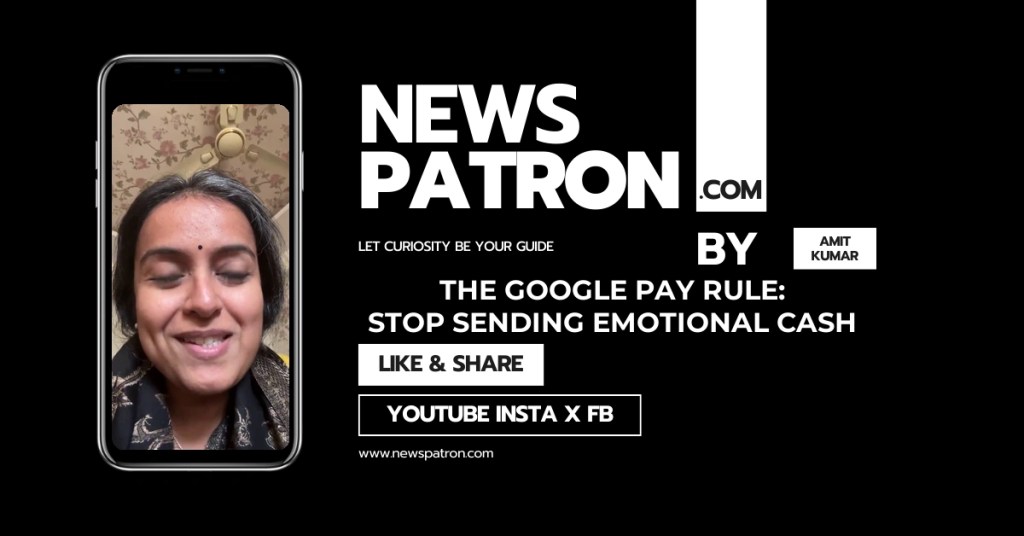
Ever feel like you are pouring your heart, soul, and energy into a connection that just… buffers? You are not alone. A viral video has surfaced that explains this complex emotional dilemma with a metaphor so sharp, it cuts through the confusion instantly: The UPI Transaction.
Watch: The Incident Explained
The ₹1 Test: Testing the Connection
Let’s get practical. If you tried to send just ₹1 to a friend on Google Pay and it failed—or they didn’t even acknowledge getting it—would you immediately panic and try sending them ₹10,000? Or ₹1 Lakh?
Absolutely not. You’d stop. You’d check the network. You’d wait for that green tick.
Yet, in love and friendship, we ignore this basic logic. When our small efforts (the “good morning” text, the thoughtful compliment, the listening ear) go unnoticed, instead of pulling back, we double down. We think, “Maybe if I do MORE, they’ll finally value me.” So we send the emotional equivalent of ₹1 Lakh—huge sacrifices, endless forgiveness, and massive compromises.
Here is the hard truth: If they didn’t value the ₹1 effort, they aren’t going to value the ₹1 Lakh sacrifice. They will just assume you have unlimited funds to burn.
(Related Story: The Illusion of Order: Why We Ignore Reality Just Like the Ticketless Travelers on Vande Bharat)
Why We Do It: The “Sunk Cost” Trap
Why do smart people make such bad investments? Psychologists call it the Sunk Cost Fallacy.
It’s that nagging voice whispering, “I’ve already invested three years in this person (or this son-in-law to be); I can’t walk away now.” It is the same psychology that keeps people gambling to “win back” their losses. You throw good energy after bad, hoping to finally hit the jackpot of Reciprocity.
But relationships aren’t slot machines. Unearned rewards are undervalued. If you give 100% while they give 0%, you aren’t being a “supportive partner”—you are training them to be a lazy one.
The “Tech-Savvy” Reality Check: Are You Actually Safe?
Okay, let’s pivot. Maybe you are a relationship guru. Maybe your heart is impenetrable. But are you this careful with your actual money?
In a world of digital relationships and instant payments, we often rush the process. Whether it’s sending money to your son, your future son-in-law, or your partner on the couch, never assume the connection is secure just because you want it to be.
Here are the strict rules for modern financial (and emotional) safety:
- The ₹1 Rule: Never send a large amount directly. Always, always send ₹1 first. Wait for the success message. Do not let your endocrine glands (anxiety or excitement) rush you.
- Force the Verification: If they say, “Oh, I can’t check my bank account right now, just send the rest,” STOP. That is a red flag. Ask them to open the same app. Make them confirm receipt.
- Don’t Trust the “Previous Success”: Just because you sent money successfully yesterday doesn’t mean the server (or the person) is receptive today.
Whether it is a “modern Gen Z situation” or a family obligation, verify the receiver is active before you drain your account.
(Recommended Read: Beyond the Flames: How Courage (and Quick Thinking) Saves Lives)
How to Stop the Transaction: 3 Steps to Recalibrate
So, how do you stop the emotional bank transfer without crashing the system?
1. Stop the Auto-Pay
Stop anticipating their needs. Don’t plan the weekend for a change. See what happens. It’s scary, but necessary.
2. Match Their Currency
If they are giving you “low battery” energy, stop giving them “full charge” effort. Match their investment. If they step up, great. If they fade away, you have your answer.
3. Observe Without Panic
When you pull back, the silence will feel loud. Don’t rush to fill it. Watch their reaction. Do they try to bridge the gap? Or do they just enjoy the free vacation?
The Bottom Line: Relationships are a mutual exchange, not a charity. Before you send that next massive emotional payment, check your transaction history. Did you get a receipt for the last one?

[…] (Read More: The “Google Pay Rule” for Relationships: Why You Should Stop Sending “Emotional Ca…) […]
[…] We recently talked about the “Google Pay Rule”—knowing when to stop sending “emotional cash” to someone who doesn’t acknowledge your value. (Read that story here: The Google Pay Rule for Relationships) […]
[…] (Read the full story in our previous blog: The “Google Pay Rule” for Relationships: Why You Should Stop Sending “Emotional Cash” Withou…) […]
[…] The “Google Pay Rule” for Relationships: Why You Should Stop Sending “Emotional Ca… […]