




Six Hours Late, and Nobody’s Surprised
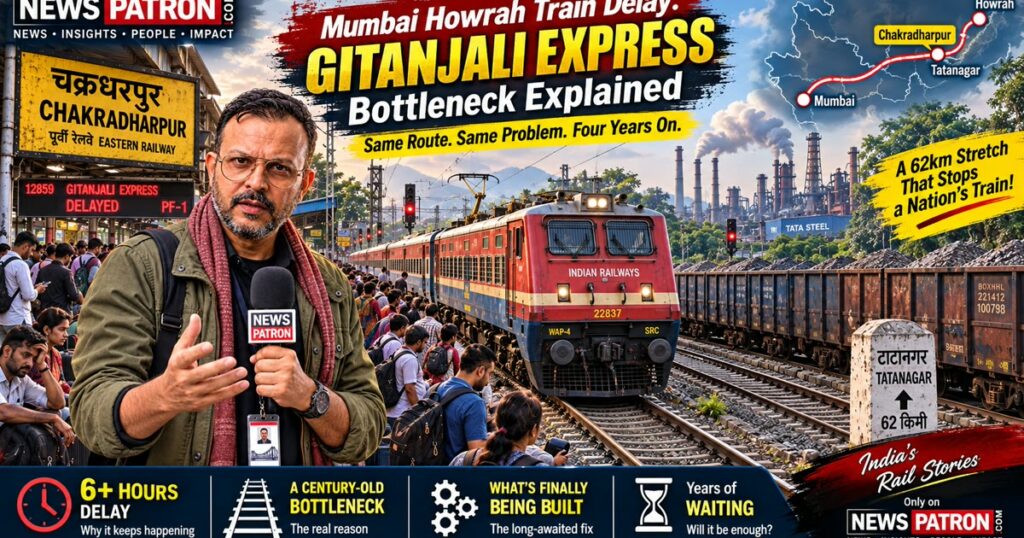
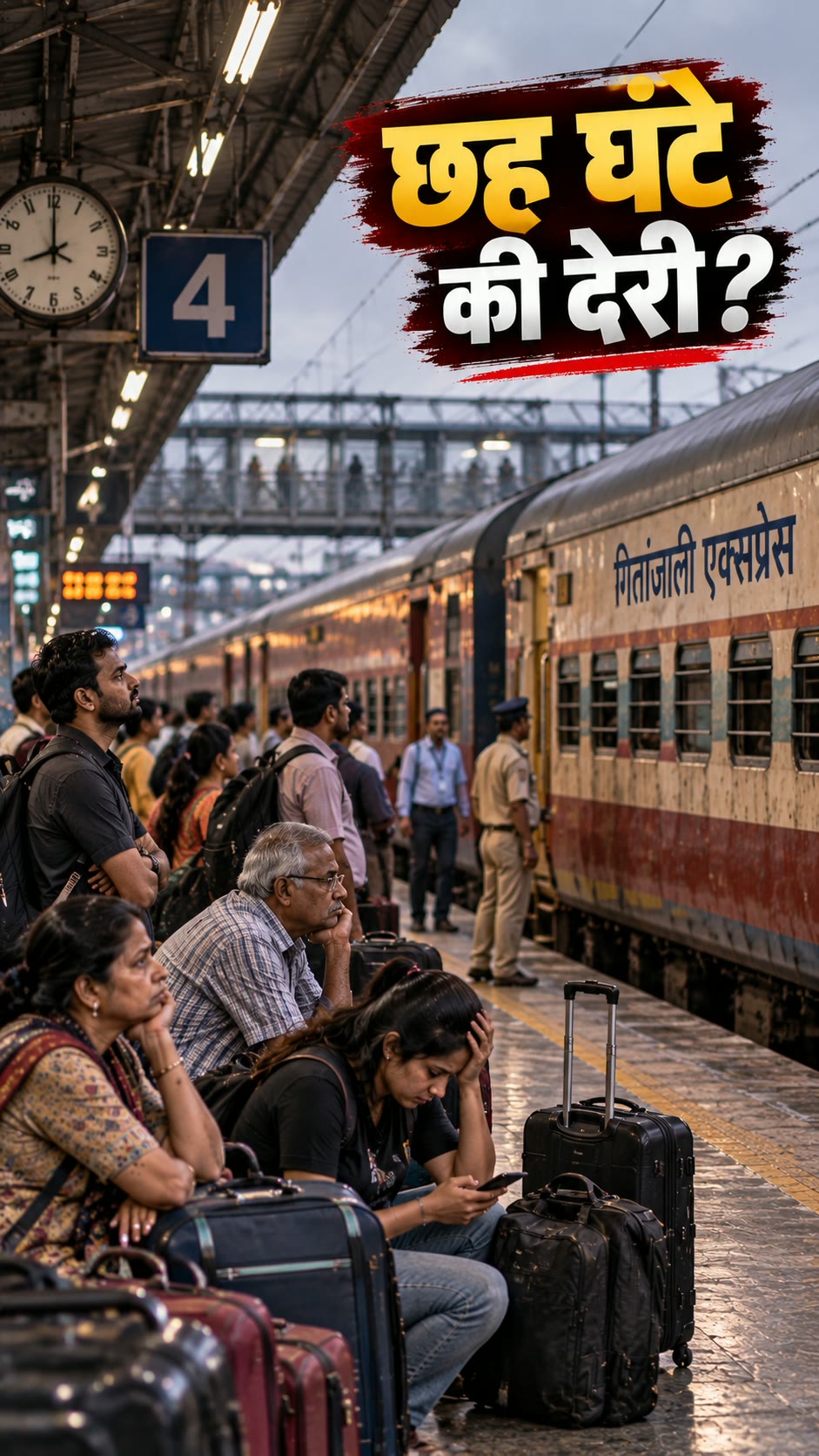
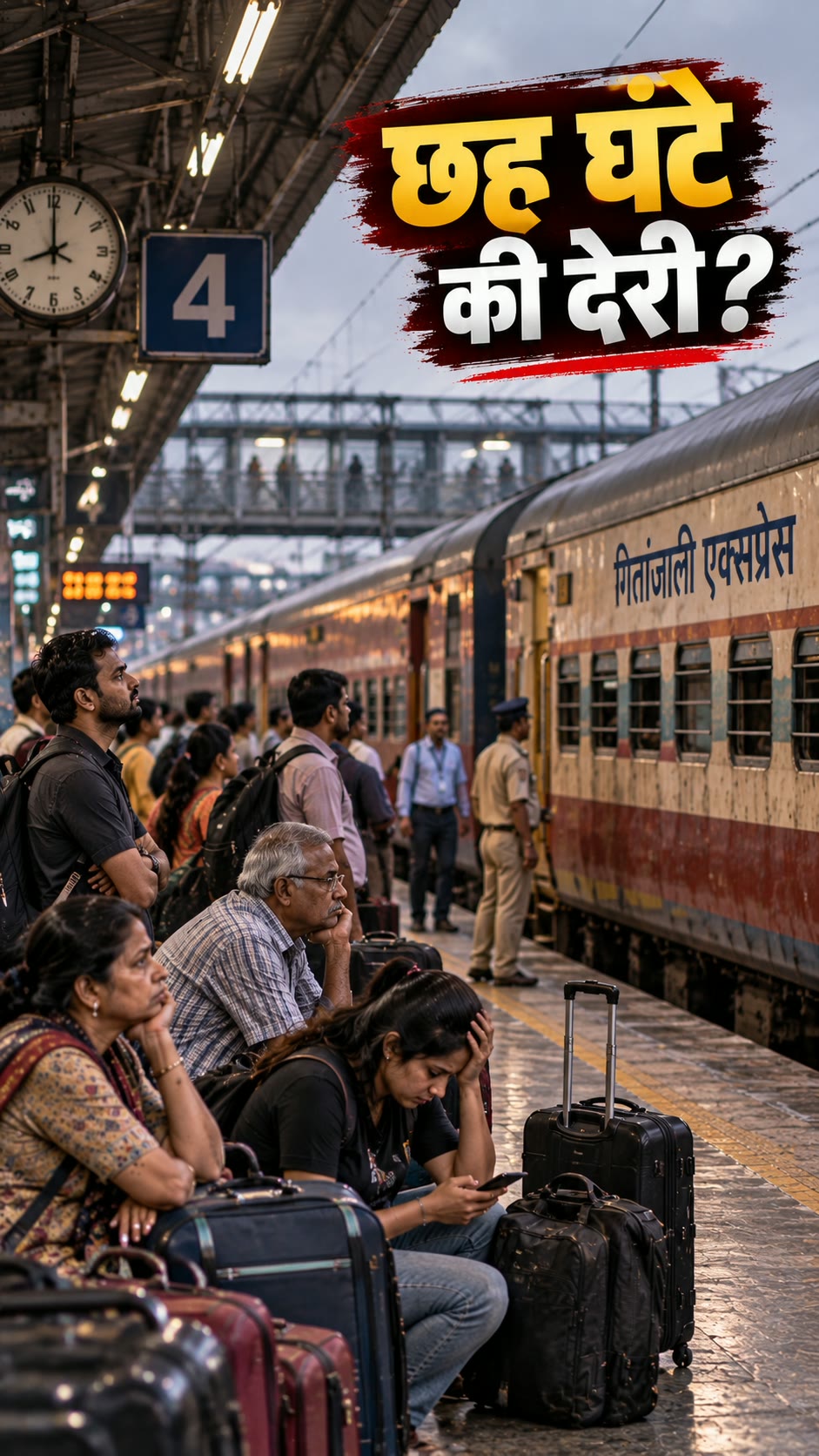
Six hours and fifteen minutes.
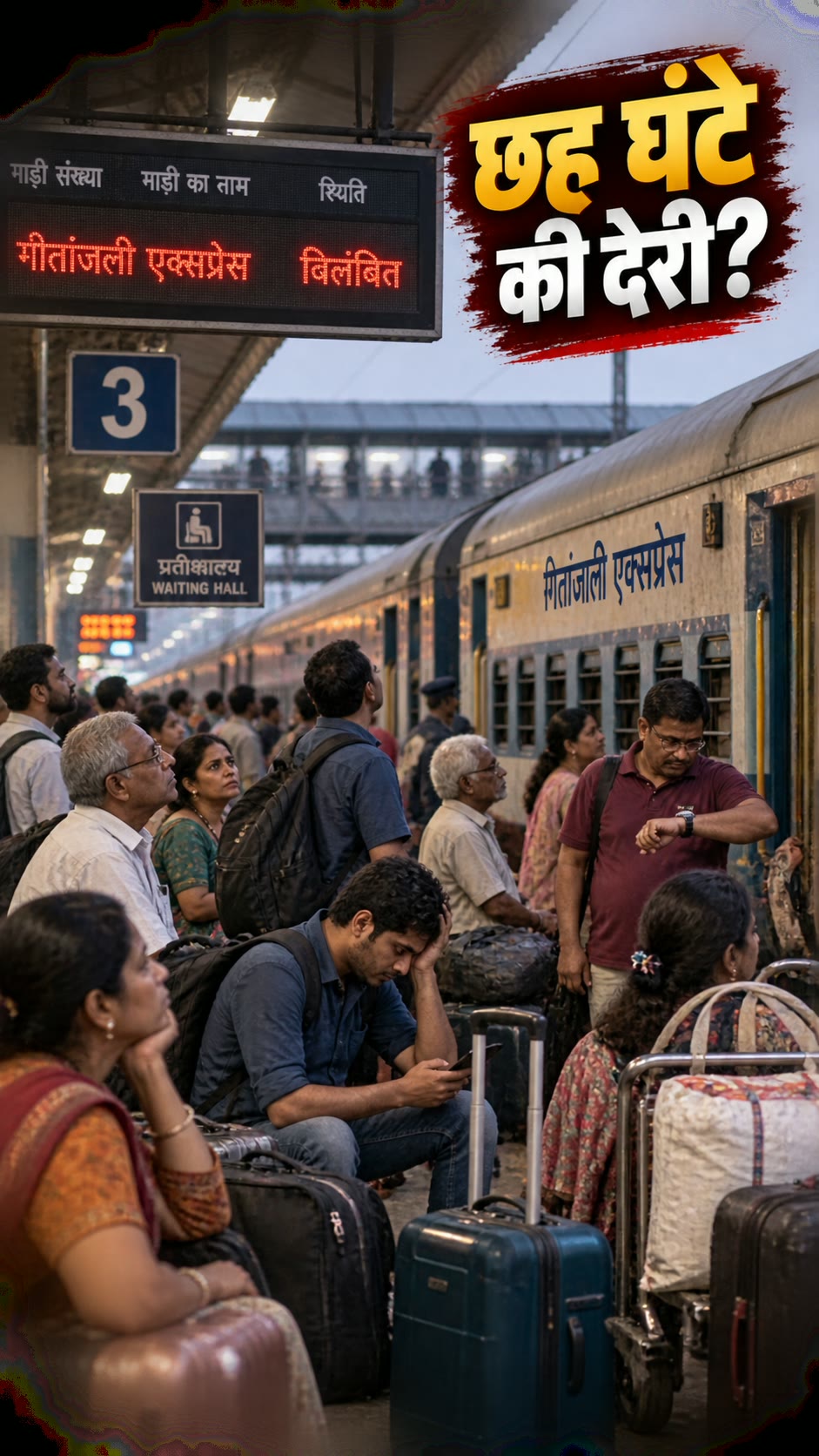
That’s how late the 12859 Gitanjali Express was pulling into Tatanagar on a recent run. Not stuck behind a signal failure. Not held up by a one-off accident. Just late, the way trains on this stretch have been late for the better part of four years.
If you’ve travelled the Mumbai–Howrah main line recently, none of this surprises you. Connections missed. Half-asleep families spread across platform benches at 2 AM. Someone’s father who was supposed to reach a hospital appointment, now stuck somewhere near Chakradharpur watching a coal freighter crawl past on the next track.
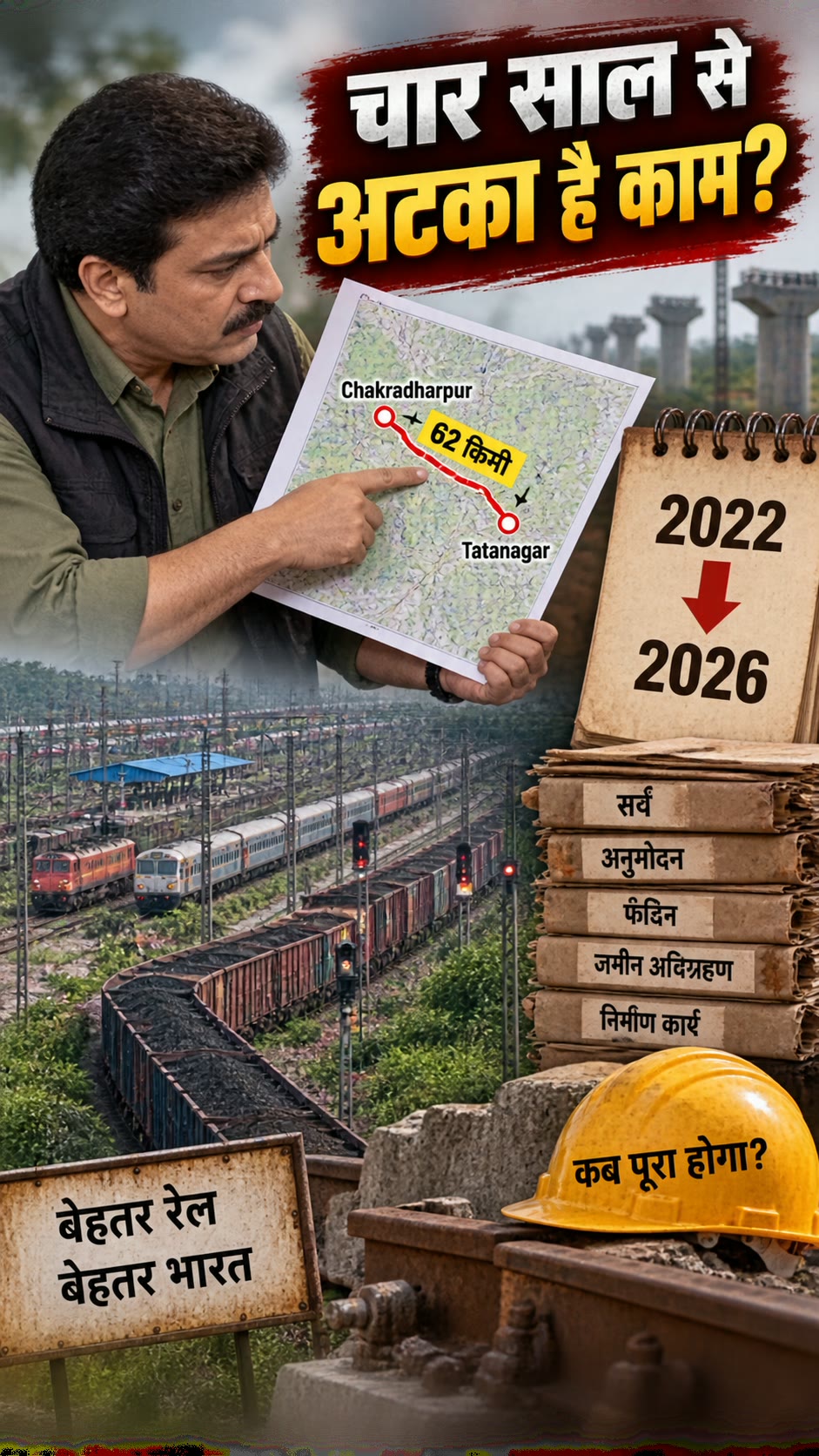
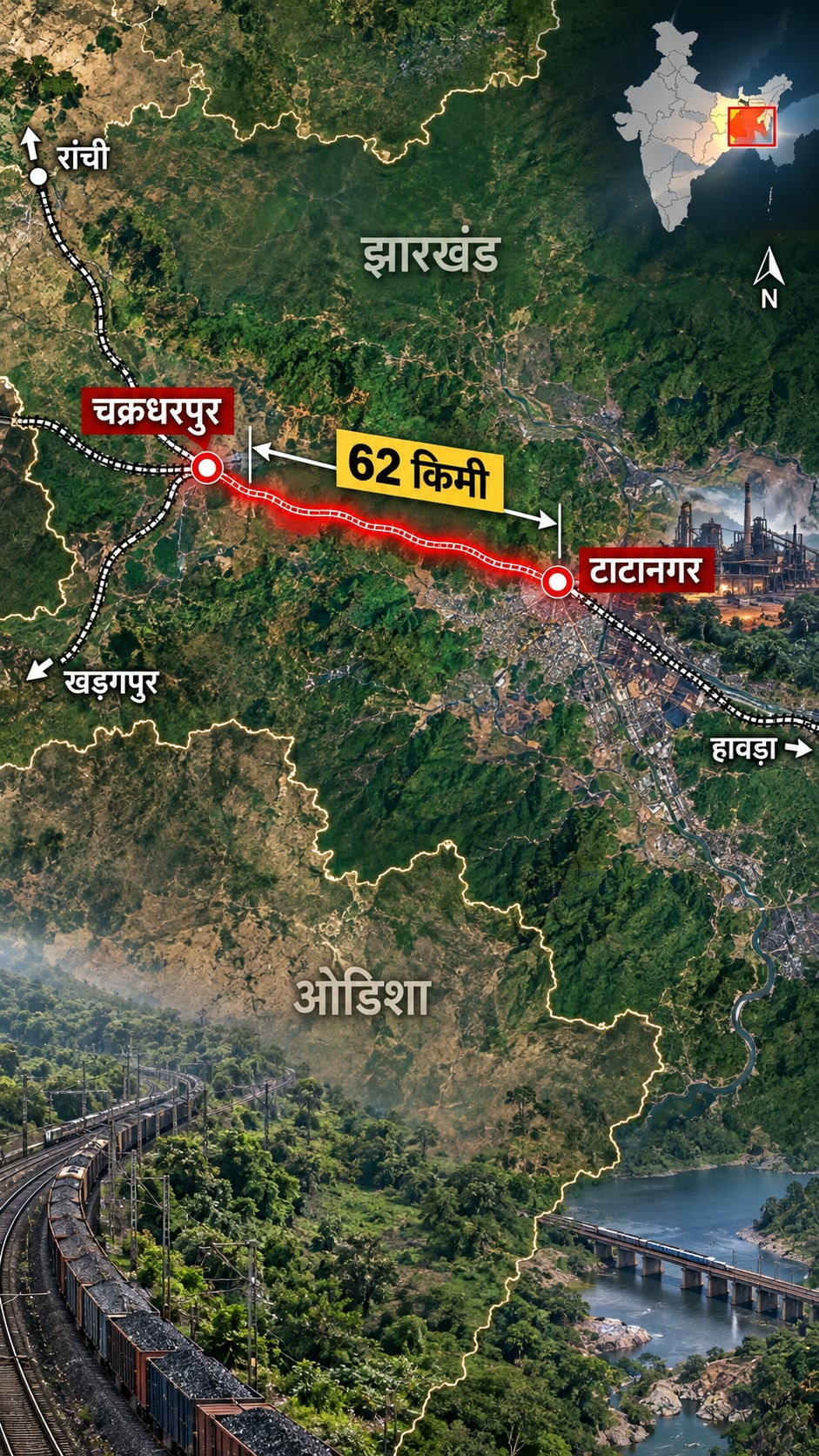
Here’s the part that should bother you more: this isn’t a mystery. Railway officials know exactly where the problem sits — a 62-kilometre stretch between Chakradharpur and Tatanagar that’s been overloaded for years. They’ve named it, studied it, and started building fixes for it. And still, in 2026, passengers are losing six, seven, sometimes ten hours on a single journey.
So the real question isn’t why your train is late. It’s this: if the bottleneck has a name, a location, and a sanctioned fix, why is 2029–30 still the earliest anyone’s promising relief?
This piece digs into the delay numbers, the century-old design flaw underneath them, what’s actually being built to fix it — and, because it’s easy to forget when you’re the one stranded on a platform, the roughly one million people who show up in shifts across this country to keep trains moving at all, sometimes at real personal risk.
Inside the Chakradharpur-Tatanagar Bottleneck
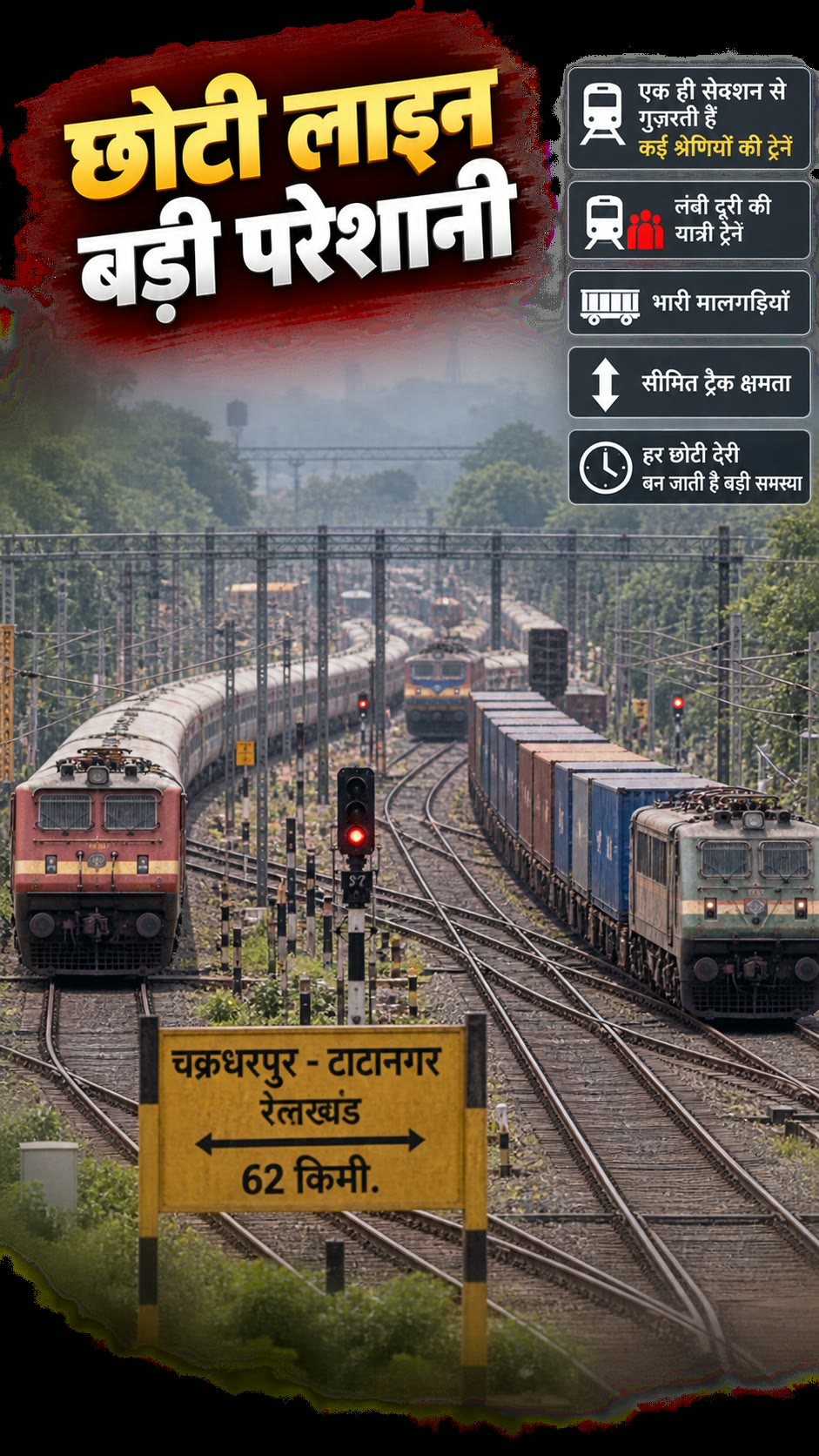
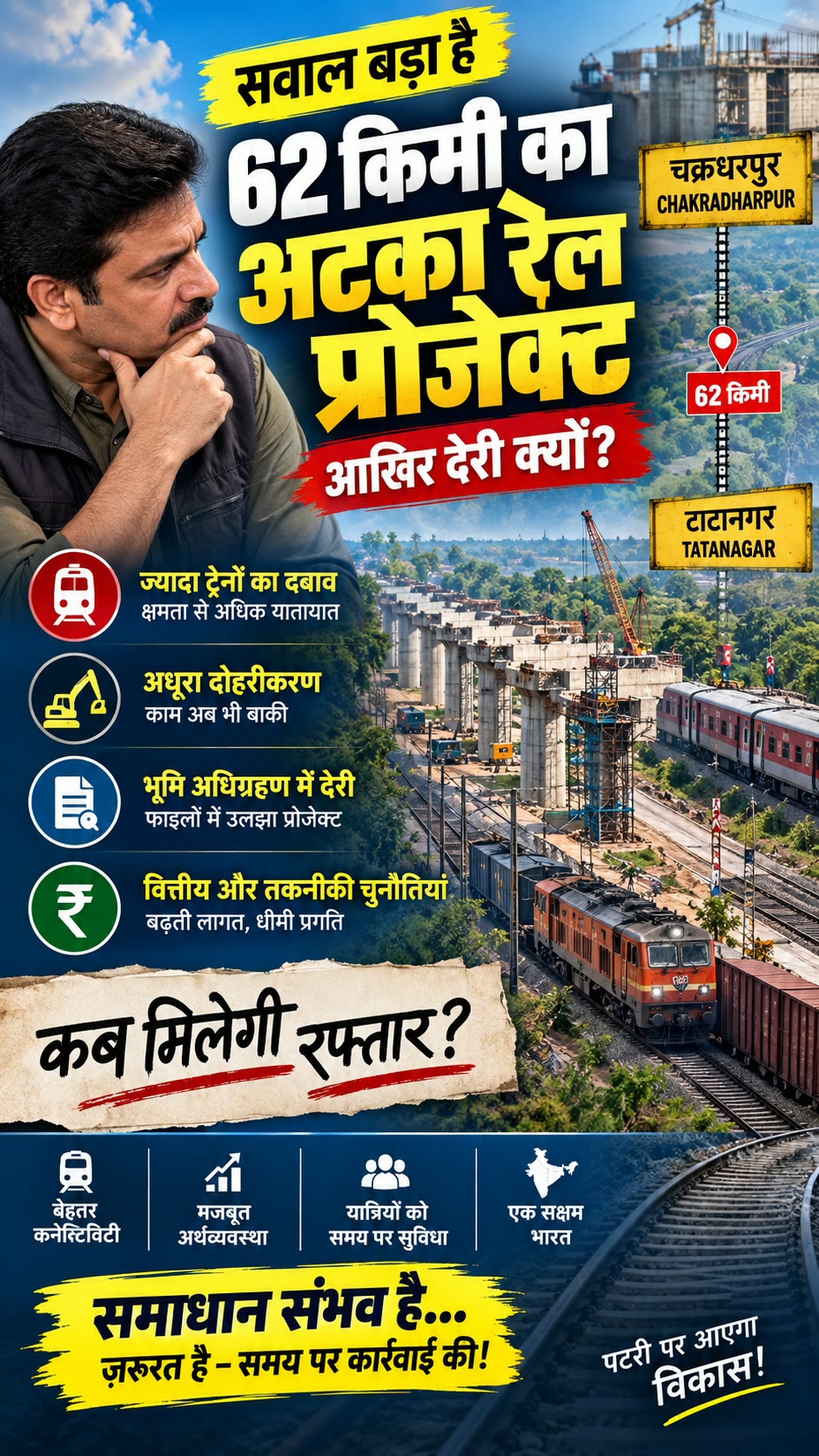
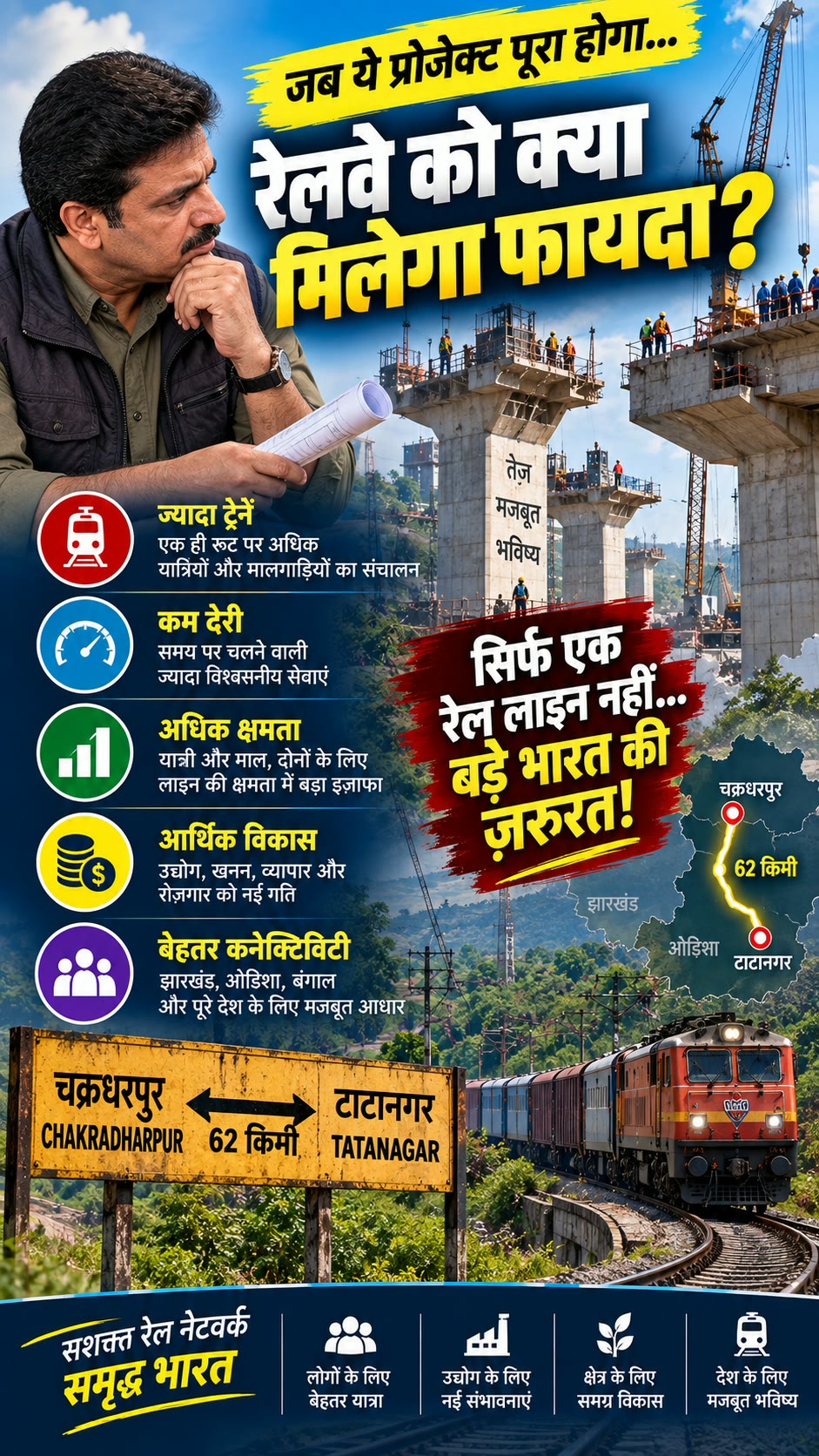
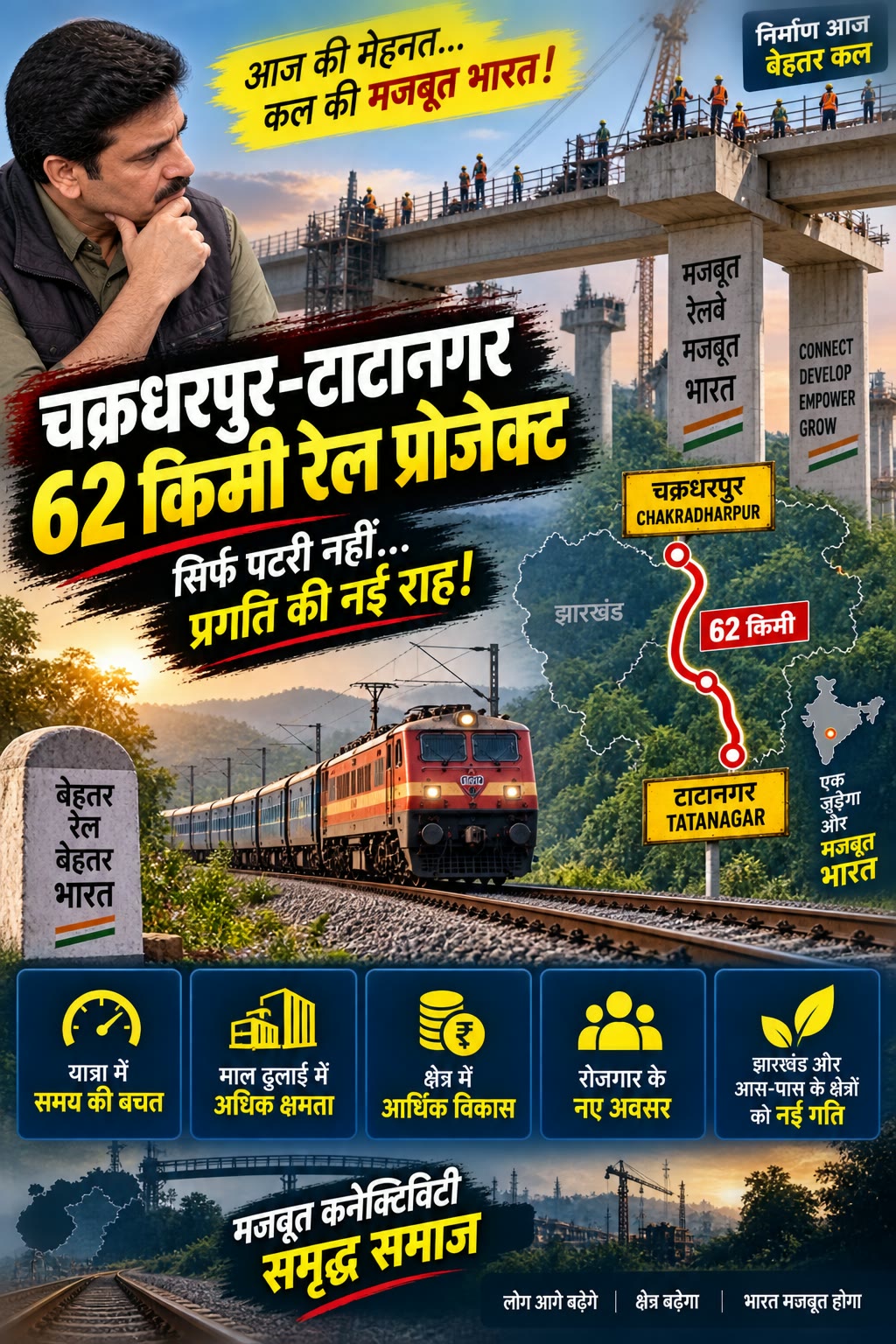
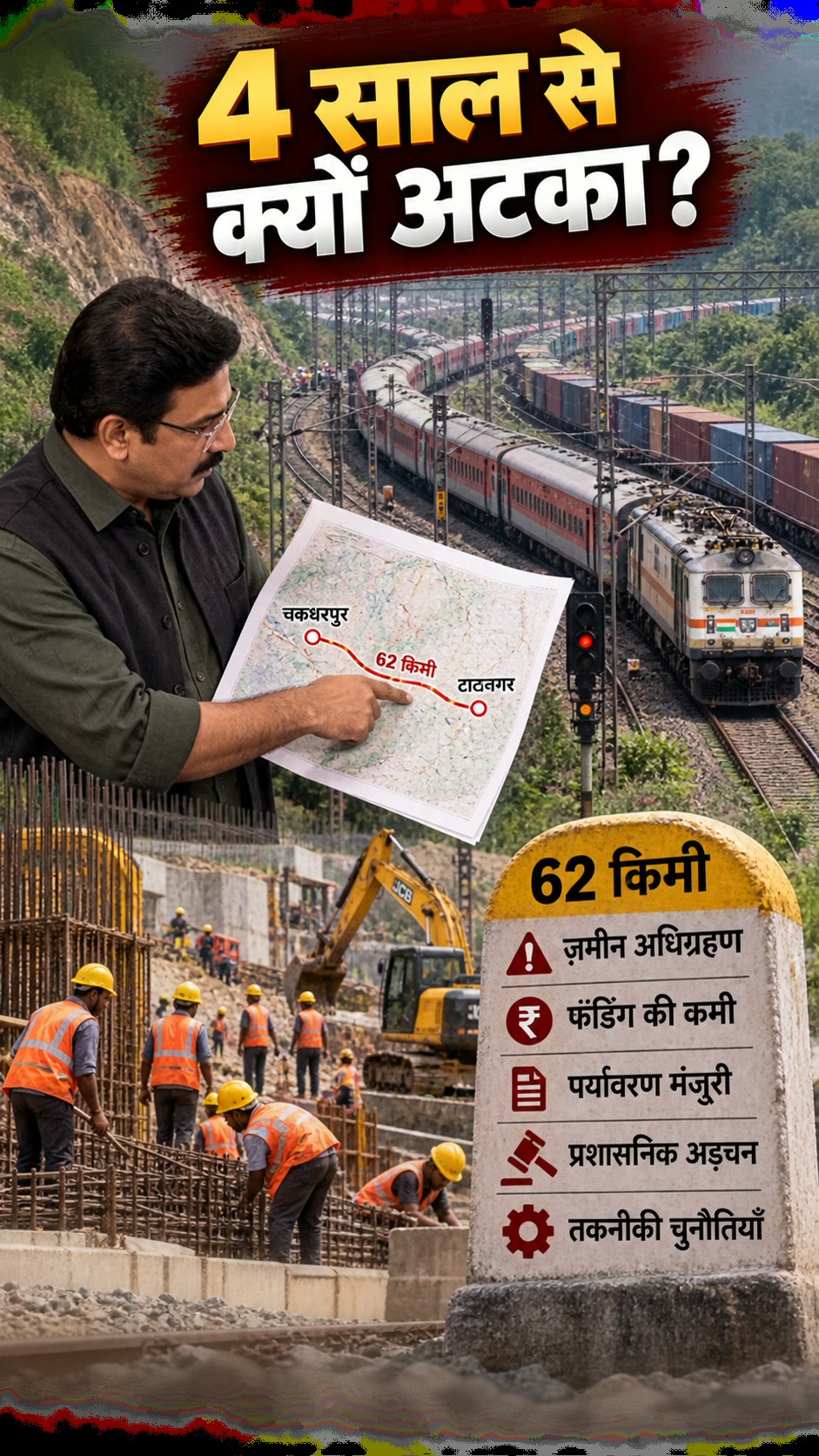
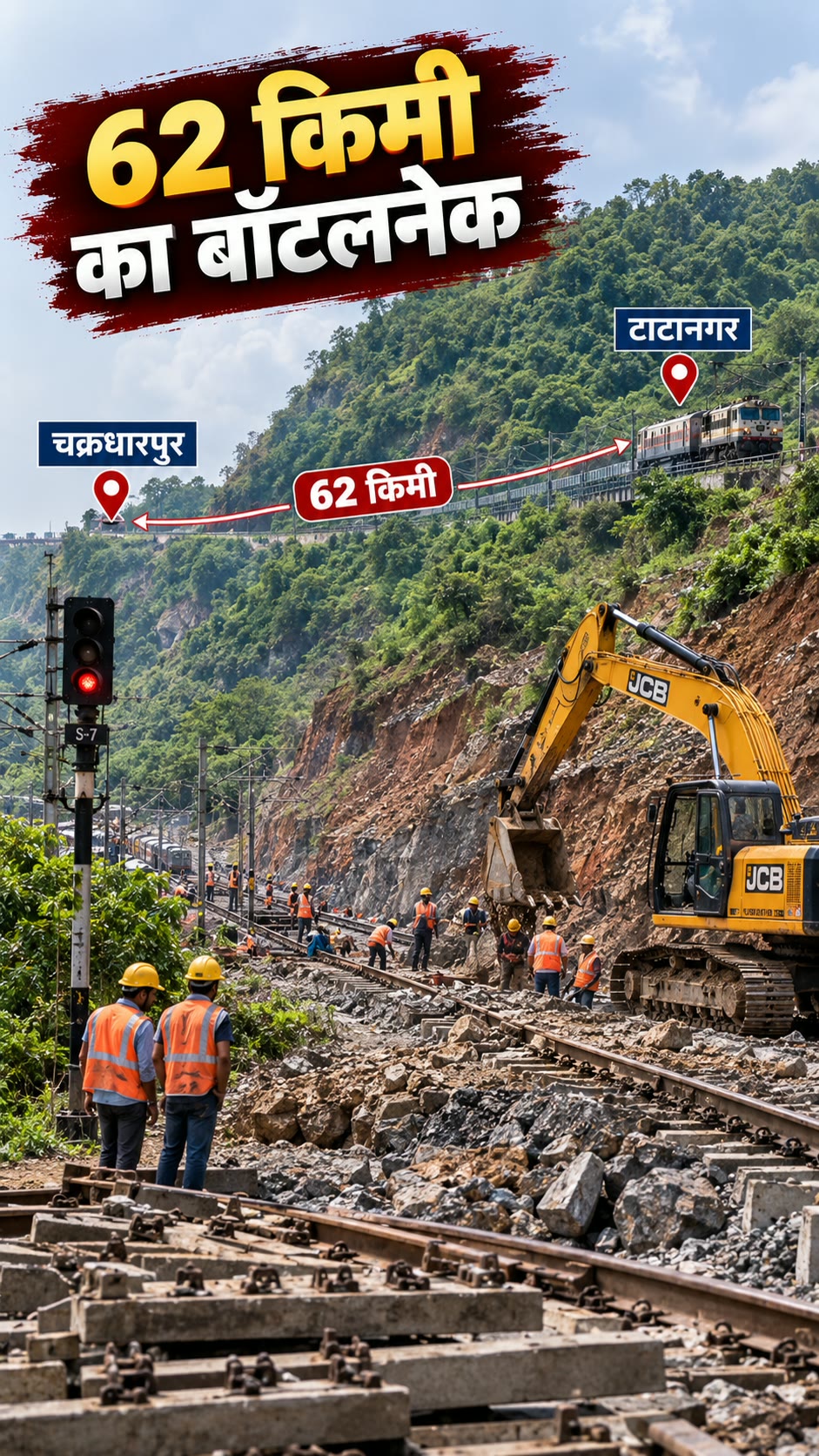
Sixty-two kilometres. On a functioning railway, that’s a 45-minute run. On this stretch of the South Eastern Railway’s Chakradharpur division, it regularly eats three, four, sometimes five hours out of a journey.
The reason is simple to state and hard to fix: this corridor carries two kinds of traffic that don’t mix well — long-distance passenger trains and heavy mineral freight moving iron ore, coal, and finished steel out of Jharkhand and Odisha. More than 170 trains a day share these tracks. There isn’t enough room for both, so one waits for the other. Usually it’s the passenger train that waits.
Even the premium services feel it. The Duronto Express, Vande Bharat, and the Gitanjali Express itself often drop to average speeds of 15 to 25 km/h through this section — walking pace for a train built to run at ten times that. Ordinary express and mail trains fare worse, frequently losing eight to ten hours by the time they clear Tatanagar.
Passenger groups, including the Jharkhand Rail Users Association, have flagged this pattern for years. It’s not a seasonal problem or a one-off breakdown. It’s a structural mismatch between how much traffic the line carries and how much it was ever built to handle — and that history matters more than it might seem.

A Route Built in 1900 for a Different India
The tracks causing today’s trouble weren’t designed for today’s traffic — they weren’t even the first choice of route between these two cities.
The original Bombay–Calcutta rail link opened in March 1870, joining the Great Indian Peninsula Railway and the East Indian Railway at Jabalpur. It worked, but it was long — routed via Allahabad, adding hundreds of kilometres to the journey.
The shorter, more direct line that trains use today came later, built in stages by the Bengal Nagpur Railway. The critical sections through Chakradharpur opened between 1890 and 1891. The full route reached Howrah by 1900. Tatanagar station itself arrived around 1910, purpose-built to serve the newly established Tata Iron and Steel plant at Sakchi.
That’s the detail worth sitting with: Tatanagar wasn’t just a passenger stop. From the start, it was an industrial junction, and the same tracks that carried passengers were always going to carry steel-plant freight too. More than a century later, that basic design hasn’t changed — even though the volume of both passenger and freight traffic has grown many times over.
The corridor was electrified in the early 1960s, one of India’s earlier 25kV AC sections, and folded into South Eastern Railway when it was formed in 1955. But electrification and reorganisation never solved the core issue: two kinds of heavy traffic, one set of tracks, since 1900.
What Indian Railways Says It’s Doing
To be fair to the railways, this isn’t a case of nothing happening. Multiple projects are underway, and some real numbers back that up.
Nationally, punctuality has climbed — from around 73.6% in 2023–24 to roughly 77% in 2024–25, and into the 77–79% range through 2025–26, according to figures presented in Parliament. That improvement comes from tighter digital monitoring through systems like the Integrated Coaching Management System, rolling maintenance blocks, and timetable rationalisation carried out with technical support from IIT Bombay.
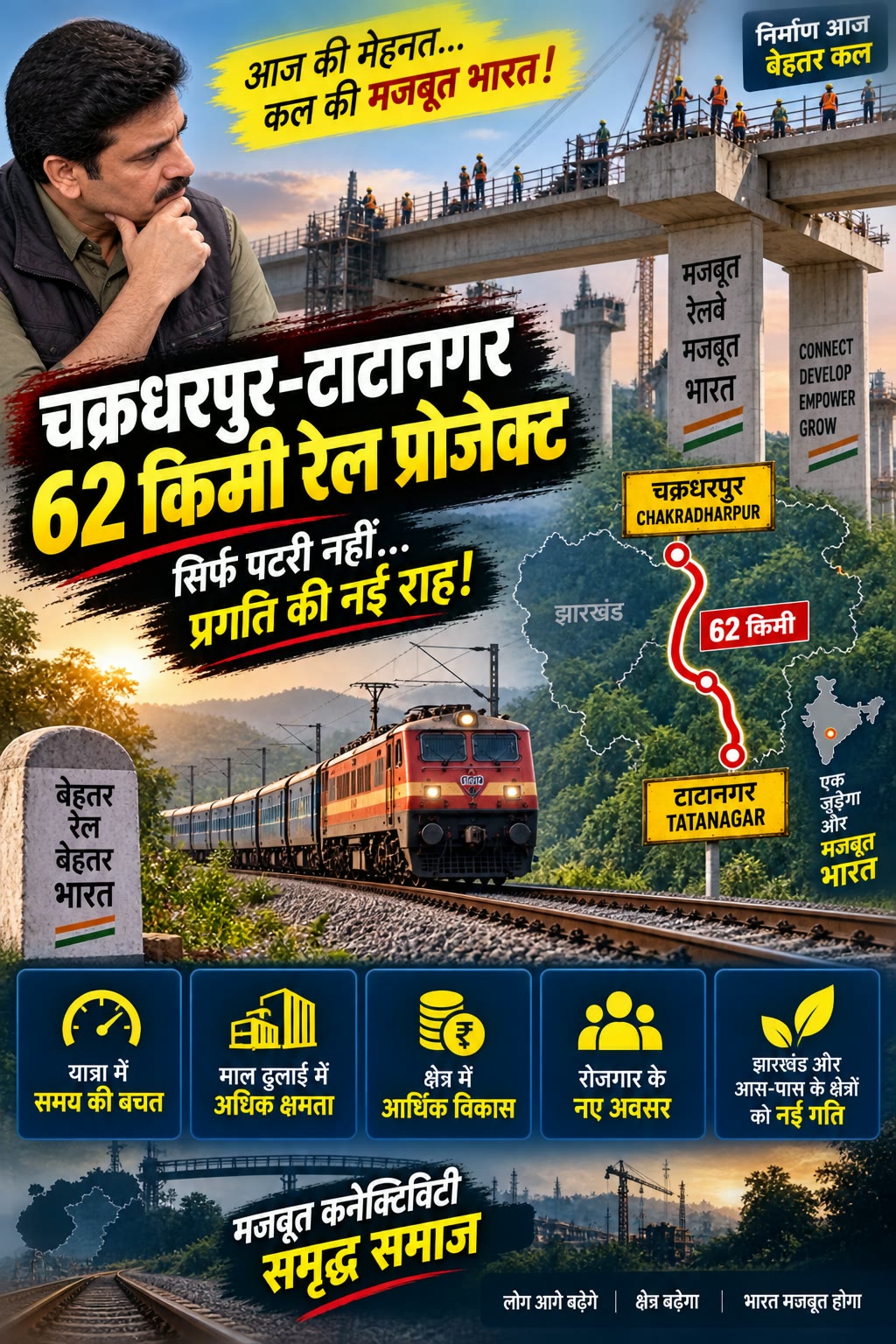
On the Mumbai–Howrah corridor specifically, capacity work is genuinely in progress. A third line between Tatanagar and Adityapur is under construction. Fourth-line work has started on the Asanboni–Bagbera stretch. Plans are finalised for additional third lines on Sini–Chaibasa and Gamharia–Chandil, with longer-term proposals for fifth and sixth lines between Sini and Rajkharsawan.
The biggest recent move came in September 2026, when the Cabinet approved a major multi-tracking package that includes the Kharagpur–Jharsuguda fourth line — a project aimed squarely at easing pressure on this exact high-density corridor. Target completion: 2029–30.
Local officials in the Chakradharpur division have also reported short-term gains after public protests, claiming divisional punctuality rose from as low as 35% to the 65–75% range in certain periods, with individual trains now monitored more closely.
Real progress. Also, still years from finished. And the piece that would actually solve the freight-passenger conflict permanently — a full East–West Dedicated Freight Corridor to divert mineral traffic off this line entirely — remains largely stuck at the proposal and detailed-project-report stage. Existing freight corridors have already helped the Delhi–Howrah and Delhi–Mumbai routes by moving goods trains onto separate tracks. That same relief hasn’t reached Chakradharpur–Tatanagar yet.
The One Million People Keeping This Running
It’s easy, standing on a delayed platform at midnight, to feel like the system doesn’t care whether you get home. That frustration is completely fair. But it’s worth pausing on something most passengers never think about: behind every train, every signal change, every freight rake being held to clear your path, there are roughly a million people working in shifts across this country, in nearly every job profile that exists, at every hour of the day and night, to keep the network moving at all.
Sometimes that job is quietly caring — a station master holding a connection two extra minutes for a family running late, a lineman walking track sections at 3 AM to catch a fault before it becomes a derailment.
Sometimes it’s dangerous in ways passengers rarely see. In one widely discussed incident, a loco pilot on the GT Express survived a violent stone attack while at the controls — injured, and still responsible for the hundreds of passengers behind him. The video account is worth watching if you want to understand what “running the train” actually asks of the person driving it:
And sometimes the job is simply humane, under pressure, in the moment — like the loco pilot who reacted to animals stuck on the tracks, a split-second decision with no easy version of “doing it right”:
None of this excuses a four-year-old bottleneck that officials have known about the whole time. But it’s a mismatch worth naming: the frustration passengers feel toward “the railways” as an abstraction rarely lands on the actual people running the physical system — the ones absorbing risk, fatigue, and, occasionally, real violence, to get a delayed train to its destination at all.
This isn’t only a railways story, either. The same tension — overstretched infrastructure, workers absorbing the gap, passengers absorbing the frustration — shows up across road transport and aviation too. It’s a pattern worth watching for, not just on this one line.
What Actually Happens Next
Here’s the honest verdict: Indian Railways is not standing still on this corridor. Multi-tracking is sanctioned and under construction. National punctuality has genuinely improved. A major new fourth-line project got Cabinet approval in September 2026.
But if you’re boarding the Gitanjali Express next month, none of that helps you yet. The projects that would meaningfully fix Chakradharpur–Tatanagar are targeted for 2029–30 — three to four years out. Until those lines open and freight gets properly separated from passenger traffic, multi-hour delays on this stretch will keep happening.
What you can do in the meantime: track running status aggressively through NTES or similar apps and build in real buffers, especially around Chakradharpur. Use RailMadad — app or 139 — with your PNR and specific delay details; escalations through that channel do get responses. And if you’re a frequent traveller on this line, documenting the pattern and raising it through local representatives adds to a paper trail that’s already reached Parliament once.
The corridor has carried people and freight for over 125 years. Fixing the design flaw at its core was never going to happen overnight — but knowing exactly where the bottleneck is, and exactly what’s being built to relieve it, is at least a real answer, even if it isn’t a fast one.
Figures on punctuality, project timelines, and the September 2026 Cabinet approval are based on publicly available data and media reporting as of the time of writing, and are subject to revision as projects progress.
Follow the Stories Behind the Headlines
For sharp analysis and the stories the headlines miss — Newspatron — Let Curiosity Be Your Guide / ??????, ????? ?? ???. Subscribe on YouTube.
For breaking stories in the time it takes to scroll — ViralNewspatron — ?? ?? ?? ???, ???? ???. Catch it on YouTube.
For the aerial view and the classic long-form drone storytelling — DroneMitra — Your Sky Is Digital, With Drone As a Friend / ?????, ????? ?? ???. Watch on YouTube.
