




? Quick Read: 5-Second Summary
- The Trend: Viral videos are promoting Datura (thorn apple) ash as a cure for respiratory issues, citing ancient Ayurvedic roots.
- The Risk: Public health agencies warn of severe toxicity (hallucinations, coma, death). No official body endorses it for self-medication.
- The Conflict: A clash between “Faith” (sacred plant of Shiva) and “Fact” (anticholinergic poison).
- The Verdict: This is not a space for casual experimentation. Algorithms are amplifying risk faster than doctors can issue warnings.
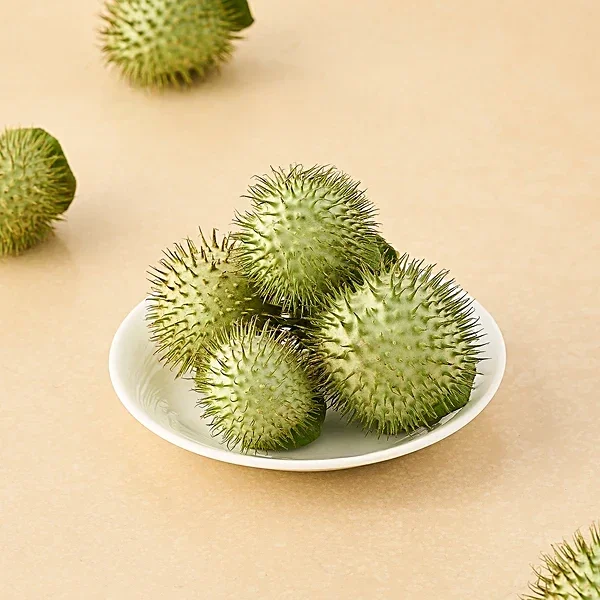
Note: You are most likely to find this fruit growing wild on shrubs while walking in rural areas. However, if you cannot find it, here is a link to source it (strictly to be consumed under medical advice and recommendation only): Buy Datura Fruit Online.
The renewed circulation of claims around Datura—a plant long known for both ritual significance and toxicity—has reopened an old tension: where traditional knowledge, belief systems, and public health intersect in the age of viral media.
While the original video frames the practice as an Ayurvedic, faith-anchored remedy for respiratory conditions, wider public discussion paints a far more cautious picture.
What Official Health Guidance Makes Clear
Public health agencies across multiple countries have consistently issued warnings about Datura species, emphasizing their high toxicity. Medical documentation links exposure to severe outcomes, including hallucinations, cardiac irregularities, respiratory suppression, coma, and, in extreme cases, death.
Crucially, no recognized medical or public health authority has endorsed Datura—in ash form or otherwise—as a treatment for asthma, bronchitis, or lung disease. On the contrary, recorded cases of poisoning, including accidental ingestion through contaminated food sources, dominate official reporting.
In short: the plant’s risks are well-documented; its therapeutic claims are not officially validated.
Sponsored
When Folk Memory Speaks Louder Than Footnotes
If grassroots observers and informal commentators from all corners of public discussion are to be believed, the appeal of such remedies lies less in science and more in storytelling. Recurring themes include:
- Faith in ancestral wisdom passed down through generations.
- Frustration with long-term dependence on pharmaceutical treatments.
- Personal anecdotes describing relief from chronic symptoms.
- A broader cultural revival of “natural” or “forgotten” cures.
These narratives often coexist with an acknowledgment of danger—supporters frequently stress “correct preparation” or “precise dosage,” even while conceding that mistakes can be disastrous.
Where Doubt and Belief Collide
Public responses broadly fall into two camps. Skeptical voices emphasize that plants like Datura have an extremely narrow margin between any perceived benefit and serious harm. They argue that cultural or religious framing cannot substitute for controlled evidence.
Recommended Product
Amazon India – Shop Today's Best Offers
🛒 View on Amazon →As an Amazon Associate, we earn from qualifying purchases. Price and availability may vary.
Supportive voices, by contrast, draw on history and lived experience. They reference traditional systems such as Ayurveda, argue that modern medicine often ignores holistic approaches, and view such remedies as complementary rather than substitutive.
?? Fact vs. Belief
| The Belief (Sacred) | Datura is “Shiva’s Plant,” offering divine healing if used with reverence. |
| The Fact (Biological) | Datura contains tropane alkaloids (atropine, scopolamine) which are potent neurotoxins. |
| The Risk | The difference between a “cure” and a “coma” can be a single seed. |
Media Literacy: Why Toxic Remedies Go Viral
A recurring concern across discussions is risk amplification through virality. Simplified videos, stripped of medical context, can circulate faster than nuanced warnings.
Why does this happen? Algorithms favor “High Arousal” emotion. A video promising a “Secret Ancient Cure” generates awe and hope, driving shares. A video saying “Please consult a doctor” generates caution, which rarely goes viral. Observers point out that religious symbolism can increase trust while reducing skepticism, particularly among vulnerable audiences.
A Clean Event Timeline (Contextual)
- Historical era: Datura documented in classical Ayurvedic texts as both medicinal and poisonous.
- Pre-modern period: Used in ritual, anesthesia, and folk medicine across cultures.
- Modern era: Reclassified under tightly controlled or restricted use due to toxicity.
- Recent years: Viral videos revive home-remedy narratives.
- Current moment: Public health warnings intensify alongside renewed online debate.
Closing Note for Readers
This episode is less about one plant and more about how information travels today—how belief, desperation, tradition, and algorithms can converge around health claims with real-world consequences.
If you’ve encountered similar remedies, been warned by elders, or questioned viral health advice, your experience matters. Share what you’ve seen, what you’ve doubted, and what made you pause. Because in the space between faith and fact, the cost of silence can be very real.
