





Today — February 19, 2026 — marks the 399th birth anniversary of Chhatrapati Shivaji Maharaj. Three hundred and ninety-nine years since a king was born in the Sahyadri hills who would permanently change the course of Indian history. On this Chhatrapati Shivaji Maharaj Jayanti 2026, most of us know the surface — the name, the statue, the public holiday. The real story? Far more extraordinary than any of that. ?
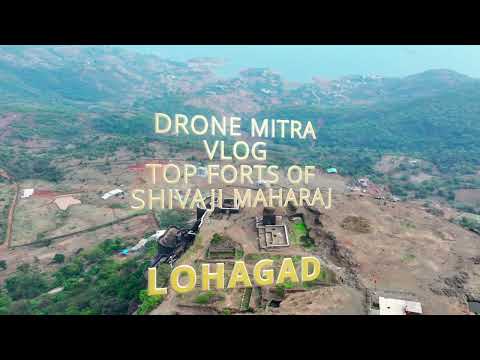
We at Newspatron decided to mark this occasion the way we know best — by going to the land itself. Our DroneMitra team captured stunning drone and GoPro footage at Pawna Lake and the historic Lohagad Fort, both sitting beautifully off NH 48 between Mumbai and Lonavala. The visuals will leave you speechless. The history, we promise, will keep you reading. Together, they tell the story of a king whose shadow still falls across every hill, every fort, and every shimmering lake in Maharashtra.
Before we get into it — do check out DroneMitra (your sky is digital with a drone as a friend!) and Newspatron on YouTube for some fantastic drone shots and more insightful content. Genuinely worth your time. ?
Born February 19 1627 The Destiny Shaped by Jijabai
Shivaji Maharaj was not handed greatness. He was built for it — deliberately, lovingly, and with fierce intent — by his mother, Rajmata Jijabai.
While his father Shahaji Bhonsle was frequently occupied managing military affairs for the Bijapur Sultanate far from home, Jijabai raised young Shivaji in Pune with singular purpose. Every evening, she told him stories — not fairy tales, but the lives of Shriram, Hanuman, and Shrikrishna. The epics of the Ramayan and Mahabharat were not bedtime stories. They were blueprints — lessons on dharma, on courage, and on the absolute duty of a ruler to protect his people above everything else.
By the time Shivaji reached his teenage years, those seeds had grown deep roots. At just 16, he took a solemn pledge at the Raireshwar temple near Pune — to establish Hindavi Swarajya: a sovereign, self-ruled state for the people of his land. History researchers and commentators widely note that what separated Shivaji from other regional rulers of his era was precisely this combination — a vision formed in childhood, and the iron discipline to execute it across an entire lifetime.
A history analyst observing his formative years makes a striking point: Jijabai was not merely his mother. She was his first strategist and earliest teacher of statecraft. Her influence produced a ruler who carried one conviction above all else — the welfare of his subjects was his highest duty. Not conquest for personal glory. Not wealth accumulation. The people, always first.
On Shivaji Maharaj Jayanti 2026, that pledge at Raireshwar feels less like ancient history and more like a living idea. The concept of Hindavi Swarajya — self-rule grounded in the welfare of ordinary people — is one that observers of the Maratha period return to repeatedly when discussing why his legacy resonates so powerfully with India’s youth today. Right now, in 2026. Not just in Maharashtra. Across India. ??
The Military Genius Who Turned Hills Into Fortresses
The Sahyadri mountain range that most of us see from a car window on the Mumbai-Pune Expressway — misty hilltops, dramatic ridgelines, the occasional fort silhouette against the sky — those exact hills were Shivaji Maharaj’s greatest military weapon. Not bravery alone. Not superior numbers. The terrain itself.
Recommended Product
Casio Vintage A168WA Digital Watch – Classic Retro Style
🛒 View on Amazon →As an Amazon Associate, we earn from qualifying purchases. Price and availability may vary.
He refused to fight the Mughal Empire on their terms. Their armies were massive, lavishly armed, and built for open-field battle. So Shivaji Maharaj simply never gave them an open field. He chose the hills, built on them, connected them — and created something the world had genuinely never seen before: a networked military landscape that functioned as a single, living defensive system.
Historical records document 463 Maratha forts across Maharashtra — 225 hill forts in the Western Ghats, 71 coastal forts, 11 island forts, and 156 land forts. Together they formed an unbroken chain stretching 720 kilometres of coastal defences extending deep into the Deccan plateau. Young historians and strategic affairs observers frequently highlight that this was not a collection of independent structures — each fort sat within signalling distance of the next. The entire network operated as one.
UNESCO Makes It Official July 2025
In July 2025, the world formally agreed with what Maharashtra had always known. The Maratha Military Landscapes of India were officially inscribed on the UNESCO World Heritage List at the 47th session of the World Heritage Committee in Paris — making them India’s 44th UNESCO Heritage Site. Twelve forts received the designation including Raigad, Lohagad, Shivneri, Sindhudurg, Pratapgad, Vijaydurg, and Rajgad. Greece, South Korea, Kazakhstan, Kenya, and Senegal co-sponsored the amendment. When five countries from three continents stand up for your king’s forts in Paris, that tells you something about the scale of the legacy. ?
The Guerrilla Warfare Blueprint That Rewrote Indian History
Shivaji Maharaj’s military strategy was brilliantly, almost elegantly, simple. Never fight your enemy on their terms. Mughal armies were enormous and built for open plains. So he used narrow mountain passes, dense forests, and sheer cliff faces to eliminate their numerical advantage entirely. Small, fast-moving units. Swift night attacks. Controlled retreats into terrain the enemy couldn’t read. Military scholars studying asymmetric warfare note that this strategy — a smaller force defeating a vastly larger one through terrain mastery and speed — became a template studied far beyond India’s borders in the centuries that followed.
The Ashtapradhan A Cabinet System 300 Years Ahead of Its Time
This is where most people’s knowledge of Shivaji Maharaj stops at bravery — and his governance genius goes largely unrecognised. He was not just a warrior king. He was a brilliant administrator. ?
He created the Ashtapradhan — a council of eight ministers, each with a clearly defined portfolio and direct accountability to the Chhatrapati:
- Peshwa — Prime Minister, overall administration
- Amatya — Finance and revenue
- Senapati — Military command
- Mantri — Intelligence and internal affairs
- Sumant — Foreign affairs and diplomacy
- Nyayadhish — Chief Justice
- Panditrao — Religious affairs and ethics
- Sachiv — Royal correspondence and records
No single minister held absolute power. Each department operated independently with built-in checks and balances. Management scholars and governance historians have long argued that the Ashtapradhan was a decentralised governance model so advanced for its era that it rivals the conceptual foundations of early parliamentary structures. History enthusiasts in popular discourse frequently raise a sharp question: why does no mainstream textbook give this system the detailed study it deserves? Business schools in the United States have already answered that — Shivaji Maharaj’s decision-making under adversity is incorporated as a leadership case study in several management programmes.
The Naval Commander Europe Never Saw Coming
Most people associate Shivaji Maharaj exclusively with hill forts and the Sahyadri mountains. Far fewer know that he was equally formidable at sea — and that the European powers operating on India’s western coast took his navy with deadly seriousness.
In 1657, he captured Kalyan and Bhivandi on the Konkan coast and immediately established his own dockyard for manufacturing warships. In a remarkably forward-thinking move, he employed Portuguese and European craftsmen alongside Indian shipbuilders — fusing the best of both traditions into a fleet specifically engineered for the Konkan coastline. That coastline was his strategic asset at sea, exactly as the Sahyadri was on land.
A Fleet That Challenged 27 Adversaries
At its peak, the Maratha naval fleet comprised over 200 warships of various types — the heavily armed gurab, the fast and agile gallivat, the tarande, the shibad, the pal and more. Two separate fleets operated under dedicated commanders — Admiral Maynak Bhandari and Daulat Khan. Historical naval records confirm that Shivaji fought no fewer than 27 adversaries including the Mughals, the English, the Dutch, the Siddis, and the Portuguese. Today, the Indian Navy proudly carries his emblem on naval officers’ epaulettes — a formal acknowledgement that the Maratha king remains the Father of the Indian Navy. ??
Raigad Fort Capital of the Maratha Kingdom
If Lohagad Fort guarded the treasury, Raigad Fort held the throne.
Perched dramatically atop a near-vertical hill in the Sahyadri ranges — 1,300 acres of fortified hilltop surrounded by almost sheer drops on every side — Raigad was Shivaji Maharaj’s carefully chosen capital. Not merely a military stronghold. An entire functioning city at altitude — with markets, residential quarters, the king’s court, the queen’s chambers, administrative offices, temples, and water cisterns. The British assessed it in one sentence that has echoed through history: “If this fort was equipped with adequate supplies, it can defend itself and fight with the entire world on its own.”
The Coronation That Changed India June 6 1674
On June 6, 1674, Raigad Fort witnessed the defining moment of the Maratha era. Shivaji Maharaj was formally crowned Chhatrapati — the sovereign ruler of Hindavi Swarajya. This was a king, a crown, and a state — fully constituted, fully legitimate, and fully prepared to defend itself. The Mughal Empire under Aurangzeb flanked the Deccan on all sides, and yet a 47-year-old king stood atop a fort and declared a sovereign kingdom. The coronation at Raigad was not a ceremony. It was a statement of civilisational defiance.
Hiroji Indulkar The Architect Who Mortgaged His Life for a King
Behind Raigad’s architectural magnificence stands one man whose name most visitors never hear — Hiroji Indulkar, Shivaji Maharaj’s chief architect and perhaps his most devoted loyalist. Hiroji built Raigad, reconstructed Pratapgad, and constructed the great sea fort Sindhudurg — a project so costly that when Shivaji was held captive in Agra, Hiroji ran out of royal funds entirely. Rather than stop, he mortgaged his personal belongings and family heirlooms to continue building, driven by nothing except loyalty to a king who might never return.
Shivaji returned — in one of history’s great escapes — and Hiroji presented the completed Sindhudurg as a personal gift. When Raigad’s Jagdishwar temple was later completed, Hiroji’s reply to the offered boon was extraordinary in its simplicity: he asked only that his name be engraved on the temple footsteps, so that Shivaji Maharaj’s feet would walk over it whenever he visited. That inscription remains at Raigad to this day.
Raigad Today A 606 Crore Revival in Progress
Sambhajiraje Chhatrapati — the 13th direct descendant of Shivaji Maharaj and Raigad Development Authority Chairman — is overseeing an ambitious restoration worth ?606.08 crore. Of this, ?114 crore restores the fort itself and ?237 crore transforms the Mahad–Raigad road into a heritage highway. As recently as January 2026, Sambhajiraje confirmed India’s largest 360-degree light and sound show is planned for Raigad — the era of Shivaji Maharaj, alive on the fort’s own walls after dark.
Read the complete Raigad Fort story, ropeway details, food, and visitor information on our sister site: Raigad Fort — The Gibraltar of the East.
Lohagad Fort The Iron Gate Between Mumbai and Pune
One Man One Camera One Fort That Does Not Go Easy on You
Let’s be real. Every travel guide tells you Lohagad is an “easy trek.” And technically, yes — there are steps most of the way. But the full Lohagad experience — all the way to Vinchu Kata at the far end, back through the four gates, up to the highest ramparts and down again — is a solid, honest day that demands respect. This writer did it solo, camera in one hand, drone kit in the other, no guide, no group. ? What I found at the top surprised me — a handful of fellow wanderers, equally unbothered by the exertion, one of them parading the entire hilltop with a saffron flag like he personally owned the sky. In a way, on that hilltop, we all did.
Lohagad Fort — literally Iron Fort in Marathi — sits at 1,033 metres above sea level, perched on the Western Ghats between Lonavala and Pune, right off the Mumbai-Pune Expressway. Shivaji Maharaj used Lohagad to store his treasury — wealth secured behind four successive arched gateways: Ganesh Darwaja, Narayan Darwaja, Hanuman Darwaja, and Maha Darwaja — each flanked by double bastions rising one above the other. Every gate was a separate battle. Any attacking army that breached one simply faced another.
The fort divides the river basins of the Indrayani and Pavna — and from its heights, you get one of the most arresting aerial views in Maharashtra: the Pawna Dam and Bhushi Dam simultaneously visible, along with the Bhaja and Karla Caves and the entire sweep of the Sahyadri valleys. ?
Vinchu Kata The Scorpion That Guards the Fort
The signature feature of Lohagad is Vinchu Kata — the Scorpion’s Tail — a narrow ridge of rock jutting outward from the main fort like the raised tail of a scorpion. From above — exactly the perspective the drone captures — the resemblance is unmistakable. This formation was actively used as a watch post: a long, elevated surveillance corridor with unobstructed visibility over the surrounding valley and all approaches. Trekkers consistently report that the narrow path to Vinchu Kata, with a sheer open valley on one side, is genuinely heart-in-mouth territory — especially in the monsoon.
Getting There The Basics
Lohagad Fort is a UNESCO World Heritage Site (Maratha Military Landscapes, July 2025), protected under the Archaeological Survey of India. Nearest train station: Malavli (Mumbai-Pune suburban line). Nearest major station: Lonavala. By road: 100 km / ~3 hours from Mumbai, 65 km / ~2 hours from Pune, off NH 48. Google Maps car parking code: PF5H+9JX. Trek hours: 9 AM to 6 PM. No food or toilets on the premises — carry water, snacks, comfortable shoes, and a raincoat in monsoon. Liquor is banned inside the fort.
Planning a solo trip from Mumbai? Kumar, the author and editor of this post, also runs Mumbai Vapi Taxi — a reliable cab service for travellers heading to Lohagad, Lonavala, and the Konkan belt. A direct cab to the base village removes all the NH 48 navigation stress. ? Read the complete vlog and travel guide here: Lohagad Lonavala Maharashtra Vlog.
Watch the Full 23 Minute Lohagad Fort Tour
Watch the complete drone and GoPro tour — all four gates, Vinchu Kata, Pawna Lake aerial views, and the full hilltop explored. Best viewed on a large screen in 4K. On mobile, tilt to landscape and use headphones. ?
Short on time? Catch the highlights in under a minute: ?
Subscribe to DroneMitra and Newspatron on YouTube — add the full travel playlist and the Mundane playlist to your YouTube library. ?
Pawna Lake Where Shivajis Forts Still Watch Over the Waters
There are lakes, and then there is Pawna Lake at golden hour.
The drone footage captures it better than any sentence can — the moment the late afternoon sun drops behind the Sahyadri ridgeline and the entire surface of the lake turns into liquid copper. Lohagad Fort sits visible on the hillside above. The valley goes quiet except for the wind. It is, genuinely, one of the most beautiful things you will see in Maharashtra without buying a flight ticket. ?
Pawna is a reservoir — an artificial water body created by the Pavana Dam on the Pavana River in the Maval region. The same Western Ghats that frame it are a UNESCO Natural World Heritage Site — home to over 325 species of flora and fauna including critically endangered plants and animals, ranking among the world’s Top 8 Biological Hotspot Locations. When you camp here, you are sitting inside a UNESCO natural heritage zone, with a UNESCO cultural heritage fort watching from the hill above. That combination exists almost nowhere else on Earth. ?
Camping at Pawna Lake What You Need to Know
Arrive by 4 PM on Day 1, leave by 11 AM on Day 2. Ask specifically for a waterfront tent position — operators accommodate early arrivals. Arriving after sunset on narrow mountain roads with sharp turns is not worth the risk.
Do not swim in the lake. Pawna Lake looks serene. It is not safe for swimming — uneven lakebed surfaces and hidden underwater rocks pose real danger, with no lifeguards present. Enjoy it from the bank, from a kayak, or from above on a paraglider.
Book in advance through a verified operator. Avoid all roadside tour guides and last-minute operators at the lake.
| Season | Experience |
|---|---|
| Monsoon (June–Sept) | Clouds flow around you at tent level — spectacular and surreal. Roads can be rough. Best for atmosphere. |
| Winter (Oct–Feb) | Clear skies, cold nights, ideal for stargazing and bonfires. Most popular season overall. |
| Summer (Mar–May) | Warm days, cooler evenings near the water. Less crowded on weekdays. |
Things to Do Around Pawna Lake
Pawna Lake is not a passive destination. The activity options around it are genuinely varied — enough to fill two days without repeating anything:
- Kayaking and canoeing — most campsites include these at the waterfront
- Boating — a lake circuit at sunrise or sunset is hard to beat
- Paragliding — tandem flights from approx ?3,000/person on weekends; views of Pawna Dam, Sahyadri ranges, and sunset at eye level
- Fort trekking combinations — Lohagad, Visapur, Tikona, or Tung fort — pick one or combine based on energy
- Bonfire, barbeque, live music — most campsites offer full evening programmes under the stars
- Bhaja Caves — ancient rock-cut Buddhist caves, 10 minutes away
Food near the lake: The OVEN Restaurant (nearest to Lohagad and Dudhiware Waterfall), Lohagad Restaurant (lake access), and Shree Swami Samarth Family Restaurant (best spicy Maharashtrian food).
A Legacy That Crossed Oceans Vietnam to Harvard
There is a story about Raigad Fort that almost no history textbook mentions — and it may be the most powerful testament to Chhatrapati Shivaji Maharaj’s global legacy.
During Vietnam’s prolonged and ultimately successful struggle against the United States military — one of the most asymmetric conflicts in modern history — Vietnamese military commanders drew heavily on one specific strategic framework: guerrilla warfare, terrain exploitation, and a networked defensive system built on local geography. Documented in historical correspondence and later referenced by military historians studying asymmetric warfare, accounts record that Vietnamese strategists had studied Shivaji Maharaj’s military campaigns and applied his core principles with extraordinary effectiveness.
In 1977, Vietnam’s diplomat to India is documented to have visited Raigad Fort and expressed a profound desire to pay respects at Shivaji Maharaj’s samadhi. Soil from the samadhi was reportedly collected and mixed with Vietnamese soil as a gesture of gratitude. A military historian tracking this connection notes it is arguably the most remarkable cross-cultural acknowledgement of Indian military genius in the post-independence era.
The Guru Who Stood Behind the Throne
Behind the warrior-king stood Samarth Ramdas Swami — spiritual guide, adviser, and one of Maharashtra’s most revered saints. Ramdas Swami authored two seminal works that directly shaped Shivaji Maharaj’s governance philosophy: the Dasbodh — a treatise on leadership and ethical governance — and the Manache Shlok, a discourse on discipline and righteousness. Their relationship — king and guru, sword and wisdom — created something greater than either could have built alone: a kingdom with a soul.
Management Schools and the Ashtapradhan Legacy
Business schools studying leadership under adversity point specifically to the Ashtapradhan system, Shivaji’s intelligence network design, revenue reforms, and his treatment of civilian populations in war — as case studies in ethical power. History researchers tracking popular discourse on the Maratha period observe that this academic recognition has been growing steadily. No comparable medieval Indian ruler has received the same level of cross-disciplinary study outside of India. ?
Shivaji Maharaj in His Own Words The Letter to the Mughals
Shivaji Maharaj was not only a warrior and administrator. He was a writer of rare force — and the letter he wrote to a Mughal commander after years of failed attempts to capture his forts remains one of the most withering pieces of prose in Indian history.
“Your experienced commanders have been arriving here for three years, all carrying imperial orders to capture Shivaji’s forts. You keep comforting your Emperor that his lands will soon fall. If your imagination were a horse, even that horse would find it impossible to move freely in our territory — so why do you dream of capturing it?
This land is not like Kalyani or Bidar — flat and easily conquered. Our territory is hilly, arduous terrain. There are no easy routes across our rivers. I hold 60 strong, fully militarised forts. More sit in the sea.
Afzal Khan came with a massive army — and tasted defeat. Shaista Khan entered with his large ego and army, bluffed he would subjugate Shivaji within no time. Three years of toil gave him nothing.
It is my prime duty to protect my territory and my people. I will discharge that duty without error.”
Every sentence lands like a fist. No decoration. No diplomatic softening. Pure, cold confidence backed by documented victories. Historians consistently point to this letter as a masterclass in psychological warfare — the ability to shake an enemy’s confidence through sheer clarity of statement.
Why Chhatrapati Shivaji Maharaj Jayanti 2026 Matters
Today — February 19, 2026 — India celebrates 399 years since this king drew his first breath in the Sahyadri hills. One year from now, it will be the 400th anniversary — a milestone Maharashtra and all of India is already preparing to mark on a scale unprecedented in recent memory.
A sharp and honest observation that history enthusiasts and civic scholars raise repeatedly: no major Indian city carries the name of Chhatrapati Shivaji Maharaj himself. In 2023, Aurangabad was finally renamed Chhatrapati Sambhajinagar — honouring Shivaji’s son, Sambhaji Maharaj. Significant and long overdue. But it was for Sambhaji, not Shivaji. A civic affairs analyst observing this pattern notes the irony plainly: the Mughal emperor who spent 25 years trying to crush Shivaji’s empire had a city named after him in Maharashtra until 2023. The man who beat him still doesn’t have one.
From Forts to Classrooms Shivaji Maharaj Enters Indias Universities
Perhaps the most significant development of the past year — one that deserves far more attention than it has received — is the formal entry of Shivaji Maharaj’s legacy into India’s university curriculum. Not as a footnote in a history chapter. As a dedicated postgraduate field of study.
Savitribai Phule Pune University (SPPU) has launched a two-year Master of Arts programme officially titled M.A. in Chhatrapati Shivaji Maharaj’s Vision and Nation Building — offered by the Department of Defence and Strategic Studies, starting in the 2025–26 academic year. The curriculum covers military strategy and guerrilla warfare techniques, the Swarajya governance model and revenue systems, maritime defence and national security, and the 17th-century Deccan socio-political landscape.
Simultaneously, Jawaharlal Nehru University (JNU) in New Delhi formally inaugurated a Centre of Excellence for Strategic Studies in honour of Chhatrapati Shivaji Maharaj — inaugurated by Maharashtra Chief Minister Devendra Fadnavis in July 2025. The Maharashtra government also successfully pushed for a 21-page dedicated history of Shivaji Maharaj in the national CBSE curriculum — a significant correction to decades of underrepresentation. For researchers, Kavayitri Bahinabai Chaudhari North Maharashtra University offers dedicated Ph.D. research scholarships for scholars studying his life and work.
British Governor Sir Richard Temple, when asked why Aurangzeb with his vast army fought 25 years in Maharashtra yet failed, gave a remarkably candid answer: “When Aurangzeb entered Maharashtra, the people revered Shivaji deeply. With time, that memory faded — and only then did they find any success.” Temple understood something critical: Shivaji Maharaj’s real fortress was not Raigad or Lohagad. It was the loyalty of his people.
That loyalty — rebuilt through knowledge, through stories, through visits to forts, through drone footage over Pawna Lake on a February morning, through university classrooms in Pune and Delhi — is what Jayanti is actually about. Not garlands on a statue. Not a public holiday. The deliberate, conscious act of remembering a man whose principles still work. ?
On his 399th birthday — Happy Jayanti, Chhatrapati. ?
? Jay Shivaji! Share This Story Today.
This Jayanti, pass on the real history — not just the holiday. Share this post with someone who should know the full story of Chhatrapati Shivaji Maharaj.
? Instagram | ? Twitter/X | ? DroneMitra | ? Newspatron YouTube | ? Telegram | ? Mumbai Vapi Taxi
All links on the Newspatron homepage. WhatsApp Channel (privacy protected) | Reddit | Facebook | Tumblr | LinkedIn | RSS
