



By the NewsPatron Editorial Desk
If you read the morning headlines, the story of the BMC 2026 election seems simple: The BJP-Shinde alliance swept Mumbai with 118 seats, crushing the Thackeray opposition (72 seats). The narrative is one of a “Saffron Wave” and the decisive end of the old guard.
But headlines often bury the math.
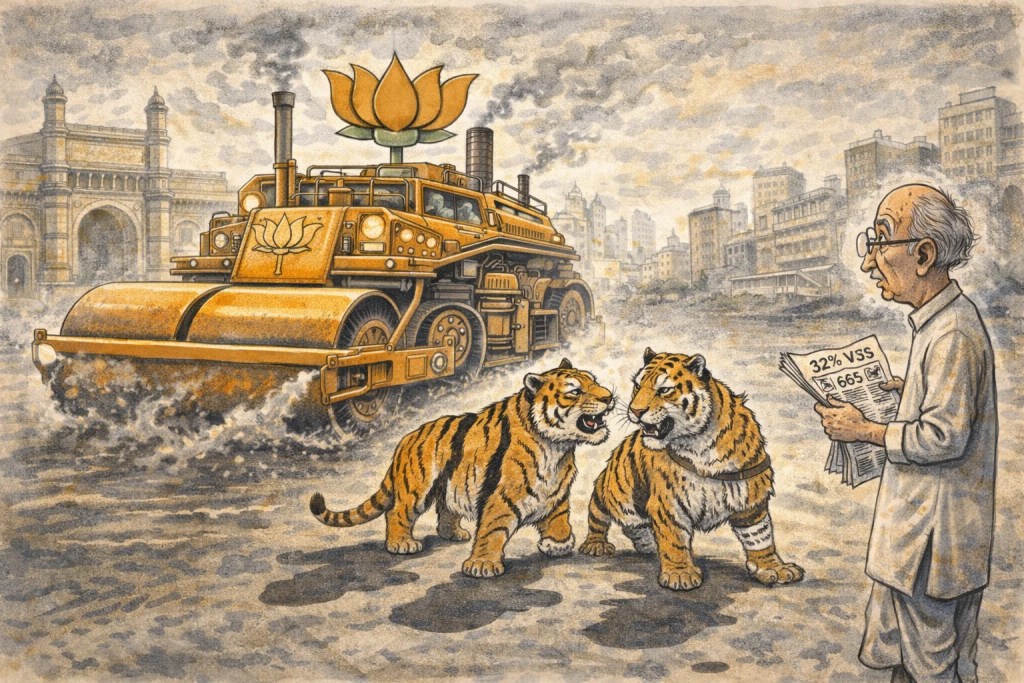
A deep-dive analysis of the election data reveals a far more complex reality. This wasn’t just a victory of ideology; it was a victory of Efficiency. While the BJP operated like a precision-guided machine, its alliance partner, the Shinde Sena, struggled to convert influence into wins. And tragically for the Marathi Manoos, the data proves that the “Tiger” wasn’t hunted down by an outsider—it tore itself apart.
1. The Strike Rate Reality: The “Junior Partner” Problem
The most damning statistic of this election isn’t the total seat count; it is the Strike Rate (the percentage of seats won vs. seats contested).
In a First-Past-The-Post system, efficiency is everything. The BJP contested ~137 seats and won 89. That is a staggering 65% Strike Rate—the highest of any party. They picked their battles in urban, Gujarati-dominated pockets (Mulund, Ghatkopar) and delivered with ruthless efficiency.
Contrast this with their partner, the Shinde Sena. They contested nearly 90 seats but won only 29.
- BJP Strike Rate: 65% (The Engine)
- Shinde Sena Strike Rate: ~32% (The Anchor)
The Insight: The Shinde faction’s performance dropped sharply from its statewide average of 55%. In Mumbai, without the “Thackeray” surname and battling allegations of “betrayal,” their candidates struggled to cross the finish line.
2. The “United Sena” Hypothesis: The Math of Regret
Here is the “Hidden Narrative” that changes everything. Current political discourse frames this as a “BJP Takeover” of Mumbai. But if we mathematically reconstruct the fractured Shiv Sena, the picture flips.
Recommended Product
Casio Vintage A168WA Digital Watch – Classic Retro Style
🛒 View on Amazon →As an Amazon Associate, we earn from qualifying purchases. Price and availability may vary.
| Faction | Seats Won |
|---|---|
| Shiv Sena (UBT) | 65 |
| Shiv Sena (Shinde) | 29 |
| MNS | 6 |
| UNITED SENA TOTAL | 100 |
The Reality Check: Had the Thackeray family and Eknath Shinde remained united, their combined bloc of 100 seats would have easily eclipsed the BJP’s 89 seats.
The tragedy of 2026 is a tragedy of fragmentation. The “Marathi Vote” didn’t disappear; it just cannibalized itself. The MNS, with a dismal 11-19% strike rate, acted as the ultimate spoiler—winning only 6 seats but slicing away critical Marathi votes in dozens of wards, handing victory to the BJP on a platter.
3. Research Verdict: “Good Riddance to Dynasty”
While the TV channels focused on victory speeches, the real sentiment was bubbling across digital platforms. Extensive online and offline research reveals a brutal generational divide.
- Gen Z vs. The Dynasty: On public forums, the sympathy for Uddhav Thackeray was overshadowed by a fierce rejection of “Dynasty Politics.” Viral discussions labeled the younger Thackerays as “nepo kids” who failed to offer a modern vision. The sentiment wasn’t pro-Shinde as much as it was anti-entitlement.
- The “Betrayal” Fatigue: Conversely, Shinde’s poor strike rate fueled “Betrayal” narratives. Grassroots supporters argued that Shinde’s “rebellion” had achieved nothing but handing Mumbai’s keys to the BJP.
The Verdict
The BMC 2026 election wasn’t just a defeat; it was a clarification.
- Identity Politics has a Ceiling: The reliance on “Marathi Asmita” hit a wall against the BJP’s “Development” juggernaut.
- Efficiency Wins Wars: The BJP didn’t just have more money; they had better targeting. Shinde’s 32% strike rate proves that “Power” without “Popularity” is a liability.
As Mumbai moves forward, the question isn’t whether the “Thackeray Brand” is dead. The question is: Can a fractured brand ever survive against a unified machine running at 65% efficiency? The numbers say no.
