




The Badlapur Case SIT Report reveals shocking details about the accused and the school’s negligence. Brace yourself for a disturbing yet crucial read.
In the quiet town of Badlapur, a horrifying crime shattered the innocence of two young lives. The sexual assault of two four-year-old girls within the supposed sanctuary of their school sent shockwaves across the nation. The ensuing investigation, led by the Special Investigation Team (SIT), has unearthed disturbing truths about the perpetrator, Akshay Shinde, and the school’s shocking negligence.
In this in-depth blog post, we’ll dive deep into the Badlapur case, examining the SIT report’s findings, the accused’s actions, and the school’s role in this tragedy. We’ll explore the community’s outrage, the legal battle ahead, and the critical lessons we must learn to prevent such horrors from recurring.
Join us as we unravel the dark secrets of this case and shed light on the urgent need for change. Remember, the fight for justice and child safety is an ongoing one. Let’s stay informed, speak up, and work together to create a world where every child can thrive without fear.
P.S. For stunning drone footage and insightful news coverage, be sure to check out my YouTube channels: DroneMitra and NewsPatron.
Badlapur Case SIT Report: Unmasking Akshay Shinde’s Dark Secrets
The Badlapur case, involving the sexual assault of two four-year-old girls within their school premises, shook the nation to its core. In the aftermath of this heinous crime, the Maharashtra government formed a Special Investigation Team (SIT) to delve into the incident and uncover the truth.
The SIT’s initial findings paint a chilling picture. The perpetrator, identified as Akshay Shinde, a 24-year-old contractual cleaner, exploited the school’s lax security and lack of oversight to carry out his horrifying acts. The report reveals that Shinde had unrestricted access to the school, including the female restrooms, despite having no background check and not even carrying an identification card.
School’s Negligence Exposed
The SIT report lays bare the shocking negligence of the school administration, revealing a series of failures that allowed a predator like Akshay Shinde to operate unchecked within their walls.
Recommended Product
Alpino Peanut Butter Chocolate Protein Bar – Gluten Free
🛒 View on Amazon →As an Amazon Associate, we earn from qualifying purchases. Price and availability may vary.
Lack of Adequate Security Measures
The report highlights a blatant disregard for basic security protocols.
- CCTV Surveillance: Despite being a private institution, the school lacked a functional CCTV system in critical areas like hallways, playgrounds, and even the restrooms. This glaring oversight created an environment where Shinde could move freely without fear of being caught on camera.
- Security Personnel: The absence of security guards during crucial hours, especially when students were arriving or leaving, further compromised the children’s safety.
- Identification Checks: Visitors and staff were not required to present identification, making it easy for anyone to enter the premises unnoticed.
Delayed Reporting
The school’s response to the incident was equally appalling.
- 48-Hour Delay: The administration waited a staggering 48 hours before reporting the crime to the authorities, causing a significant delay in the investigation and potential loss of crucial evidence.
- Communication Breakdown: Internal reports suggest a complete breakdown in communication, with staff members unsure of the proper procedures for reporting such incidents. This points to a lack of training and preparedness for handling emergencies.
Specific Security Lapses
The SIT identified several specific security lapses that facilitated Shinde’s access to the victims.
- Unsecured Entry and Exit Points: The school had multiple unsecured entry and exit points, allowing unauthorized individuals to enter and leave the premises without scrutiny.
- Inadequate Lighting: Poor lighting in certain areas of the school created blind spots, making it easier for Shinde to operate unnoticed.
Statements and Internal Reports
While the school principal and security head expressed regret and acknowledged the security lapses, their statements do little to assuage public anger. An internal audit report, conducted after the incident, further exposed the school’s lack of preparedness. It highlighted the absence of regular security drills and insufficient training for staff on emergency procedures.
The Badlapur case is a stark reminder that even institutions entrusted with the care of children can fail them catastrophically. The school’s negligence created an environment where a predator could thrive, leaving two innocent children to suffer unimaginable trauma.
Public Outrage and Demands for Justice
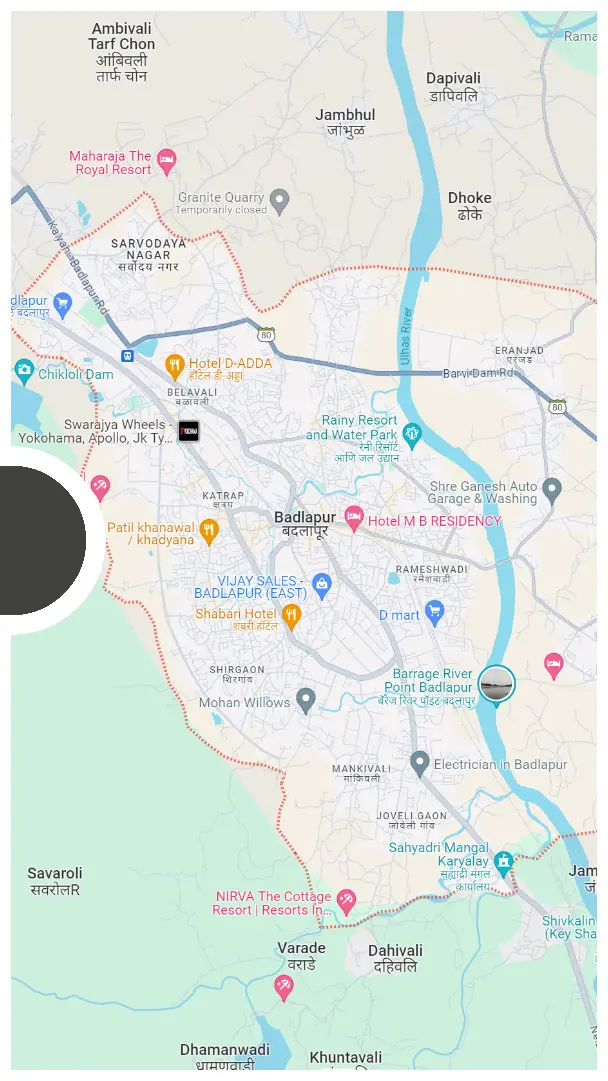
Image Courtesy – Google Maps – Badlapur
Protests and Demonstrations
The streets of Badlapur erupted in protests, with parents, students, and residents taking to the streets to voice their fury. The demonstrations were marked by a sense of urgency and desperation, with many questioning the safety of their children in educational institutions.
- School Vandalism: The anger spilled over into violence, with protesters vandalizing the school building, a symbolic act reflecting their deep-seated frustration with the institution’s failure to protect its students.
- Rail Roko: In a dramatic display of their determination, demonstrators blocked railway tracks, disrupting train services and bringing attention to their cause.
- Clashes with Police: The situation escalated further, leading to clashes between protesters and police, highlighting the intensity of the public’s emotions.
Calls for Systemic Change
The Badlapur case has transcended the immediate demand for justice for the victims. It has sparked a broader conversation about the safety of children in schools and the urgent need for systemic change.
- Maharashtra Bandh: Calls for a statewide shutdown, or “Maharashtra Bandh,” echoed across the state, with citizens demanding strict punishment for the accused and comprehensive measures to prevent such incidents in the future.
- Social Media Uproar: The online world was abuzz with discussions, hashtags, and petitions, amplifying the public outcry and pressuring authorities to take decisive action.
Government Response
The Maharashtra government, faced with mounting public pressure, responded with a series of measures aimed at addressing the situation.
- SIT Formation: The formation of the Special Investigation Team was a crucial step, demonstrating the government’s commitment to uncovering the truth and holding the guilty accountable.
- Promises of Justice: The government has assured the public that the case will be fast-tracked and the perpetrators will face the full force of the law.
- Preventive Measures: In a bid to prevent future tragedies, the government has announced several measures, including mandatory CCTV cameras in schools and the establishment of Vishaka Committees for grievance redressal.
The Badlapur case has left an indelible scar on the community’s psyche. The public’s unwavering demand for justice serves as a powerful reminder that child safety is non-negotiable. The fight continues as the legal battle unfolds and the nation awaits a verdict that will hopefully bring some closure to the victims and their families.
[Unmasking the Rape Mentality: 5 Shocking Insights]
The Legal Battle Ahead
The Badlapur case is far from over. As the SIT continues its investigation, the legal battle to bring the perpetrators to justice is just beginning. The accused, Akshay Shinde, and the school administration face a slew of charges under various laws, including the stringent Protection of Children from Sexual Offences (POCSO) Act.
Charges Against Akshay Shinde
Shinde, the primary accused, faces a series of grave charges that could lead to severe punishment if convicted.
- Rape: Under Section 376 of the Indian Penal Code (IPC), rape carries a minimum sentence of seven years imprisonment, which can extend to life imprisonment, and a fine.
- Sexual Assault: The POCSO Act further strengthens the legal framework for dealing with child sexual abuse. Shinde is also charged with sexual assault under this Act, which carries similar penalties to those under the IPC.
- Criminal Intimidation: Section 506 of the IPC deals with criminal intimidation. Shinde may face additional charges under this section if it’s proven that he threatened the victims or their families.
Charges Against the School Administration
The school administration’s negligence hasn’t gone unnoticed. They too face legal consequences for their failure to protect the children under their care.
- POCSO Act Violation: The school has been booked under Section 21 of the POCSO Act for failing to report the incident promptly. This offense carries a penalty of up to six months imprisonment or a fine.
- Negligence: The administration may also face charges of negligence under the IPC, which could lead to further penalties.
POCSO Act: Safeguarding Children
The Protection of Children from Sexual Offences (POCSO) Act, 2012, is a landmark legislation aimed at protecting children from sexual abuse. It defines a child as any person below the age of 18 and covers a wide range of offenses, including penetrative and non-penetrative sexual assault, sexual harassment, and the use of children for pornography.

The Fight for Justice
The legal battle ahead is likely to be long and arduous. However, the victims, their families, and the community at large are determined to see justice served. The Badlapur case has become a symbol of the fight against child sexual abuse, and the outcome of this legal battle could set a precedent for future cases.
The road to justice may be challenging, but the unwavering pursuit of it sends a clear message: child sexual abuse will not be tolerated, and those who fail to protect children will be held accountable.
Preventing Future Tragedies
The Badlapur case serves as a chilling reminder of the vulnerability of children and the urgent need to strengthen our safeguards against sexual abuse. While the legal battle seeks justice for the victims, it’s equally crucial to focus on prevention and ensure that such horrors are never repeated.
Lessons Learned
The Badlapur incident highlights several critical lessons that we must heed:
- Stringent Background Checks: The school’s failure to conduct a thorough background check on Akshay Shinde underscores the importance of this crucial step in hiring any individual, especially those who will be near children.
- Robust Security Measures: The lack of adequate security measures at the school, including CCTV cameras and security personnel, created an environment where a predator could operate with impunity. Schools must prioritize the safety of their students by implementing and maintaining robust security protocols.
- Timely Reporting: The delay in reporting the incident to the authorities hampered the investigation and potentially allowed the perpetrator to evade capture. It’s imperative that schools and individuals report any suspicion of child abuse immediately.
- Empowering Children: Children must be educated about their bodies, personal boundaries, and the importance of speaking up if they feel uncomfortable or unsafe. Creating a safe and open environment where children feel empowered to report any concerns is vital.
The Role of Capital Punishment: A Complex Debate
In the wake of such heinous crimes, the question of capital punishment often arises. Can the death penalty serve as a deterrent and prevent future tragedies?
Arguments in Favor:
- Deterrence: Proponents argue that the fear of the ultimate punishment can dissuade potential offenders from committing such crimes.
- Retribution: For some, capital punishment provides a sense of justice and closure for the victims and their families.
- Incapacitation: It ensures that the perpetrator can never harm another child.
Arguments Against:
- Irreversibility: The possibility of wrongful convictions raises serious concerns about the irreversible nature of the death penalty.
- Lack of Evidence: Studies on its effectiveness as a deterrent are inconclusive.
- Human Rights: Opponents argue that it violates the right to life and is a cruel and inhumane form of punishment.
The Indian Context
In India, the death penalty is reserved for the “rarest of rare” cases. The Supreme Court has emphasized that it should be awarded only in exceptional circumstances where the crime is so heinous that no other punishment would suffice. Whether the Badlapur case meets this threshold is a matter for the courts to decide.
The Badlapur case has left an indelible mark on our collective conscience. It’s a stark reminder that we must remain vigilant in protecting our children. While the legal battle unfolds, let’s focus on creating a society where every child feels safe, heard, and empowered. The fight against child sexual abuse is a continuous one, and it requires the concerted efforts of individuals, institutions, and the government.
Join the Discussion
Your opinion matters! We invite you to express your views. Join our forum, engage in thoughtful discussions, share information, and submit your content. Let’s delve into diverse perspectives together.
[bbp-single-topic id=7616]
Conclusion
The Badlapur case has shaken the nation, exposing the dark underbelly of child sexual abuse and the systemic failures that allow such crimes to occur. The SIT report’s revelations about Akshay Shinde’s actions and the school’s negligence have sparked outrage and calls for justice.
The legal battle ahead will be crucial in holding the perpetrators accountable and ensuring that the victims receive the justice they deserve. The POCSO Act, with its stringent provisions, provides a strong legal framework for prosecuting such crimes.
However, the fight against child sexual abuse goes beyond the courtroom. It requires a collective effort to create a society where children are safe, heard, and empowered. Schools must prioritize security, conduct thorough background checks, and foster an environment where children feel comfortable reporting any concerns. Parents and communities must remain vigilant and educate children about personal safety.

Regardless of the legal outcome, the Badlapur case serves as a stark reminder that we must never let our guard down when it comes to protecting our children. Let’s continue to raise awareness, advocate for change, and work towards a future where every child can grow up free from the fear of abuse.
Remember, every child deserves a safe and happy childhood. It’s our collective responsibility to make that a reality.
Read previous blog –
Unmasking the Rape Mentality: 5 Shocking Insights
Unmasking the Rape Mentality: 5 Shocking Insights
The blog delves into the complex and disturbing “rape mentality,” exploring the motivations behind this heinous crime. It highlights that rape is often driven by a desire for power and control rather than solely sexual gratification. Research emphasizes the role of social and cultural factors, including patriarchal norms and gender inequality, in shaping this mentality.
The article discusses key motivations such as narcissism, sexual addiction, and other contributing factors like substance abuse and exposure to violence. It underscores the urgent need for societal change, advocating for open conversations about sex, challenging gender norms, and providing comprehensive sex education.
The role of the government in strengthening law enforcement, supporting survivors, and implementing preventive programs is also emphasized. The section concludes by highlighting the collective responsibility of individuals, communities, and governments in eradicating the rape mentality and creating a safer world for all. It calls for active participation in forums, sharing insights, and supporting organizations combating sexual violence to make a tangible difference.
The Special Investigation Team (SIT): A Temporary Force for Justice
Unlike established organizations such as the CBI, NIA, or RAW, the Special Investigation Team (SIT) isn’t a permanent fixture in the Indian legal landscape. It’s a specialized, task-oriented unit assembled by the government to address specific, high-profile, or complex cases that demand swift and thorough investigation.
Composition and Purpose
The SIT is typically composed of experienced police officers, legal experts, and sometimes officials from the Criminal Investigation Department (CID). Their primary mandate is to conduct a focused inquiry into the assigned case, gathering evidence, interrogating witnesses, and analyzing the facts to prepare a comprehensive report for the government.
Timeframe and Dissolution
The SIT operates within a defined timeframe, determined by the complexity of the case. This can range from a few weeks to several months. Once the investigation is complete and the report is submitted, the SIT is disbanded, and its members return to their original postings. However, they may be called upon to testify in court if the case proceeds to trial.
The Badlapur Case SIT
In the wake of the horrific Badlapur incident, the Maharashtra government swiftly formed an SIT to investigate the sexual assault of two young girls. This team, comprising seasoned officers and legal experts, was tasked with uncovering the truth and bringing the perpetrators to justice.
The SIT’s primary objectives include:
- Uncovering the Facts: Gathering evidence, interviewing witnesses, and reconstructing the events surrounding the crime.
- Identifying the Culprits: Determining the individuals responsible for the assault and any accomplices.
- Assessing Negligence: Investigating the school administration’s role and potential lapses in security and reporting protocols.
- Recommending Action: Proposing measures to prevent similar incidents in the future.
The SIT’s findings have already shed light on the disturbing details of the case, revealing the accused’s actions and the school’s negligence. Their final report will likely play a crucial role in the legal proceedings and the pursuit of justice for the victims.
While the SIT’s existence is temporary, its impact can be profound. By conducting a thorough and impartial investigation, it helps ensure that the truth is revealed, the guilty are held accountable, and steps are taken to prevent such tragedies from recurring.
