


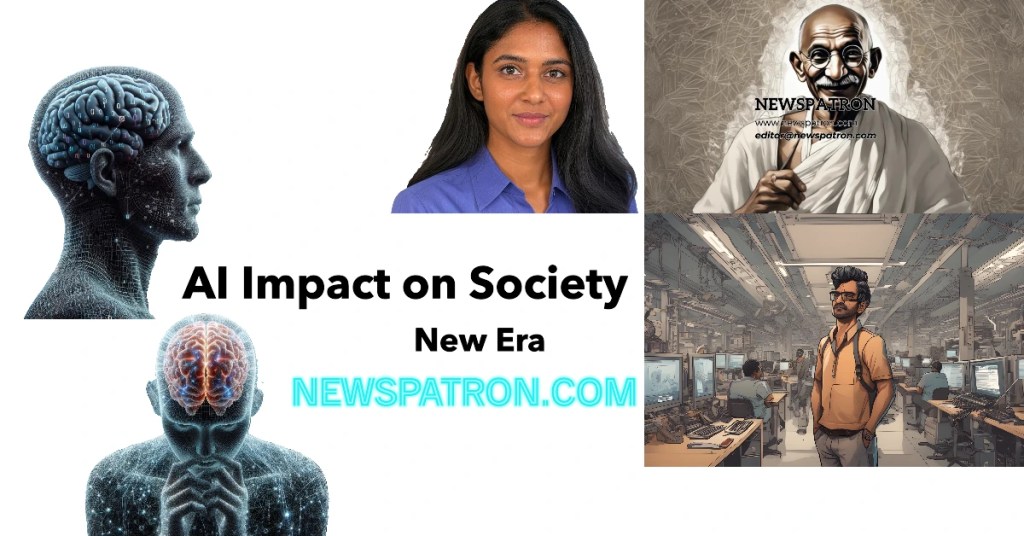

Welcome to a journey where we’re not just talking about AI. We’re really getting to grips with how it’s changing our world. It is changing our jobs and even how we think. We’re exploring the AI revolution, where artificial minds are reshaping what it means to be human. Get ready for some thought-provoking insights. Is AI really going to take over? Or is it just another tool in our human toolkit?
We’ll dive into how AI will create a whole new society. In this society, work as we know it will become a thing of the past. Don’t worry. It’s not all doom and gloom. There’s plenty of room for optimism if we play our cards right. We’ll also touch on the ethical side of things. Imagine Mahatma Gandhi in the age of AI. What would he have to say about all this?
We are all about keeping things real. We will share some hot takes from Twitter. It’s where the world’s pulse on AI is beating the loudest. So, if you’re curious about how AI touches every aspect of our lives, from jobs to justice, buckle up – or wait, no, let’s just say, get comfy for this ride.
Check out some fantastic drone shots at DroneMitra. “Your Sky is Digital with a Drone as a Friend.” And for more in-depth exploration, swing by Newspatron – “Let Curiosity Be Your Guide.”
Understanding AI’s Leap Progress
The BC and AD of AI
The landscape of artificial intelligence has undergone a profound transformation. It is akin to a before and after scenario. We’ll call this BC (Before ChatGPT) and AD (After Disruption).
Before ChatGPT:
- Niche AI Applications: In the BC era, AI was often confined to specialized fields. Early chatbots like ELIZA and ALICE were groundbreaking, yet they were more novelties than practical tools. These systems laid the groundwork for what was to come but were limited in scope and interaction.
- Transformers and GPT-2: The advent of the transformer model in 2017 was a significant milestone in AI’s development. It enhanced the ability of machines to understand and generate human-like text. However, even after GPT-2 was released in 2019, AI was still somewhat of a tech insider’s tool. It was not fully accessible or integrated into daily life.
After ChatGPT:
- ChatGPT’s Launch: November 2022 changed everything. With the release of ChatGPT by OpenAI, we entered what could be termed the AD era. ChatGPT amassed over a million users in just five days. It showed the world what AI could do. From writing poetry to coding solutions, it was a jack-of-all-trades in the digital realm.
- GPT-4 Advancements: Fast forward to March 2023, and the introduction of GPT-4 pushed boundaries further. With an impressive 1.76 trillion parameters, this model wasn’t just smarter. It was more accurate and capable of complex logical reasoning. It transformed how businesses and individuals interact with technology.
- AI Integration in Daily Life: Post-ChatGPT, AI has woven itself into the fabric of our daily lives. Customer service bots now handle inquiries with human-like patience. Personal assistants manage our schedules effectively. AI has become a staple, not just an anomaly. This shift signifies a technological leap. It also shows a cultural evolution where AI is seen as a partner in our daily activities.
AI’s Efficiency vs. Human Potential
While AI has surged ahead in terms of speed and efficiency, the human element remains uniquely complex. Vivek Sawant points out that AI surpasses human intelligence in speed and precision. However, there is a vast untapped potential within humanity.
- Untapped Human Potential: It’s estimated that 90% of people don’t utilize even 90% of their human potential. In contrast, AI works at its full capacity instantly upon deployment. This raises questions about balancing technological advancement with human development.
- The Role of AI: We should not see AI as a replacement for human intellect. Instead, we should view it as an amplifier. AI can take over repetitive or high-volume tasks. This process frees humans to engage in more creative, strategic, or empathetic roles. In these roles, human judgment and emotion play critical roles.
[Watch a Video by Vivek Sawant on Think Bank YouTube]
In this new age, understanding AI isn’t just about recognizing its capabilities. It’s also about redefining what it means to be human in an AI-augmented world.
The Spectrum of Human Intelligence
Beyond IQ: Multiple Intelligences
It’s a common mistake to equate intelligence solely with IQ or academic prowess. However, human intelligence is a spectrum, not a single point on a scale. This understanding becomes even more critical in the age of AI.
- Artistic Intelligence: Consider Leonardo da Vinci. His artistic genius not only produced timeless art. It also advanced scientific understanding through his detailed anatomical studies. In the modern era, artists like Refik Anadol harness AI to push the boundaries of art. They create immersive experiences that blend human creativity with machine computation. This synergy highlights how AI can amplify artistic expression, yet the spark of original thought remains human.
- Musical Intelligence: Beethoven’s story illustrates how musical intelligence can overcome physical barriers. His compositions, created even as he lost his hearing, continue to resonate with audiences worldwide. Today, AI tools like Amper Music assist musicians. They offer new sounds and compositions. However, they serve as tools under human direction, not replacements.
- Interpersonal Intelligence: Mahatma Gandhi’s leadership in India’s independence movement illustrates how powerful it is to understand and influence others. He achieved this through non-violent protest. In today’s tech-driven world, platforms like Crisis Text Line use AI to extend human empathy. They provide support at scale. However, they still rely on human counsellors for the nuanced understanding of human emotions.
Nurturing Different Intelligences
The challenge lies not just in recognizing but in nurturing this spectrum of intelligences within our educational systems.
- Educational Systems Adapting: Finland stands out as a beacon of educational reform. Its system integrates arts, physical education, and social skills, acknowledging that education should cater to all types of intelligence. Similarly, Montessori education emphasizes learning through doing. It allows students to explore their natural inclinations. They can lean towards logical, spatial, or interpersonal intelligence.
- Challenges and Neglect: Many educational systems globally still rely heavily on standardized tests. These tests favour logical-mathematical and linguistic skills. They often sideline other intelligences. This can result in an education system that does not fully tap into students’ potential. It may also fail to prepare them for a world where AI is ubiquitous.
- Standardized Testing: The focus on one or two types of intelligence can limit potential. This approach can be seen as a missed opportunity to develop well-rounded individuals.
- Need for Reform: There’s a pressing need for educational paradigms to shift towards recognizing and fostering multiple intelligences. This shift would better prepare individuals for a future where they work alongside AI. It would also enrich personal development, creativity, and problem-solving capabilities.
In this era, AI can perform tasks with superhuman efficiency. However, the real value of human intelligence lies in its diversity and adaptability. Schools, societies, and individuals must acknowledge and cultivate this rich tapestry of human capabilities to thrive in an AI-driven world.
The Societal Shift – A Non-Working Class
Automation and Employment
- Impact on Different Sectors:
- Manufacturing: Automation has significantly increased productivity in manufacturing. For example, the automotive industry saw a rise in industrial robot density from 14.2 to 29.3 robots per million hours worked between 2003 and 2017[1]. This has led to higher efficiency but also job displacement.
- Service Industry: Automation is also making inroads into the service sector. Self-checkout systems in retail are becoming more common. Automated customer service bots are also more prevalent. These technologies reduce the need for human workers in these roles[1].
- Healthcare: AI and robotics are used for tasks such as diagnostics and surgery. This can reduce the demand for certain medical professionals. At the same time, it increases the need for AI specialists[2].
- Projections:
- A World Bank report suggests that when labour productivity improves by 10% due to technology. In advanced economies, employment can decrease by 2%. Labour productivity improvement by 10% due to technology can decrease employment by 2% in advanced economies. It can also reduce employment by 1% in emerging markets in the short term[2].
- By 2025, automation could displace up to 85 million jobs globally. However, it could also create 97 million new roles. These roles are more adapted to the new division of labour between humans, machines, and algorithms[3].
Historical Parallels
- Industrial Revolution:
- The Industrial Revolution, which began in the late 18th century, drastically changed the economic landscape. It introduced machinery that increased production efficiency but also led to significant job displacement in traditional crafts and agriculture[4].
- Urbanization: Many people moved from rural areas to cities in search of factory jobs. This migration led to urbanization. It also resulted in the growth of new social classes[5].
- Social Impact: The rise of factories brought about harsh working conditions, leading to the formation of labour unions and the push for workers’ rights[5].
- Digital Revolution:
- The late 20th century saw the advent of computers and the internet, which transformed industries and created new job categories while rendering some obsolete[6].
- Connectivity and Information Access: This revolution increased global connectivity and access to information, changing how people work, communicate, and learn[6].
Key Differences:
- Speed and Scale: The current AI and automation revolution is happening at a much faster pace and on a larger scale compared to previous technological revolutions.
- Scope of Impact: Unlike the Industrial Revolution, which primarily affected manufacturing, the AI revolution impacts a broader range of sectors, including services and knowledge-based industries.
These insights highlight the profound changes automation and AI are bringing to the workforce and society, drawing parallels with past technological shifts while also noting the unique aspects of the current transformation.
References
[1] Robots and the Economy – The Role of Automation in Driving Productivity …
[2] Automation, Industry, and Income Effects – World Bank
[3] AI and robots in 2025: the robotics revolution we predicted has arrived
[4] Historical Aspects of Technological Revolutions and Society …
[5] Impact on Society During the Industrial Revolution – Worldhistory
[6] A Review of the Impacts of Industrial Revolutions in World History
[7] http://www.worldbank.org/prwp
Ethical AI and Human Values
Gandhi’s Modern Protest
In an era where AI touches every aspect of human life, ethical considerations are paramount. If Mahatma Gandhi were here today, he might protest for AI to be developed with integrity, transparency, and a commitment to human values.
[Read a previous post on What the World Can Learn from Mahatma Gandhi in 2025]
- Facial Recognition Technology: This technology, while beneficial for security, has sparked debates over privacy and surveillance. Cases where facial recognition has been used for mass surveillance in public spaces illustrate the potential for misuse, echoing Gandhi’s advocacy for individual rights and privacy1.
- AI in Criminal Justice: Algorithms predicting recidivism aim to aid judicial decisions but have been criticized for inheriting biases from historical data, potentially leading to discriminatory outcomes. Gandhi would likely argue for a system where justice is not just about law enforcement but also about equitable treatment for all2.
- Autonomous Weapons: The ethical quandary of AI in warfare, where machines make life-or-death decisions, would be a significant concern for Gandhi. He would push for AI to be a tool for peace, not war, emphasizing human oversight and ethical decision-making3.
AI as a Partner
AI can be more than a disruptor; it can be a collaborator in enhancing human life when aligned with our values:
- Healthcare: AI complements human doctors by enhancing diagnostic accuracy and speeding up treatment processes. This partnership respects patient autonomy and privacy, core human values in healthcare4.
- Education: Personalized learning through AI can level the educational playing field, ensuring that every student receives an education tailored to their needs. This approach embodies the value of fairness and equal opportunity5.
- Environmental Sustainability: AI can drive initiatives towards sustainability by optimizing resource use, reducing carbon footprints, and aiding in conservation efforts, reflecting the human value of stewardship for our planet6.
Designing AI to Complement Human Values
To ensure AI supports rather than undermines human values, several principles must be embraced:
- Value Alignment:
- Transparency and Accountability: AI must be explainable, allowing humans to understand its decisions. This transparency fosters trust and accountability, crucial for ethical AI use4.
- Bias Mitigation: AI systems should be carefully designed to avoid perpetuating societal biases. This involves using diverse data sets and ongoing audits to ensure fairness across all demographic groups5.
- Stakeholder Engagement: Including ethicists, community leaders, and the public in AI development ensures that these technologies reflect the values and needs of society, not just the interests of developers or corporations4.
By focusing on these aspects, we can aim to create AI that not only advances our technological capabilities but also enhances our human experience, respects our ethical standards, and promotes a just society.
Consciousness, Education, and AI
Human Consciousness vs. AI
The distinction between human consciousness and AI capabilities illuminates areas where AI can never fully replicate human experience:
- Philosophical Insights:
- The Mind-Body Problem: As Descartes pondered, the separation of mind and body hints at a consciousness that transcends physical computation. AI, bound by code and data, cannot embody this dualism, highlighting a fundamental difference in existence1.
- Qualia: The personal, subjective nature of experience, like the smell of rain or the warmth of sunlight, remains out of AI’s grasp. These sensations are part of what makes us human, deeply rooted in our consciousness2.
- Global Workspace Theory: While AI can process and prioritize information, the subjective experience of awareness, as described by Baars, where consciousness acts like a spotlight on our mental stage, is uniquely human3.
- Psychological Perspectives:
- Self-Awareness: AI might simulate responses, but the introspection and personal identity that come with human consciousness are beyond its scope. Humans ponder their existence; AI merely computes2.
- Emotional Depth: AI can analyze and mimic emotional responses, but the depth of human emotion, influencing our every action and interaction, is something AI experiences only in simulation3.
Educational Reforms
To truly harness human potential in an AI-driven world, educational systems must evolve:
- Fostering Human Potential:
- Individualized Learning: Finland’s approach to education, where learning is tailored to each student’s profile, shows how we can nurture all forms of intelligence. This method respects and develops the unique consciousness of each learner4.
- Skill-Based Programs: Programs like the SkillUp Coalition recognize that education should fit the learner, not the other way around, enabling individuals to explore and enhance their inherent abilities, preparing them for a dynamic work environment4.
- Systems Thinking:
- Holistic Education: By teaching students to think in terms of systems, we equip them to tackle the complex challenges of the future. This method not only complements AI but also emphasizes human creativity and adaptability5.
- Interdisciplinary Learning: Encouraging students to draw connections across different disciplines fosters a broad, creative mindset. This approach can lead to innovations where AI might serve as a tool, but human insight drives progress6.
In this era where AI can perform tasks with precision and speed, education must focus on developing those aspects of human consciousness that are irreplaceable—empathy, creativity, ethical reasoning, and the joy of discovery. By doing so, we ensure that humans remain at the heart of technological advancement, not just as users but as innovators and thinkers.
The Future of AI Regulation
Regulating for Humanity
As AI integrates deeper into societal functions, the call for regulation grows louder to ensure these technologies serve humanity’s best interests:
- Current News and Developments:
- US Executive Order on AI: President Biden’s 2023 executive order aimed to set a precedent for AI governance, focusing on safety, security, and trust. However, with the incoming administration in 2025 under Donald Trump, there’s uncertainty about the continuation or modification of these policies, potentially leaning towards less regulation to spur innovation12.
- EU AI Act: The EU is setting a global benchmark with its AI Act, due to be enforced in 2024. This act categorizes AI systems by risk, mandating stringent controls for high-risk systems to ensure they respect human rights, privacy, and safety3.
- China’s AI Regulations: China’s approach to AI governance includes stringent rules on algorithms, particularly around content recommendation, to safeguard public interest while promoting technological advancement4.
- Examples of AI Regulation Practices:
- Transparent AI: The EU’s requirement for transparency in AI operations ensures users can comprehend how decisions are made, emphasizing the need for explainability in AI systems3.
- Responsible AI: The FTC in the US pushes for AI systems to operate without bias, promoting fairness and ethical use. This involves proactive steps to prevent discriminatory outcomes from AI5.
- Safe AI: NIST’s framework for managing AI risks underscores the importance of safety in AI systems, advocating for thorough testing and monitoring to prevent unintended consequences5.
Types of AI and Their Regulatory Needs
- Transparent AI:
- Regulatory Needs: There’s a pressing need for laws that ensure AI’s decision-making processes are not black boxes. Regulations should enforce clear documentation and explanations, particularly for AI impacting health, justice, or employment3.
- Responsible AI:
- Regulatory Needs: Ensuring AI acts responsibly involves enforcing ethical guidelines, bias mitigation, and stakeholder involvement. Regulations must compel developers to consider the broader societal impact of AI5.
- Safe AI:
- Regulatory Needs: Safety regulations are crucial to prevent AI malfunctions or security breaches. This includes setting standards for testing, deployment, and ongoing oversight to maintain system integrity5.
The future of AI regulation hinges on finding a balance where innovation is not stifled but where AI’s growth aligns with human values, rights, and safety. As AI evolves, so must our regulatory frameworks, ensuring that AI serves to enhance human life rather than undermine it.
Twitter’s Take on AI and Society
Insights from Tweet Threads
Twitter has become a vibrant arena for discussing AI’s impact on our world, with threads offering diverse insights:
- AI’s Role in Reshaping Job Markets:
- Thread Insight: Users like @TechFuturist argue that AI isn’t just about job loss but also about creating new opportunities. The emphasis is on the need for workers to adapt, learning new skills to fit into roles like AI system maintenance or data analysis. The thread underscores the growth in demand for AI specialists, especially in sectors like healthcare where AI can augment human expertise1.
- Ethical Considerations in AI Development:
- Thread Insight: @EthicsInAI’s thread dives into the ethical quagmire of AI, stressing the importance of tackling bias, ensuring transparency, and involving a broad spectrum of society in AI ethical discussions. An intriguing point raised is the necessity of embedding ethics education within tech curricula to prepare future developers for these challenges2.
- AI and Human Intelligence Coexistence:
- Thread Insight: @AIandHumanity’s conversation on Twitter highlights AI as a collaborator rather than a competitor. The discussion points to “human-in-the-loop” scenarios where AI assists but doesn’t replace human judgment, particularly in fields requiring nuanced decision-making like medicine or education3.
[15 Best Artificial Intelligence Twitter Accounts to Follow]
Reflection on Coexistence with AI
The dialogue on Twitter reflects broader societal considerations about living with AI:
- Enhancing Human Life:
- AI as an Augmenter: AI can take on the role of enhancing human abilities, acting as a diagnostic aid in medicine or a creative partner in art, pushing the boundaries of what’s possible when humans and machines collaborate1.
- Creative Collaboration: In creative industries, AI can serve as a springboard for new ideas, allowing artists to venture into uncharted creative territories, demonstrating how technology can amplify human creativity2.
- Ethical and Responsible AI:
- Transparency and Accountability: The frequent calls for transparency in AI systems on Twitter echo the need for users to understand and trust AI operations, particularly in areas where AI impacts human lives directly2.
- Bias Mitigation: There’s a strong thread of advocacy for addressing AI biases, ensuring that AI does not perpetuate existing societal injustices but instead helps in creating a more equitable world2.
- Educational Reforms:
- Holistic Education: Twitter discussions often highlight the importance of an education system that nurtures human qualities like empathy and creativity, aspects where AI cannot compete. This approach prepares individuals to complement AI’s capabilities3.
- Lifelong Learning: The consensus on platforms like Twitter is clear: continuous learning is essential. As AI reshapes job roles, education must evolve to provide lifelong learning opportunities, ensuring everyone can adapt to new technological landscapes1.
In this era, where AI is a significant part of our societal fabric, the visions from these tweet threads suggest a future where AI and humans work together, enhancing each other’s strengths and addressing each other’s limitations, to create a world that’s more efficient, fair, and creatively rich.
Conclusion
As we stand at the crossroads of an AI-driven future, the insights from experts like Vivek Sawant, coupled with the vibrant discussions on platforms like Twitter, paint a multifaceted picture of what lies ahead. AI’s leap from a niche technology to a societal mainstay marks a new epoch, one where we must redefine our interactions with technology.
The journey through AI’s capabilities and challenges reveals a few key takeaways:
- AI is not just a tool but a partner in human progress. Its ability to perform tasks with speed and precision that surpass human capabilities should be seen as an amplification of our potential, not a replacement. In healthcare, education, and beyond, AI can enhance, not diminish, human touch.
- Human intelligence is a spectrum to be celebrated. From artistic creativity to emotional intelligence, humans possess qualities that AI cannot replicate. Our educational systems, therefore, must evolve to nurture these unique human strengths, preparing individuals not just for jobs but for a life enriched by AI.
- Ethics and regulation are non-negotiable. As AI grows in influence, so does the need for frameworks that ensure it aligns with human values. The discussions on ethical AI development, bias mitigation, and transparent operations are not mere academic exercises but essential safeguards for our society.
- The societal shift towards a ‘non-working class’ requires proactive measures. It’s not just about finding new jobs but about redefining what work means in an AI-augmented world. Lifelong learning, reskilling, and upskilling are crucial to navigate this change.
- Coexistence with AI should be symbiotic. The future isn’t about humans versus machines but humans with machines. The reflections from social media, the philosophical debates on consciousness, and the regulatory efforts all point towards a balanced future where AI serves to elevate human experience.
In this new dawn, let’s not fear the automation revolution but embrace it with wisdom. Let’s ensure AI is developed with integrity, used with responsibility, and regulated with foresight. As we move forward, let’s remember that the true measure of our advancement will not be in the sophistication of our machines but in how well we harness them to enrich human life, creativity, and community.
Together, in this age of AI, we can craft a future where technology is not just a tool but a partner in our ongoing journey of discovery, growth, and connection. Let’s keep learning, adapting, and shaping this future with a human touch, ensuring that AI not only disrupts but also uplifts.
#aiimpactonsociety #artificialintelligencerevolution #humanintelligencevsai #aiandjobdisplacement #aitransformation #automationandemployment #aiethics #airegulation
Engagement and Social Links
I’m always eager to hear your thoughts and perspectives, so feel free to share your comments below or connect with me, Kumar, Editor at Newspatron, on your favorite platform:
- For quick updates and insights: Follow me on Instagram, Twitter, YouTube, or Reddit.
- For deeper conversations: My Facebook profile is open to new friends! Feel free to send a friend request from your authentic profile (no fake accounts, please!). Alternatively, you can like the Newspatron page to stay updated on all the latest happenings.
- For a visual journey: Follow me on Tumblr for captivating content and inspiring imagery.
- For instant updates: Subscribe to my WhatsApp Channel and be the first to know about new posts and announcements (your privacy is protected – I can only see the subscriber count, not your phone number).
- For quick chats and discussions: Connect with me instantly on Telegram.
- For a convenient way to stay in the loop: Subscribe to my RSS feed and never miss a post.
- For professional networking: Let’s connect on LinkedIn and share our industry insights.
You can find all the relevant links on the Newspatron homepage too. Looking forward to connecting with you!
Book a Taxi for Travel Between Major Cities in Western India

[…] The Real-World AI Impact on Society: Beyond the Hype […]
[…] Explore societal AI impacts at AI Impact on Society – New Era. […]