




$115 Million an Hour: Your Taxes Are Funding Terrorism. A United States Senator Said So, Under Oath.
The hearing happened. The witness was sworn in. The numbers were stated on the record. And Washington changed the subject. That is the story. Not the fraud itself — though the fraud is the story. The story is that this information is public, confirmed, and ignored. A senator sat across from a fraud expert in a formal Senate hearing. He asked a direct question. He received a direct answer. The exchange lasted under forty seconds. And the number at the centre of it — $115 million per hour — should have ended every budget debate in Washington permanently. It did not.
What Was Said, and Who Said It
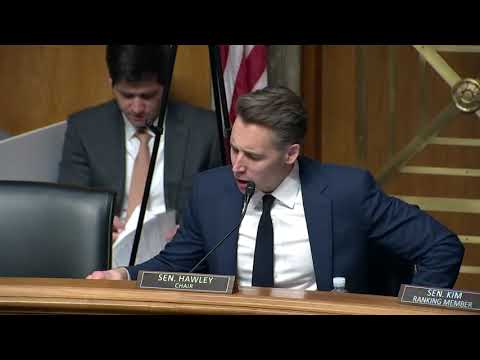
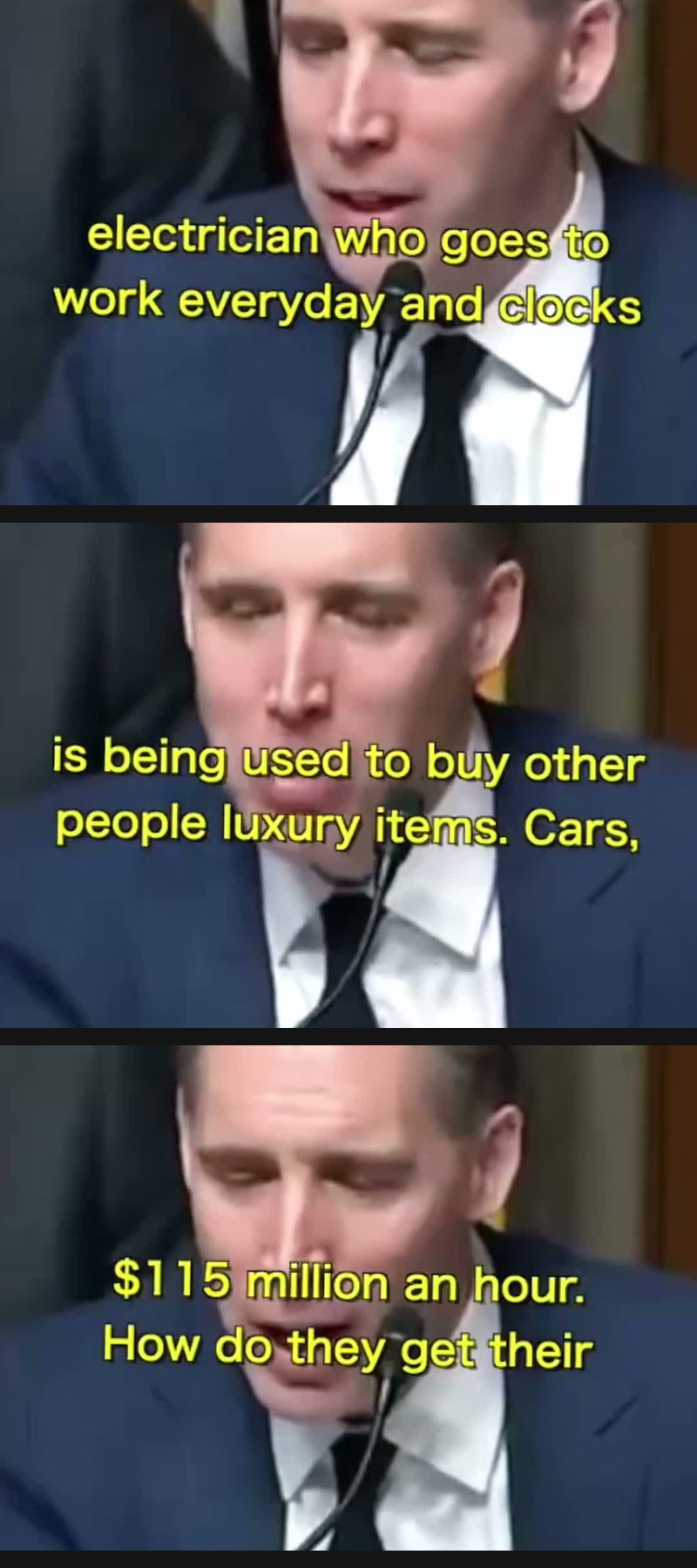
Senator Josh Hawley of Missouri posed the question plainly. He described a working electrician. A man who clocks in every morning, earns enough to cover rent, maybe has a couple of children, tries to keep food on the table. He asked whether that man’s tax money — the money taken from his paycheck before he ever sees it — was being used to buy luxury items for other people. Cars. Yachts. Whatever else. And to fund terrorism. And child trafficking.
The witness, Haywood Talcove — Chief Executive of LexisNexis Risk Solutions Government division, a recognised authority on government fraud — answered with two words: “Yes, sir.” Hawley pressed further. A trillion dollars a year, he asked? Talcove corrected him upward: “$115 million an hour.” That is the exchange. It is not paraphrased. It is not summarised. That is what was said, under oath, in a United States Senate hearing, on the record.
The Math Nobody in Washington Wants You to Do
$115 million an hour does not stay abstract for long once you run the numbers. $115 million per hour. That is $2.76 billion per day. That is $19.3 billion per week. That is just over one trillion dollars per year. Not wasted. Not inefficiently allocated. Not lost to bureaucratic overhead. The witness’s word was stolen.
The entire debate over Department of Homeland Security funding — the government shutdowns, the continuing resolutions, the weeks of procedural theater — was about $70 billion. Fraud steals that in twenty-five days. The comparison circulating widely online is worth sitting with: the cost of a major military operation runs close to $900 million a day. Fraud costs more than three times that. Every single day. With no bombs dropped and no soldiers deployed and no Congressional authorisation required.
The electrician Senator Hawley described works a standard forty-hour week. In the time it takes him to earn that paycheck, $4.6 billion disappears into the machinery of fraud. Nobody is bombing the fraudsters. Nobody is imposing sanctions. Washington is scheduling the next hearing.
How They Do It
Talcove’s answer on method was as disturbing as the numbers. Fraudsters exploit antiquated government systems and processes. They deliberately target programs that elected and appointed officials refuse to examine. The logic is precise: go where no one is watching. Go where scrutiny is politically uncomfortable. Go where oversight is a problem no one wants to own.
And then steal at scale. Because the underlying calculation is simple. Talcove stated it without euphemism: government never runs out of money, and the probability of getting caught is virtually zero. That is not a flaw in the system. That is the operating environment.
Recommended Product
Casio Enticer Men's Analog Green Dial Watch MTP-VD01D
🛒 View on Amazon →As an Amazon Associate, we earn from qualifying purchases. Price and availability may vary.
It is not an accident that fraud concentrates in programs without accountability structures. It is a feature being exploited by professional criminal networks — national organisations, repeat offenders, people who have learned that American government is a system optimised for access and effectively unoptimised for enforcement. Fake daycares. Fake autism centres. Fraudulent healthcare providers. Front organisations channeling funds toward groups supporting terrorism. Child trafficking networks drawing from the same pool.
A Legitimate Shutdown Would Look Different
One reaction to this story, shared widely among those following the hearing, captures the public frustration precisely: a legitimate government shutdown should only shut down the legislative frauds and failures that are actually ruining the institution. That sentiment is understandable. What the hearing revealed is a specific kind of institutional failure — not underfunding, not understaffing, not the absence of laws. The laws exist. The programs exist. The oversight committees exist.
What does not exist is the political will to go near the programs where fraud operates. Talcove said it plainly: they go into programs that elected and appointed officials won’t touch. That is not a technical statement about systems. That is a statement about political protection. Fraud survives where accountability creates inconvenience. It thrives where investigation threatens constituency relationships, donor relationships, or the next election cycle. It scales where the systems are old enough to be exploitable and the oversight is new enough to be deniable.
The Budget Debate Is the Wrong Debate
Every congressional fight over spending levels, every continuing resolution, every debt ceiling negotiation proceeds as though the fundamental problem is the size of appropriations. It is not. You can cut every discretionary program in the federal budget and leave fraud infrastructure intact. The number will still be $115 million an hour. You can add to every social program and leave enforcement gaps untouched. The number will still be $115 million an hour.
The conversation Washington keeps having is about inputs. Authorise more. Appropriate less. Find the number both sides can live with. Sign the bill. Move on. The conversation Washington keeps not having is about what happens after the money is appropriated. Who is taking it. Through which systems. In which programs. With which political cover.
Those questions do not get answered in budget negotiations. They get answered in hearings — occasionally, briefly, under oath — and then they get filed and forgotten. The receipts exist. The testimony is on record. The number is confirmed. $115 million per hour.
Every hour you go to work, that clock runs. Every paycheck with its tax line, that clock runs. Every Senate recess, every committee recess, every Congressional recess — that clock runs. The electrician clocks in. Washington clocks out. And the fraud experts keep watching the numbers go up. ?
Newspatron — Let Curiosity Be Your Guide.
